 Uri dinozore iyihe? Umukino w'ibibazo
 Intambara ya dinozore
 Isiganwa rya dinozore
 Imikino mito ya dinozore
 Alubumu ya sitikeri
 Intonde za TOP za dinozore
 Ntungura!
Sinocalliopteryx
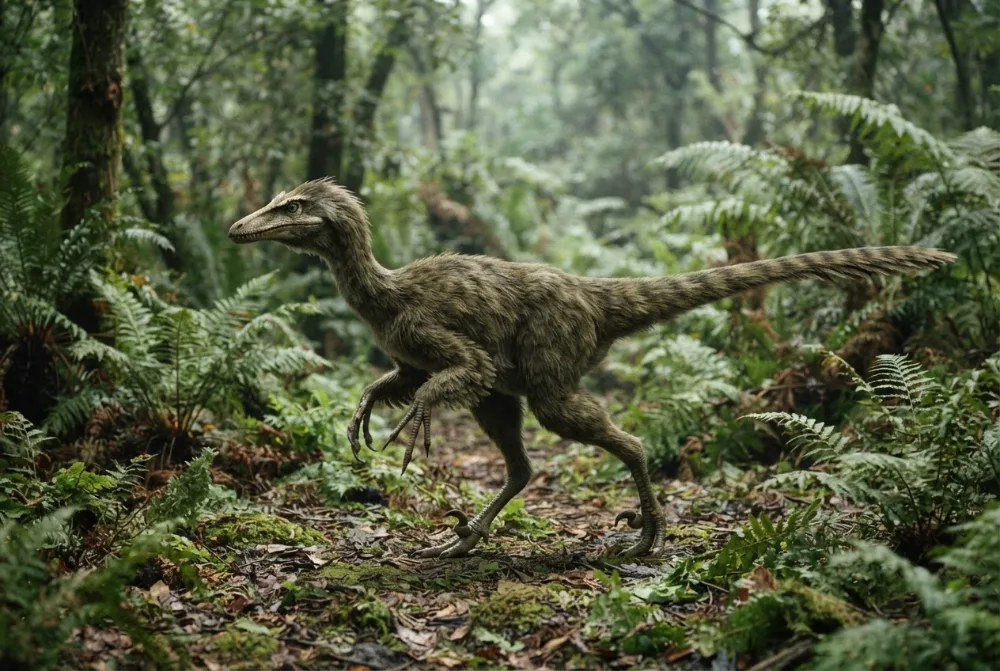
Sinocalliopteryx was a fast, feathered hunter that lived in what is now China. It had long legs and arms, and its body was covered in simple, hair-like feathers. This dinosaur was a fierce predator that could even catch birds on the ground.21
Yabayeho ryari?
Yanganaga ite?
Yari ndende ite?
Ubutumburuke bwayo bwanganaga iki?
igereranya
Yari iremereye ite?
 ndende nk'injangwe 5 zo mu rugo zikurikiranye🍌ndende nk'imineke 13 ikurikiranye🍉iremereye nk'imbuto 4 za watermelon🏃yashoboraga kwiruka metero 100 mu masegonda 8,4 (umuntu wihuta kurusha abandi akenera 9,6)
Sinocalliopteryx yanganaga ite ugereranyije NAWE?
Ni imibare gusa ibarirwa muri mushakisha yawe. Nta kintu kibikwa cyangwa cyoherezwa ahandi.
Yihutaga ite?


Utuntu dushimishije
Sinocalliopteryx was the largest known compsognathid dinosaur when it was discovered in 2007.2
One Sinocalliopteryx fossil had the leg of a dromaeosaurid dinosaur inside its stomach, showing it ate other predators.21
Another fossil contained the bones of at least two Confuciusornis birds in its belly, suggesting it hunted birds.2
Sinocalliopteryx had long protofeathers on its hips, tail, and thighs, some up to 10 centimeters (4 inches) long.2
It also had protofeathers on its feet, which is unusual for a dinosaur that was not closely related to birds.2
The stomach acid in one fossil had etched a bone for about 13 days, showing Sinocalliopteryx had a high metabolism.2
Ibibazo bibazwa cyane kuri Sinocalliopteryx
?How big was Sinocalliopteryx?
About 2.4 metres (7.8 feet) long and weighed around 20 kilograms (44 pounds).21
?Did Sinocalliopteryx have feathers?
Yes, it was covered in simple, hair-like protofeathers, with the longest ones on its hips, tail, and thighs.21
Ku bazobereye muri dinozore
- Izina rya siyansi
- Sinocalliopteryx
- Yiswe na
- Ji et al. 20075
- Itsinda
- Dinozore zirya inyama
- Umuryango / ishami
- Compsognathidae5
- Ishyirwa mu byiciro
- Theropoda > Compsognathidae5
- Imyaka y'amabuye
- imyaka miliyoni 126 kugeza 120 (Barremian / Aptian)5
- Inzego z'amabuye
- Yixian5
- Ibihugu
- Ubushinwa5
- Ibisigazwa byanditswe
- 2 muri The Paleobiology Database5
- Ivumburwa
- Sinocalliopteryx was named in 2007 by Ji Shu'an, Ji Qiang, Lü Junchang, and Yuan Chongxi. The first fossil was found at Hengdaozi, in Sihetun, Liaoning Province, China.21
- Biracyagibwaho impaka
- Scientists are not sure if the stones found in the first Sinocalliopteryx fossil were swallowed on purpose to help digestion or by accident.2
Aho amakuru yakuwe
- Sinocalliopteryx | Natural History Museum (nhm.ac.uk)
- Sinocalliopteryx (en.wikipedia.org)
- PBDB Taxon (paleobiodb.org)
- Abdominal Contents from Two Large Early Cretaceous Compsognathids (Dinosauria: Theropoda) Demonstrate Feeding on Confuciusornithids and Dromaeosaurids | PLOS One (journals.plos.org)
- Sinocalliopteryx in The Paleobiology Database (CC BY 4.0): imyaka, ahantu, inzego z'amabuye, ishyirwa mu byiciro.
Buri kintu kiri kuri uru rupapuro gifite nimero yerekana aho cyakuwe. Niba hari icyo twibeshye, tubabarire, turi abakunzi ba dinozore, ntituri ikinyamakuru cya siyansi. Tubwire kuri [email protected] tuzagikosora.
 Rex arashonje! Dino Wiki ni umushinga wa papa umwe yakoreye umuhungu we ukunda dinozore, ni ubuntu, nta matangazo kandi nta bigukurikirana. Abantu bakuru bashobora guha Rex akantu ko kurya kugira ngo Dino Wiki ikomeze kuboneka kuri interineti.Gaburira Rex
 Allosaurus
 Carnotaurus
 Dilophosaurus
 Giganotosaurus
 Compsognathus
 Paronychodon
 Stegosaurus
 Iguanodon
 Archaeopteryx
 Microraptor
 Deinonychus
 Baryonyx