 Uri dinozore iyihe? Umukino w'ibibazo
 Intambara ya dinozore
 Isiganwa rya dinozore
 Imikino mito ya dinozore
 Alubumu ya sitikeri
 Intonde za TOP za dinozore
 Ntungura!
Yabayeho ryari?

Yanganaga ite?
Yari ndende ite?
Ubutumburuke bwayo bwanganaga iki?
igereranya
Yari iremereye ite?
 ndende nk'injangwe 2 zo mu rugo zikurikiranye🍌ndende nk'imineke 6 ikurikiranye🪶yoroheje kurusha injangwe yo mu rugo🍌iremereye nk'imineke 8🪑nto ku buryo yanyura munsi y'intebe🏃yashoboraga kwiruka metero 100 mu masegonda 19 (umuntu wihuta kurusha abandi akenera 9,6)
Sinosauropteryx yanganaga ite ugereranyije NAWE?
Ni imibare gusa ibarirwa muri mushakisha yawe. Nta kintu kibikwa cyangwa cyoherezwa ahandi.
Yihutaga ite?


Utuntu dushimishije
Sinosauropteryx was the first feathered dinosaur discovered that was not directly related to birds.1
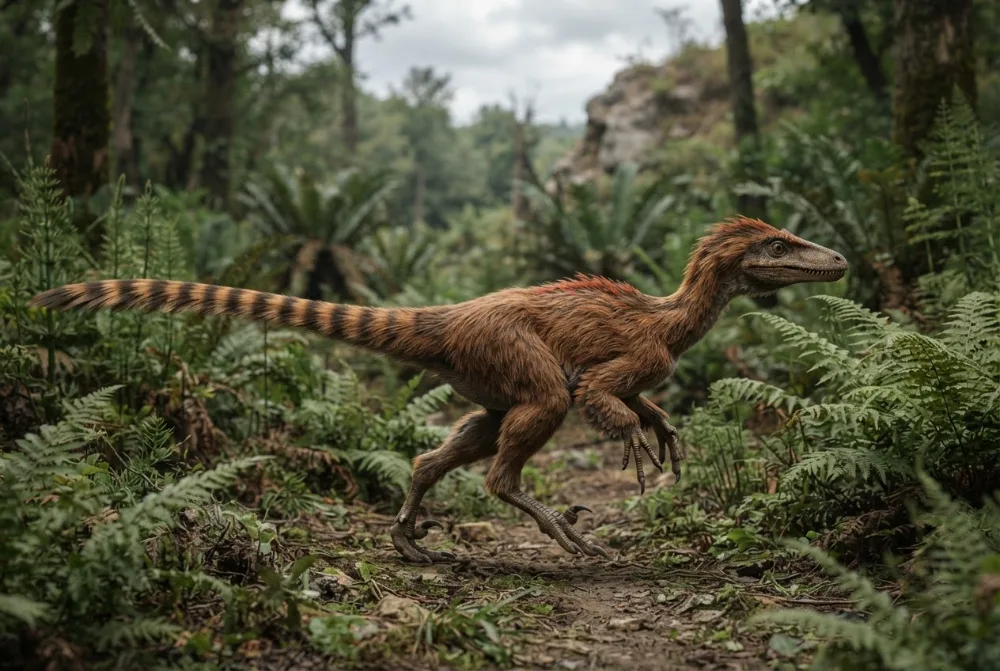
Scientists used Sinosauropteryx to figure out a dinosaur's color pattern for the first time ever.1
A fossil of Sinosauropteryx has a tiny lizard preserved in its stomach, showing what it ate for its last meal.1
Sinosauropteryx had over 50 very long tail bones, which made up about 60% of its body length.2
Its feathers were short and simple, like down feathers, not like the flight feathers of modern birds.2
Sinosauropteryx could not fly, but it could run fast on two legs, like an ostrich.2
One of the small mammals Sinosauropteryx ate, called Zhangheotherium, may have been venomous, with spurs on its ankles like a platypus.1
Ibibazo bibazwa cyane kuri Sinosauropteryx
?How big was Sinosauropteryx?
About 1.07 metres (3.5 feet) long and weighed around 0.55 kilograms (1.2 pounds). That is about as long as a skateboard but much lighter.31
?Did Sinosauropteryx have feathers?
Yes, it had a coat of thin, hair-like feathers. It was the first non-avian dinosaur discovered with evidence of feathers.13
?What did Sinosauropteryx eat?
It ate small animals like lizards, mammals, and insects. One fossil even has a tiny lizard preserved in its stomach.13
?When did Sinosauropteryx live?
It lived during the Early Cretaceous period, about 125 to 122 million years ago.13
?Where was Sinosauropteryx found?
Its fossils were found in Liaoning Province in northeastern China.13
?What color was Sinosauropteryx?
Scientists think it was reddish-brown with a light belly and dark and light bands on its tail, like a camouflage pattern.13
Ku bazobereye muri dinozore
- Izina rya siyansi
- Sinosauropteryx
- Yiswe na
- Ji and Ji 19965
- Itsinda
- Dinozore zirya inyama
- Umuryango / ishami
- Sinosauropterygidae5
- Ishyirwa mu byiciro
- Theropoda5
- Imyaka y'amabuye
- imyaka miliyoni 126 kugeza 120 (Barremian / Aptian)5
- Inzego z'amabuye
- Yixian5
- Ibihugu
- Ubushinwa5
- Ibisigazwa byanditswe
- 4 muri The Paleobiology Database5
- Ivumburwa
- A fossil hunter named Li Yumin found the first Sinosauropteryx remains in 1996 in Liaoning, China. He sold the fossils to museums, and scientists Ji and Ji named the dinosaur in the same year.15
Aho amakuru yakuwe
- Sinosauropteryx | Natural History Museum (nhm.ac.uk)
- On the Discovery of the earliest fossil bird in China (Sinosauropteryx (naturalhistory.si.edu)
- Sinosauropteryx (en.wikipedia.org)
- Dinosaurs - Sinosauropteryx prima - The Australian Museum (australian.museum)
- Sinosauropteryx in The Paleobiology Database (CC BY 4.0): imyaka, ahantu, inzego z'amabuye, ishyirwa mu byiciro.
Buri kintu kiri kuri uru rupapuro gifite nimero yerekana aho cyakuwe. Niba hari icyo twibeshye, tubabarire, turi abakunzi ba dinozore, ntituri ikinyamakuru cya siyansi. Tubwire kuri [email protected] tuzagikosora.
 Rex arashonje! Dino Wiki ni umushinga wa papa umwe yakoreye umuhungu we ukunda dinozore, ni ubuntu, nta matangazo kandi nta bigukurikirana. Abantu bakuru bashobora guha Rex akantu ko kurya kugira ngo Dino Wiki ikomeze kuboneka kuri interineti.Gaburira Rex
 Allosaurus
 Carnotaurus
 Dilophosaurus
 Giganotosaurus
 Compsognathus
 Paronychodon
 Stegosaurus
 Iguanodon
 Archaeopteryx
 Microraptor
 Deinonychus
 Baryonyx