 Uri dinozore iyihe? Umukino w'ibibazo
 Intambara ya dinozore
 Isiganwa rya dinozore
 Imikino mito ya dinozore
 Alubumu ya sitikeri
 Intonde za TOP za dinozore
 Ntungura!
Vallibonavenatrix
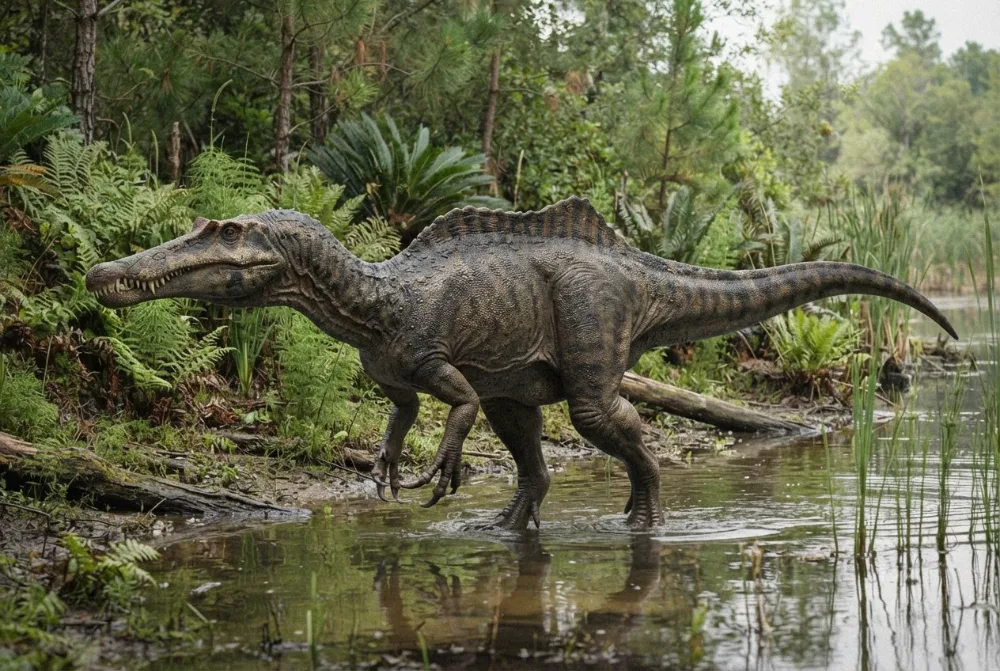
Vallibonavenatrix was a medium-sized spinosaurid dinosaur that lived in what is now Spain during the Early Cretaceous. It had a long, crocodile-like snout and probably ate fish, just like its bigger cousin Spinosaurus. This dinosaur is the most complete spinosaur ever found in the Iberian Peninsula.1
Yabayeho ryari?
Yanganaga ite?
Yari ndende ite?
Ubutumburuke bwayo bwanganaga iki?
Yari iremereye ite?
 ndende nk'imbwa 7 zikurikiranye🍌ndende nk'imineke 39 ikurikiranye🍉iremereye nk'imbuto 200 za watermelon🧸iremereye nk'abana 53 bo mu ishuri ry'incuke🎒iremereye nk'abanyeshuri 31🐻❄️iremereye nk'idubu 2 zo mu rubura🏃yashoboraga kwiruka metero 100 mu masegonda 12 (umuntu wihuta kurusha abandi akenera 9,6)
Vallibonavenatrix yanganaga ite ugereranyije NAWE?
Ni imibare gusa ibarirwa muri mushakisha yawe. Nta kintu kibikwa cyangwa cyoherezwa ahandi.
Yihutaga ite?


Utuntu dushimishije
Vallibonavenatrix had a sail on its back made of tall, fan-shaped spines, similar to the dinosaur Ichthyovenator.1
Its bones were full of air pockets, making its skeleton lighter. This is called being pneumatic.1
The first fossils were found by amateur fossil collector Juan Cano Forner in the 1980s and 1990s.1
Vallibonavenatrix lived about 129 to 125 million years ago, during the Barremian stage of the Early Cretaceous.1
It shared its home with other dinosaurs like Iguanodon and the spinosaurid Protathlitis.1
Ibibazo bibazwa cyane kuri Vallibonavenatrix
?How big was Vallibonavenatrix?
It was a medium-sized spinosaurid, but scientists do not know its exact length or weight because only a partial skeleton has been found.1
?What did Vallibonavenatrix eat?
It probably ate fish, just like its bigger cousin Spinosaurus, because it had a long, crocodile-like snout.1
?Did Vallibonavenatrix have a sail?
Yes, it likely had a sail on its back made of tall, fan-shaped spines, similar to the dinosaur Ichthyovenator.1
?When did Vallibonavenatrix live?
It lived about 129 to 125 million years ago, during the Barremian stage of the Early Cretaceous.1
?Where was Vallibonavenatrix found?
Its fossils were found in the Arcillas de Morella Formation near Vallibona, Castellón, Spain.12
?Is Vallibonavenatrix a dinosaur?
Yes, it is a spinosaurid dinosaur, a type of theropod dinosaur.1
Gusenya ibinyoma
Ibivugwa: Vallibonavenatrix was a close relative of Baryonyx from Europe.
Ukuri: Scientists disagree. Some studies place it closer to spinosaurines from Africa and South America, like Spinosaurus and Irritator.1
Ku bazobereye muri dinozore
- Izina rya siyansi
- Vallibonavenatrix
- Yiswe na
- Malafaia et al. 20192
- Itsinda
- Spinozore
- Umuryango / ishami
- Spinosauridae2
- Ishyirwa mu byiciro
- Theropoda > Spinosauridae2
- Imyaka y'amabuye
- imyaka miliyoni 126 kugeza 121 (Barremian)2
- Inzego z'amabuye
- Arcillas de Morella2
- Ibihugu
- Esipanye2
- Ibisigazwa byanditswe
- 1 muri The Paleobiology Database2
- Ivumburwa
- Vallibonavenatrix was named in 2019 by Elisabete Malafaia and colleagues. The species name cani honors Juan Cano Forner, who discovered the fossils.1
- Biracyagibwaho impaka
- Scientists are not sure whether Vallibonavenatrix belongs to the Spinosaurinae or Baryonychinae group, or if it is a more primitive spinosaurid.1
Aho amakuru yakuwe
- Vallibonavenatrix (en.wikipedia.org)
- Vallibonavenatrix in The Paleobiology Database (CC BY 4.0): imyaka, ahantu, inzego z'amabuye, ishyirwa mu byiciro.
Buri kintu kiri kuri uru rupapuro gifite nimero yerekana aho cyakuwe. Niba hari icyo twibeshye, tubabarire, turi abakunzi ba dinozore, ntituri ikinyamakuru cya siyansi. Tubwire kuri [email protected] tuzagikosora.
 Rex arashonje! Dino Wiki ni umushinga wa papa umwe yakoreye umuhungu we ukunda dinozore, ni ubuntu, nta matangazo kandi nta bigukurikirana. Abantu bakuru bashobora guha Rex akantu ko kurya kugira ngo Dino Wiki ikomeze kuboneka kuri interineti.Gaburira Rex
 Spinosaurus
 Baryonyx
 Suchomimus
 Angaturama
 Camarillasaurus
 Ceratosuchops
 Stegosaurus
 Iguanodon
 Archaeopteryx
 Giganotosaurus
 Microraptor
 Deinonychus