 Uri dinozore iyihe? Umukino w'ibibazo
 Intambara ya dinozore
 Isiganwa rya dinozore
 Imikino mito ya dinozore
 Alubumu ya sitikeri
 Intonde za TOP za dinozore
 Ntungura!
Wuerhosaurus
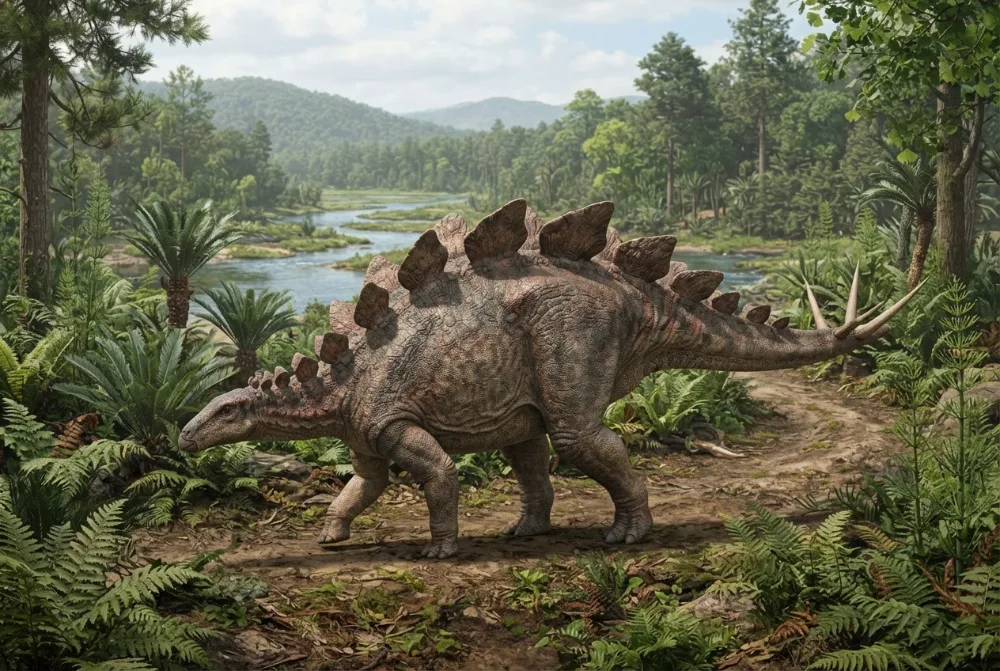
Wuerhosaurus was a plated dinosaur that munched on plants in ancient China. It had bony plates on its back and a spiky tail to protect itself. This stegosaur lived during the early Cretaceous period, about 137 to 100 million years ago.5
Yabayeho ryari?
Yanganaga ite?
Yari ndende ite?
Ubutumburuke bwayo bwanganaga iki?
Yari iremereye ite?

 ndende nk'imbwa 7 zikurikiranye🍌ndende nk'imineke 39 ikurikiranyeiremereye nk'imbwa 200🍉iremereye nk'imbuto 800 za watermelon🎒iremereye nk'ibyumba 5 by'amashuri byuzuye abana🐻❄️iremereye nk'idubu 9 zo mu rubura🏃yashoboraga kwiruka metero 100 mu masegonda 24 (umuntu wihuta kurusha abandi akenera 9,6)
Wuerhosaurus yanganaga ite ugereranyije NAWE?
Ni imibare gusa ibarirwa muri mushakisha yawe. Nta kintu kibikwa cyangwa cyoherezwa ahandi.
Yihutaga ite?


Utuntu dushimishije
Wuerhosaurus was named by Chinese paleontologist Dong Zhiming in 1973.5
Its fossils were found in the Lianmuqin Formation in Xinjiang, China.2
Some scientists think Wuerhosaurus might actually be a species of Stegosaurus, called Stegosaurus homheni.1
The type specimen of Wuerhosaurus is a partial skeleton stored at the Institute of Vertebrate Paleontology and Paleoanthropology in Beijing.1
Wuerhosaurus lived alongside the meat-eating dinosaur Kelmayisaurus and the pterosaur Noripterus.2
Its back vertebrae had deep hollows above the spinal cord, which is different from other stegosaurs.1
Wuerhosaurus was a ground-dwelling herbivore that probably moved on all four legs.5
Ibibazo bibazwa cyane kuri Wuerhosaurus
?How big was Wuerhosaurus?
Wuerhosaurus homheni was about 7 metres (23 feet) long and weighed 4 metric tons (4.4 short tons). A smaller species, W. ordosensis, was about 5 metres (16 feet) long and weighed 1.2 metric tons (1.3 short tons).3
?How many species of Wuerhosaurus are there?
There are two known species: Wuerhosaurus homheni and Wuerhosaurus ordosensis.3
?Is Wuerhosaurus the same as Stegosaurus?
Some scientists think Wuerhosaurus might actually be a species of Stegosaurus called Stegosaurus homheni, but other scientists disagree.3
Gusenya ibinyoma
Ibivugwa: Many people think all stegosaurs lived in the Jurassic period.
Ukuri: Wuerhosaurus lived in the early Cretaceous, much later than most stegosaurs.1
Ku bazobereye muri dinozore
- Izina rya siyansi
- Wuerhosaurus
- Yiswe na
- Dong 19735
- Itsinda
- Dinozore zifite ibisate
- Umuryango / ishami
- Stegosauridae5
- Ishyirwa mu byiciro
- Ornithischia > Stegosauria > Thyreophora5
- Imyaka y'amabuye
- imyaka miliyoni 137 kugeza 100 (Valanginian / Albian)5
- Inzego z'amabuye
- Lianmuqin, Ejinhoro5
- Ibihugu
- Ubushinwa5
- Ibisigazwa byanditswe
- 3 muri The Paleobiology Database5
- Ivumburwa
- Wuerhosaurus was discovered in 1964 at a site called Wuerho in Xinjiang, China. Dong Zhiming named it in 1973 based on a partial skeleton.2
- Biracyagibwaho impaka
- Scientists debate whether Wuerhosaurus is a separate genus or just a species of Stegosaurus.1
Aho amakuru yakuwe
- PBDB Taxon (paleobiodb.org)
- PBDB Collection (paleobiodb.org)
- Wuerhosaurus (en.wikipedia.org)
- enchantedlearning.com (enchantedlearning.com)
- Wuerhosaurus in The Paleobiology Database (CC BY 4.0): imyaka, ahantu, inzego z'amabuye, ishyirwa mu byiciro.
Buri kintu kiri kuri uru rupapuro gifite nimero yerekana aho cyakuwe. Niba hari icyo twibeshye, tubabarire, turi abakunzi ba dinozore, ntituri ikinyamakuru cya siyansi. Tubwire kuri [email protected] tuzagikosora.
 Rex arashonje! Dino Wiki ni umushinga wa papa umwe yakoreye umuhungu we ukunda dinozore, ni ubuntu, nta matangazo kandi nta bigukurikirana. Abantu bakuru bashobora guha Rex akantu ko kurya kugira ngo Dino Wiki ikomeze kuboneka kuri interineti.Gaburira Rex
 Stegosaurus
 Diracodon
 Hypsirophus
 Dacentrurus
 Miragaia
 Kentrosaurus
 Iguanodon
 Archaeopteryx
 Giganotosaurus
 Microraptor
 Deinonychus
 Baryonyx