 Uri dinozore iyihe? Umukino w'ibibazo
 Intambara ya dinozore
 Isiganwa rya dinozore
 Imikino mito ya dinozore
 Alubumu ya sitikeri
 Intonde za TOP za dinozore
 Ntungura!
Yabayeho ryari?

Yanganaga ite?
Yari ndende ite?
Ubutumburuke bwayo bwanganaga iki?
igereranya
Yari iremereye ite?

 ndende nk'imbwa 6 zikurikiranye🍌ndende nk'imineke 35 ikurikiranyeiremereye nk'imbwa 200🍉iremereye nk'imbuto 820 za watermelon🎒iremereye nk'ibyumba 5 by'amashuri byuzuye abana🐻❄️iremereye nk'idubu 9 zo mu rubura🏃yashoboraga kwiruka metero 100 mu masegonda 26 (umuntu wihuta kurusha abandi akenera 9,6)
Yanbeilong yanganaga ite ugereranyije NAWE?
Ni imibare gusa ibarirwa muri mushakisha yawe. Nta kintu kibikwa cyangwa cyoherezwa ahandi.
Yihutaga ite?


Utuntu dushimishije
Yanbeilong is known from a single partial skeleton that includes vertebrae and hip bones.1
It lived about 113 to 100 million years ago, during the Albian age of the Early Cretaceous.3
The name 'ultimus' means 'last' in Latin, because it was one of the last stegosaurs.1
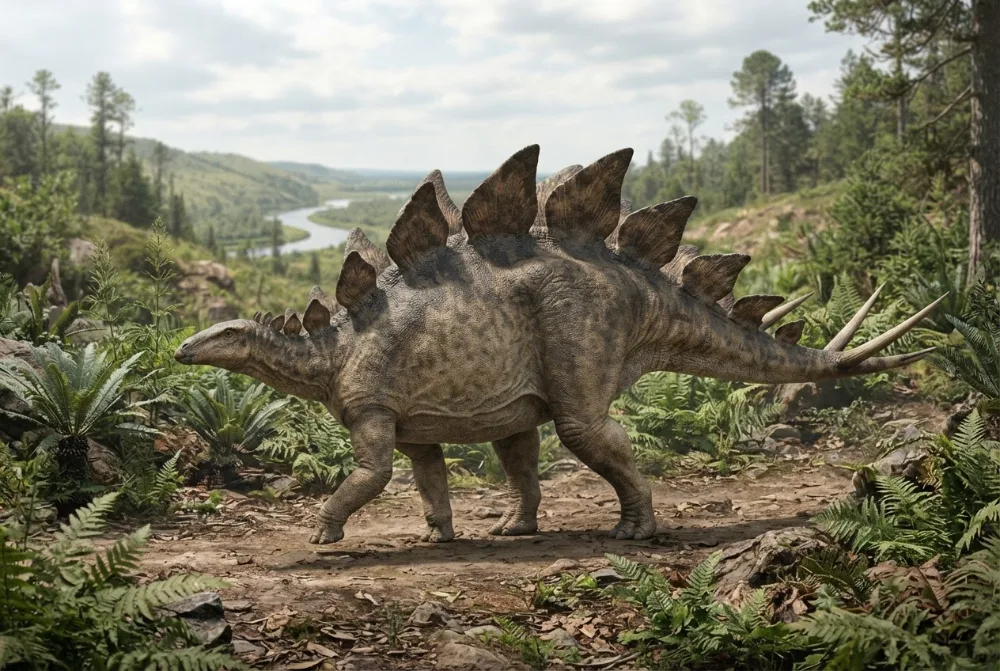
Yanbeilong was a close relative of Stegosaurus and Wuerhosaurus.1
Its fossils were discovered in 2011 in the Zuoyun Formation of China.1
Scientists think Yanbeilong was a ground-dwelling herbivore that walked on all four legs.3
Ibibazo bibazwa cyane kuri Yanbeilong
?How big was Yanbeilong?
Scientists do not know Yanbeilong's exact size because only a partial skeleton has been found. Estimates suggest it was a medium sized dinosaur, but a specific length is not currently known.3
?What did Yanbeilong eat?
Yanbeilong was a herbivore, meaning it ate plants. It was a ground-dwelling dinosaur that walked on all four legs.3
?When did Yanbeilong live?
Yanbeilong lived during the Albian age of the Early Cretaceous period, about 113 to 100 million years ago.13
?Where was Yanbeilong found?
Yanbeilong's fossils were discovered in 2011 in the Zuoyun Formation near Madaotou Township in Shanxi, China.1
?Is Yanbeilong a dinosaur?
Yes, Yanbeilong is a dinosaur. It is a type of ornithischian, though its classification as a stegosaur is currently debated by paleontologists.1
?Why is it called Yanbeilong ultimus?
Yanbeilong means 'north of Yanmen Pass dragon' in Chinese, and 'ultimus' means 'last' in Latin, because it was one of the last stegosaurs to exist.1
Ku bazobereye muri dinozore
- Izina rya siyansi
- Yanbeilong
- Yiswe na
- Jia et al. 20243
- Itsinda
- Dinozore zifite ibisate
- Umuryango / ishami
- Stegosauridae3
- Ishyirwa mu byiciro
- Ornithischia > Stegosauria > Thyreophora3
- Imyaka y'amabuye
- imyaka miliyoni 113 kugeza 100 (Albian)3
- Inzego z'amabuye
- Zuoyun3
- Ibihugu
- Ubushinwa3
- Ibisigazwa byanditswe
- 1 muri The Paleobiology Database3
- Ivumburwa
- Yanbeilong was named in 2024 by Lei Jia and colleagues based on a partial skeleton found in 2011 in Shanxi, China.13
- Biracyagibwaho impaka
- Scientists are not sure exactly how many plates or spikes Yanbeilong had on its back, because only a partial skeleton has been found.1
Aho amakuru yakuwe
- Yanbeilong (en.wikipedia.org)
- Yanbeilong ultimus | Dinosaur Database by DinoAnimals.com (dinoanimals.com)
- Yanbeilong in The Paleobiology Database (CC BY 4.0): imyaka, ahantu, inzego z'amabuye, ishyirwa mu byiciro.
Buri kintu kiri kuri uru rupapuro gifite nimero yerekana aho cyakuwe. Niba hari icyo twibeshye, tubabarire, turi abakunzi ba dinozore, ntituri ikinyamakuru cya siyansi. Tubwire kuri [email protected] tuzagikosora.
 Rex arashonje! Dino Wiki ni umushinga wa papa umwe yakoreye umuhungu we ukunda dinozore, ni ubuntu, nta matangazo kandi nta bigukurikirana. Abantu bakuru bashobora guha Rex akantu ko kurya kugira ngo Dino Wiki ikomeze kuboneka kuri interineti.Gaburira Rex
 Stegosaurus
 Diracodon
 Hypsirophus
 Dacentrurus
 Miragaia
 Kentrosaurus
 Iguanodon
 Archaeopteryx
 Giganotosaurus
 Microraptor
 Deinonychus
 Baryonyx