 Uri dinozore iyihe? Umukino w'ibibazo
 Intambara ya dinozore
 Isiganwa rya dinozore
 Imikino mito ya dinozore
 Alubumu ya sitikeri
 Intonde za TOP za dinozore
 Ntungura!
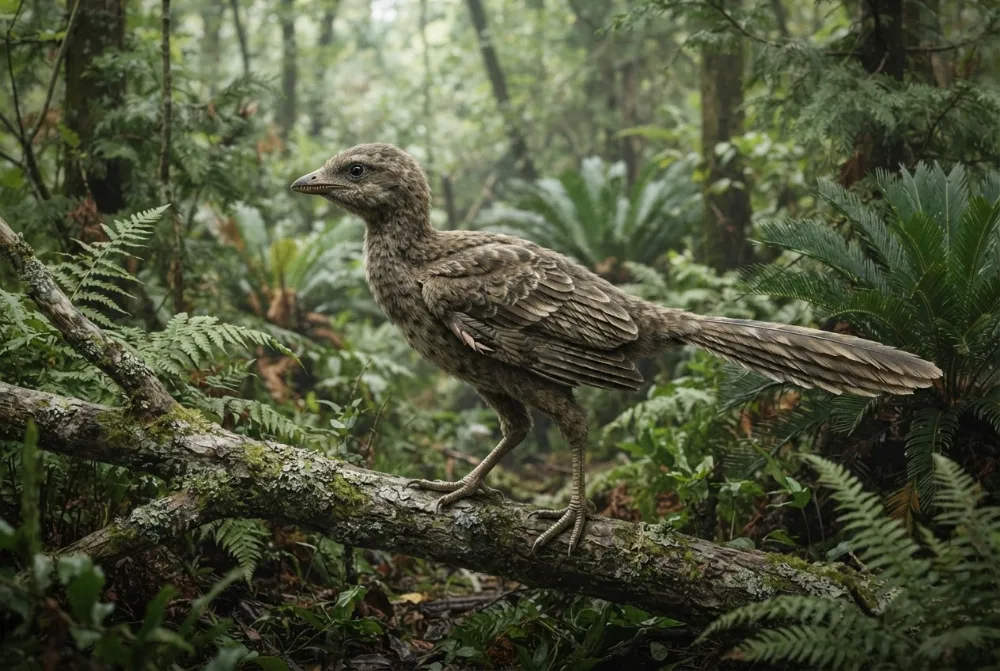
Yixianornis
Yixianornis was a bird that lived 120 million years ago in what is now China. It was about the size of a chicken and had broad, rounded wings that helped it fly through dense forests. Its tail feathers could fan out like a modern bird's tail.1
Yabayeho ryari?
Yanganaga ite?
Yari ndende ite?
Ubutumburuke bwayo bwanganaga iki?
Yari iremereye ite?
Yixianornis yanganaga ite ugereranyije NAWE?
Ni imibare gusa ibarirwa muri mushakisha yawe. Nta kintu kibikwa cyangwa cyoherezwa ahandi.
Yihutaga ite?


Utuntu dushimishije
Yixianornis is one of the best-preserved bird fossils from the Jehol group, with bones that are mostly uncrushed and clear impressions of wing and tail feathers.1
Its tail feathers were arranged in a graduated series, with the outer feathers anchored closer to the base of the tail, giving it a rounded silhouette.1
Yixianornis had a rectrical bulb, a muscle that allows tail feathers to be fanned out during flight and retracted when at rest, just like in modern birds.1
The tips of its jaws were toothless and had small pits and grooves, possibly indicating the presence of a beak.1
Its flight feathers were very broad and rounded, not narrow and pointed like in many other early birds.1
Scientists think Yixianornis was diurnal, meaning it was active during the day, similar to most modern birds.1
Yixianornis is the most primitive bird known to have an essentially modern pygostyle and fan of tail feathers.1
Ku bazobereye muri dinozore
- Izina rya siyansi
- Yixianornis
- Yiswe na
- Zhou and Zhang 20012
- Itsinda
- Inyoni za mbere
- Umuryango / ishami
- Hongshanornithidae2
- Ishyirwa mu byiciro
- Theropoda > Avialae2
- Imyaka y'amabuye
- imyaka miliyoni 121 kugeza 113 (Aptian)2
- Inzego z'amabuye
- Jiufotang2
- Ibihugu
- Ubushinwa2
- Ibisigazwa byanditswe
- 1 muri The Paleobiology Database2
- Ivumburwa
- Yixianornis was named by Zhou Zhonghe and Zhang Fucheng in 2001 based on a nearly complete fossil with feather impressions found in the Jiufotang Formation of Liaoning, China.12
- Biracyagibwaho impaka
- Scientists are still debating whether Yixianornis had a beak at the tips of its jaws, because the pits and grooves could also be from other features.1
Aho amakuru yakuwe
- Yixianornis (en.wikipedia.org)
- Yixianornis in The Paleobiology Database (CC BY 4.0): imyaka, ahantu, inzego z'amabuye, ishyirwa mu byiciro.
Buri kintu kiri kuri uru rupapuro gifite nimero yerekana aho cyakuwe. Niba hari icyo twibeshye, tubabarire, turi abakunzi ba dinozore, ntituri ikinyamakuru cya siyansi. Tubwire kuri [email protected] tuzagikosora.
 Rex arashonje! Dino Wiki ni umushinga wa papa umwe yakoreye umuhungu we ukunda dinozore, ni ubuntu, nta matangazo kandi nta bigukurikirana. Abantu bakuru bashobora guha Rex akantu ko kurya kugira ngo Dino Wiki ikomeze kuboneka kuri interineti.Gaburira Rex
 Archaeopteryx
 Hesperornis
 Ichthyornis
 Baptornis
 Jurapteryx
 Gobipteryx
 Stegosaurus
 Iguanodon
 Giganotosaurus
 Microraptor
 Deinonychus
 Baryonyx