 Uri dinozore iyihe? Umukino w'ibibazo
 Intambara ya dinozore
 Isiganwa rya dinozore
 Imikino mito ya dinozore
 Alubumu ya sitikeri
 Intonde za TOP za dinozore
 Ntungura!
Yongjinglong
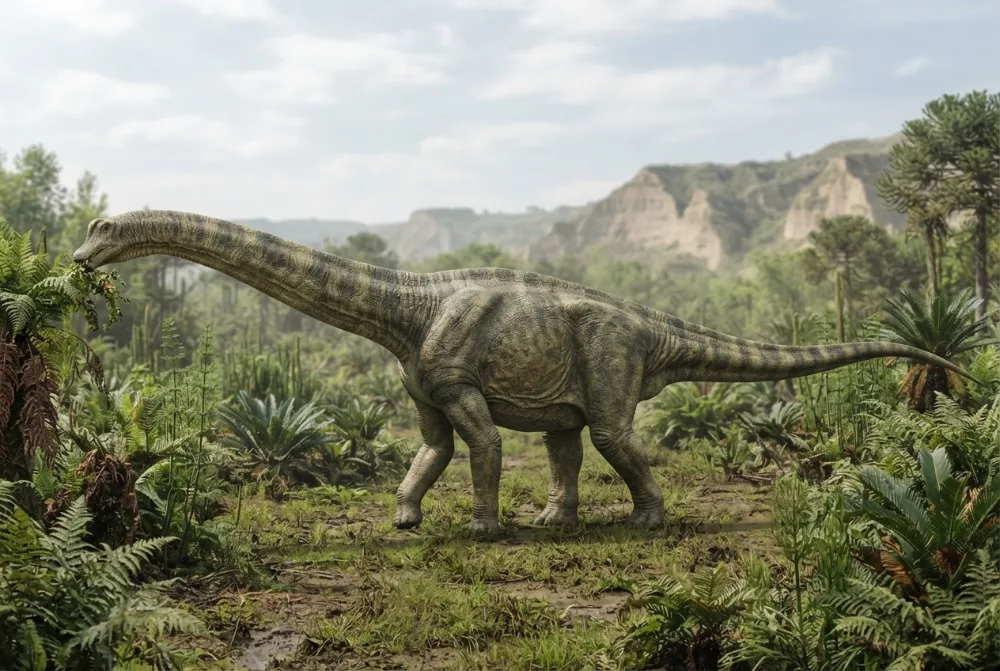
Yongjinglong was a big, long-necked plant-eater that lived in what is now China. It had a very long shoulder blade that stretched more than half the length of its body. Scientists think it was still growing when it died.1
Yabayeho ryari?
Yanganaga ite?
Yari ndende ite?
Ubutumburuke bwayo bwanganaga iki?
igereranya
Yari iremereye ite?
 ndende nk'imodoka 2,5 ziparitse ku murongo🍌ndende nk'imineke 67 ikurikiranye
 iremereye nk'inzovu🍉iremereye nk'imbuto 1500 za watermelon🎒iremereye nk'ibyumba 9 by'amashuri byuzuye abana🐻❄️iremereye nk'idubu 17 zo mu rubura🏃yashoboraga kwiruka metero 100 mu masegonda 22 (umuntu wihuta kurusha abandi akenera 9,6)
Yongjinglong yanganaga ite ugereranyije NAWE?
Ni imibare gusa ibarirwa muri mushakisha yawe. Nta kintu kibikwa cyangwa cyoherezwa ahandi.
Yihutaga ite?


Utuntu dushimishije
Yongjinglong's shoulder blade was extremely long and straight, stretching over half the length of its trunk.1
Its neck and back bones had deep, air-filled holes called pleurocoels that covered the whole side of each bone, making the skeleton lighter.1
The ridges on the sides of its middle back bones formed a pattern that looks like the Roman numeral XI.1
Yongjinglong lived about 125 to 113 million years ago, during the Early Cretaceous period.2
The only known fossil is a subadult, meaning Yongjinglong was not fully grown when it died.1
Its teeth were long and spoon-shaped, perfect for scooping up plants.1
Ku bazobereye muri dinozore
- Izina rya siyansi
- Yongjinglong
- Yiswe na
- Li et al. 20144
- Itsinda
- Izifite amajosi maremare
- Umuryango / ishami
- Euhelopodidae4
- Ishyirwa mu byiciro
- Sauropodomorpha > Sauropoda > Macronaria4
- Imyaka y'amabuye
- imyaka miliyoni 126 kugeza 113 (Barremian / Aptian)4
- Inzego z'amabuye
- 54
- Ibihugu
- Ubushinwa4
- Ibisigazwa byanditswe
- 1 muri The Paleobiology Database4
- Ivumburwa
- Yongjinglong was discovered in 2008 by Li Daqing and You Hailu beside the G75 Highway in Gansu, China. It was named and described by Li and colleagues in 2014.12
- Biracyagibwaho impaka
- Scientists are not sure exactly how big Yongjinglong grew, because the only known fossil is from a young animal.1
Aho amakuru yakuwe
- A New Titanosaurian Sauropod from the Hekou Group (Lower Cretaceous) of the Lanzhou-Minhe Basin, Gansu Province, China | PLOS One (journals.plos.org)
- PBDB Taxon (paleobiodb.org)
- Yongjinglong datangi | Dinosaur Database by DinoAnimals.com (dinoanimals.com)
- Yongjinglong in The Paleobiology Database (CC BY 4.0): imyaka, ahantu, inzego z'amabuye, ishyirwa mu byiciro.
Buri kintu kiri kuri uru rupapuro gifite nimero yerekana aho cyakuwe. Niba hari icyo twibeshye, tubabarire, turi abakunzi ba dinozore, ntituri ikinyamakuru cya siyansi. Tubwire kuri [email protected] tuzagikosora.
 Rex arashonje! Dino Wiki ni umushinga wa papa umwe yakoreye umuhungu we ukunda dinozore, ni ubuntu, nta matangazo kandi nta bigukurikirana. Abantu bakuru bashobora guha Rex akantu ko kurya kugira ngo Dino Wiki ikomeze kuboneka kuri interineti.Gaburira Rex
 Brachiosaurus
 Diplodocus
 Brontosaurus
 Argentinosaurus
 Camarasaurus
 Morosaurus
 Stegosaurus
 Iguanodon
 Archaeopteryx
 Giganotosaurus
 Microraptor
 Deinonychus