 Uri dhino ripi? Kwizi
 Hondo yemadhino
 Mujaho wemadhino
 Mitambo midiki yemadhino
 Arubhamu yemasitika
 Rondedzero dzeTOP dzemadhino
 Ndishamise!
Aeolosaurus
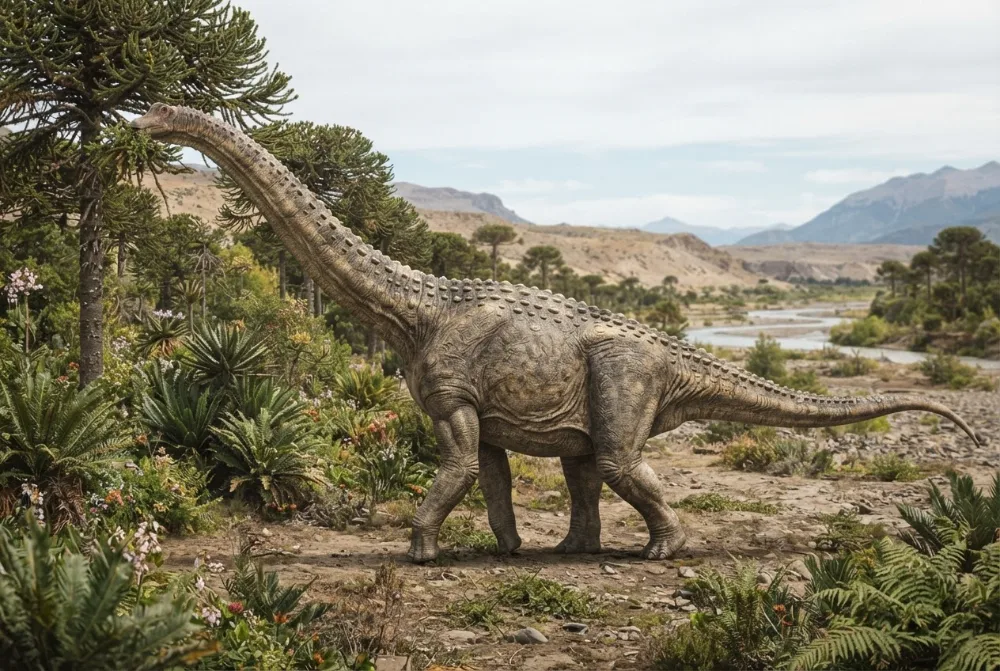
Aeolosaurus was a huge, long-necked plant eater that lived in South America near the end of the Age of Dinosaurs. It walked on four sturdy legs and probably used its long neck to reach leaves high in the trees.6
Rairarama rini?
Raiva hombe sei?
Raiva refu zvakadii?
Raiva rakakwirira zvakadii?
Rairema zvakadii?

 kureba semotokari 22 dzakamiswa dzakatevedzana🍌kureba semabhanana 560 akatevedzanakurema semotokari 10🍉kurema semanwiwa 2900🦒kukwirira setwiza 18 dzakamira pamusoro peimwe neimwe🎒kurema semakirasi 18 akazara evana vechikoro🐻❄️kurema semabere echando 33🏢rakakwirira zvekudongorera muhwindo riri pafuroo nhamba 34🏃raigona kumhanya mamita 100 mumasekonzi 24 (munhu anomhanya kupfuura vose anoda 9.6)
Aeolosaurus raiva hombe sei kana richienzaniswa NEWE?
Masvomhu chete mubrowser yako. Hapana chinochengetwa kana kutumirwa kupi zvako.
Raimhanya zvakadii?


Zvinonakidza
Aeolosaurus lived between about 83.6 and 66 million years ago, during the Campanian and Maastrichtian ages of the Late Cretaceous.2
It belonged to a group called Aeolosaurini, which is part of the larger titanosaur family. Its closest relatives include Baurutitan, Caieiria, Gondwanatitan, and Panamericansaurus.6
Scientists have named two species: Aeolosaurus rionegrinus, the type species, and Aeolosaurus colhuehuapensis.6
Aeolosaurus fossils have been found in rocks from the Turonian to Santonian ages in central Brazil, which is older than the Campanian-Maastrichtian fossils from Argentina. This shows the genus lived over a long time and a wide area.1
The discovery of Aeolosaurus in the Marilia Formation of Brazil shows that this dinosaur survived after a marine incursion flooded parts of northern Patagonia during the Campanian-Maastrichtian.1
Aeolosaurus had special bones in its tail: the prezygapophyses (joints) curved downward on the front tail vertebrae, and the haemal arches had double articular facets set in a concave surface. This unique combination helps scientists identify it.6
Mibvunzo inonyanya kubvunzwa nezve Aeolosaurus
?How big was Aeolosaurus?
Estimates vary. Gregory S. Paul said Aeolosaurus rionegrinus was about 14 metres (46 ft) long and weighed 6 tonnes (6.6 short tons). In 2020, Molina-Pérez and Larramendi gave a larger estimate of 18.1 metres (60 ft) and 14.7 tonnes (16.2 short tons).45
?What did Aeolosaurus eat?
Aeolosaurus was a herbivore, meaning it ate plants. Like other sauropods, it used its long neck to reach leaves high in trees.45
Mubvisi wengano
Ngano: Some people think Aeolosaurus was a type of marine reptile because its name sounds like 'Aeolus' from the sea.
Chokwadi: Aeolosaurus was a land-dwelling dinosaur, a sauropod that lived on land and ate plants. It was not a marine reptile.6
Zvevanyanzvi vemadhino
- Zita resainzi
- Aeolosaurus
- Akaripa zita:
- Powell 19876
- Boka
- Madhino emitsipa mirefu
- Mhuri / boka
- Aeolosaurini6
- Kurongwa kwemhuka
- Sauropodomorpha > Sauropoda > Titanosauria > Macronaria6
- Zera rematombo
- makore mamiriyoni 84 kusvika 66 (Campanian / Maastrichtian)6
- Mapoka ematombo
- Allen, Lago Colhué Huapi, Angostura Colorada6
- Nyika
- Ajentina, Brazil, Uruguay6
- Zvinyorwa zvemafosiri
- 6 mu The Paleobiology Database6
- Kuwanikwa
- Aeolosaurus was named by J. E. Powell in 1987. The name comes from the Late Cretaceous fauna of Los Alamitos in Patagonia, Argentina, where the first fossils were found.6
- Zvichiri kupokanwa
- Scientists debate whether Gondwanatitan faustoi is a separate valid genus or a junior synonym of Aeolosaurus. One study says it is valid, but other classifications have placed it as a sister taxon.16
Kunobva chokwadi
- Record of the genus Aeolosaurus (Sauropoda, Titanosauria) in the Late Cretaceous of South America: paleogeographic implications (Journal Article) | ETDEWEB (osti.gov)
- PBDB Taxon (paleobiodb.org)
- Aeolosaurus (en.wikipedia.org)
- Aeolosaurus - Wikipedia (en.wikipedia.org)
- Aeolosaurus (en.m.wikipedia.org)
- Aeolosaurus in The Paleobiology Database (CC BY 4.0): zera, nzvimbo, mapoka ematombo, kurongwa kwemhuka.
Chokwadi chega chega papeji ino chine nhamba inoratidza kwachakabva. Kana takakanganisa chimwe chinhu, ruregerero, tiri vanoda madhino, kwete magazini yesainzi. Tiudze pa [email protected] tichazvigadzirisa.
 Rex ane nzara! Dino Wiki ipurojekiti yababa yemwanakomana wavo anoda madhino, mahara, pasina kushambadza uye pasina zvinokutevera. Vakuru vanogona kupa Rex chekudyadya kuti vabatsire kuchengeta saiti iri pamhepo.Fudza Rex
 Brachiosaurus
 Diplodocus
 Brontosaurus
 Argentinosaurus
 Camarasaurus
 Morosaurus
 Tyrannosaurus
 Triceratops
 Velociraptor
 Spinosaurus
 Ankylosaurus
 Parasaurolophus