 Uri dhino ripi? Kwizi
 Hondo yemadhino
 Mujaho wemadhino
 Mitambo midiki yemadhino
 Arubhamu yemasitika
 Rondedzero dzeTOP dzemadhino
 Ndishamise!
Alamodactylus
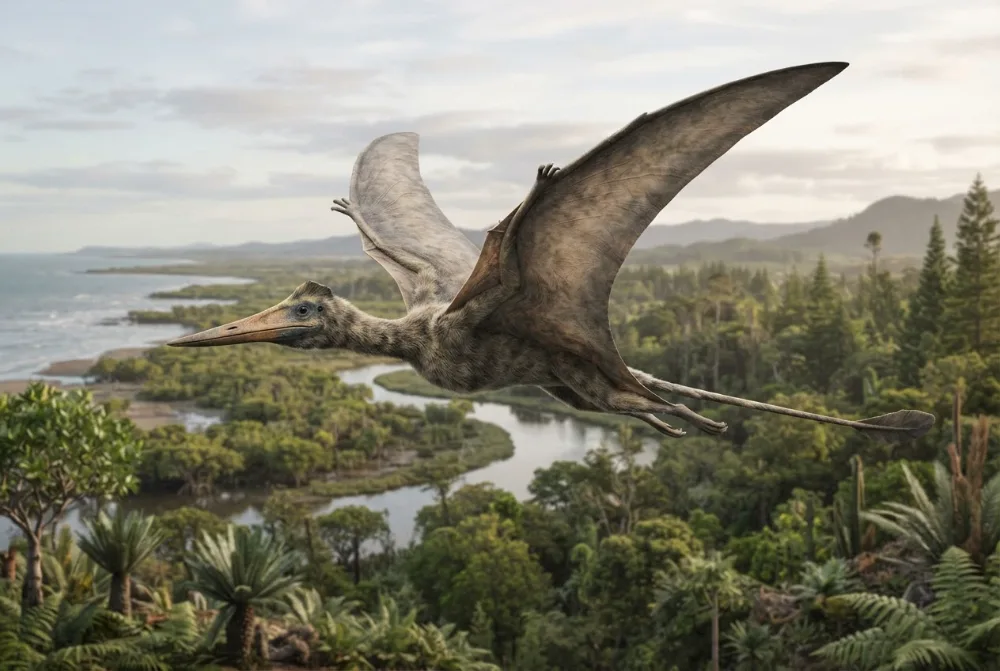
Alamodactylus was a flying reptile that soared over Texas about 88 million years ago. It had long, narrow wings and probably glided over the sea to catch fish. It was not a dinosaur, but a pterosaur, a close cousin of dinosaurs.14
Rairarama rini?
Raiva hombe sei?
Mapapiro aro aiva akapamhama zvakadii?
 mapapiro akapamhama semabhasikoro 3 akatevedzana⚽raigona kubhururuka richiyambuka nhandare yose yebhora mumasekonzi 5.5
Alamodactylus raiva hombe sei kana richienzaniswa NEWE?
Masvomhu chete mubrowser yako. Hapana chinochengetwa kana kutumirwa kupi zvako.
Raimhanya zvakadii?


Zvinonakidza
Alamodactylus is known from only one partial wing, including a humerus and other bones, found in Texas.1
Its name means 'Alamo finger' because the fossil was found in Texas, the 'Alamo' state, and pterosaurs often have 'finger' in their names due to their long wing digits.1
Scientists think it was a medium-sized pterosaur, but they don't know its exact size because only a few bones have been found.1
The fossil was first thought to be from a Pteranodon, but later study showed it was a new kind of pterosaur.1
Alamodactylus lived about 89.8 to 88 million years ago, during the Late Cretaceous period.1
Its wing bones show a unique combination of features, like a constricted humerus shaft and a D-shaped cross-section, that set it apart from other pterosaurs.1
Mibvunzo inonyanya kubvunzwa nezve Alamodactylus
?How big was Alamodactylus?
Its wingspan is estimated at about 4 to 5 metres (13 to 16.5 feet), but scientists are not sure because only a few bones have been found.3
?What did Alamodactylus eat?
It was a carnivore and probably caught fish by flying over the sea.3
?When did Alamodactylus live?
It lived about 89.8 to 88 million years ago, during the Late Cretaceous period.1
Mubvisi wengano
Ngano: Alamodactylus was a dinosaur.
Chokwadi: It was a pterosaur, a flying reptile that is a close relative of dinosaurs, but not a dinosaur itself.1
Zvevanyanzvi vemadhino
- Zita resainzi
- Alamodactylus
- Akaripa zita:
- Andres and Myers 20134
- Boka
- Zvinokambaira zvinobhururuka
- Mhuri / boka
- Pteranodontia4
- Kurongwa kwemhuka
- Pterosauria > Pterodactyloidea4
- Zera rematombo
- makore mamiriyoni 90 kusvika 86 (Coniacian)4
- Mapoka ematombo
- Atco4
- Nyika
- Amerika4
- Zvinyorwa zvemafosiri
- 1 mu The Paleobiology Database4
- Kuwanikwa
- The fossil was discovered by Gary Byrd, who it is named after, and first described in 2010. It was given its own genus and species name, Alamodactylus byrdi, by Brian Andres and Timothy Myers in 2013.1
- Zvichiri kupokanwa
- Scientists still debate exactly where Alamodactylus fits in the pterosaur family tree. Some studies place it close to Pteranodon, while others put it in the Nyctosauridae group.1
Kunobva chokwadi
- Alamodactylus (en.wikipedia.org)
- Alamodactylus byrdi | Pterosaur Database by DinoAnimals.com (dinoanimals.com)
- Alamodactylus — Pteros (pteros.com)
- Alamodactylus in The Paleobiology Database (CC BY 4.0): zera, nzvimbo, mapoka ematombo, kurongwa kwemhuka.
Chokwadi chega chega papeji ino chine nhamba inoratidza kwachakabva. Kana takakanganisa chimwe chinhu, ruregerero, tiri vanoda madhino, kwete magazini yesainzi. Tiudze pa [email protected] tichazvigadzirisa.
 Rex ane nzara! Dino Wiki ipurojekiti yababa yemwanakomana wavo anoda madhino, mahara, pasina kushambadza uye pasina zvinokutevera. Vakuru vanogona kupa Rex chekudyadya kuti vabatsire kuchengeta saiti iri pamhepo.Fudza Rex
 Pteranodon
 Quetzalcoatlus
 Dorygnathus
 Rhamphorhynchus
 Anhanguera
 Pterodactylus
 Tyrannosaurus
 Triceratops
 Velociraptor
 Spinosaurus
 Ankylosaurus
 Parasaurolophus