 Uri dhino ripi? Kwizi
 Hondo yemadhino
 Mujaho wemadhino
 Mitambo midiki yemadhino
 Arubhamu yemasitika
 Rondedzero dzeTOP dzemadhino
 Ndishamise!
Rairarama rini?

Raiva hombe sei?
Raiva refu zvakadii?
Raiva rakakwirira zvakadii?
Rairema zvakadii?
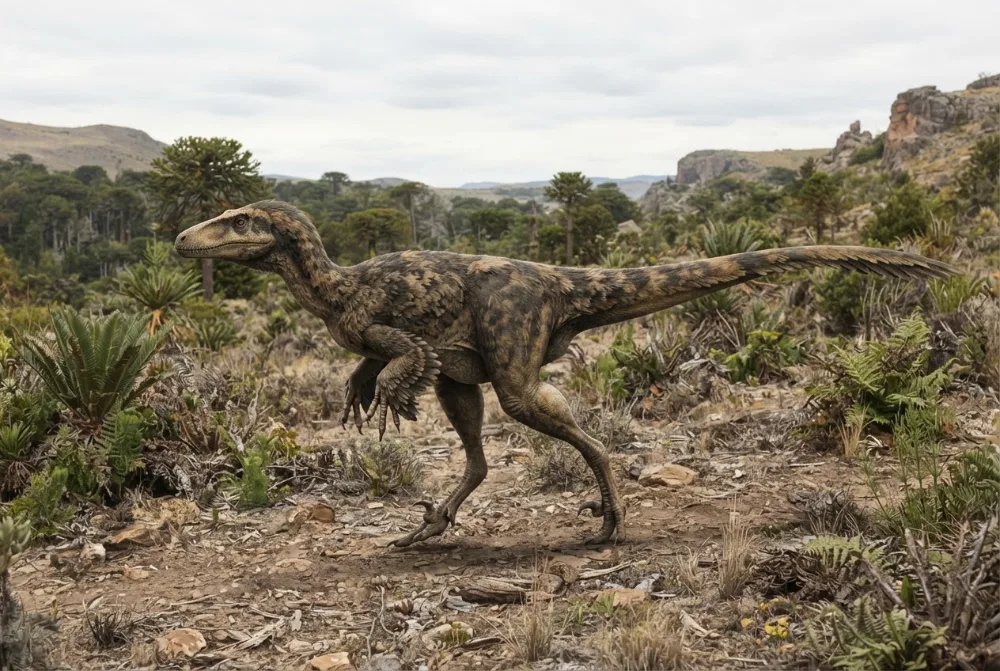
 kureba seimbwa 3 kubva pamhino kusvika kumuswe🍌kureba semabhanana 17 akatevedzana
 kurema sekatsi dzemumba 11🍉kurema semanwiwa 9🧸kurema sevana vekireshi 2.5🎒kurema sevana vechikoro 1.5🏃raigona kumhanya mamita 100 mumasekonzi 7.5 (munhu anomhanya kupfuura vose anoda 9.6)
Aniksosaurus raiva hombe sei kana richienzaniswa NEWE?
Masvomhu chete mubrowser yako. Hapana chinochengetwa kana kutumirwa kupi zvako.
Raimhanya zvakadii?


Zvinonakidza
Aniksosaurus means 'spring lizard' because it was discovered on September 21, 1995, the first day of spring in the Southern Hemisphere.1
Its shin bone (tibia) was about 13% longer than its thigh bone (femur), which helped it run fast.1
Fossils of at least four Aniksosaurus individuals were found together, suggesting they may have lived in groups.1
The type specimen includes a right hind leg with the foot still attached, found in green sandstone.1
Aniksosaurus lived about 96 to 91 million years ago during the Late Cretaceous period.1
Scientists think the individuals found were juveniles or sub-adults, about three years old when they died.1
Mibvunzo inonyanya kubvunzwa nezve Aniksosaurus
?How big was Aniksosaurus?
Aniksosaurus was about 2 to 3 metres long and weighed between 35 and 65 kilograms. It stood about 70 centimetres tall at the hip.1
?Did Aniksosaurus live in groups?
Yes, scientists think Aniksosaurus may have lived in groups. Fossils of at least five individuals were found together, and studies suggest they were gregarious, especially as sub-adults.1
?What did Aniksosaurus eat?
Aniksosaurus was a meat-eating dinosaur (a theropod). It likely hunted small animals, though its exact diet is not known from fossils.1
?How fast could Aniksosaurus run?
Aniksosaurus had a shin bone 13% longer than its thigh bone, which is a sign of good running ability. Scientists think it was a fast runner, but no exact speed is known.1
Zvevanyanzvi vemadhino
- Zita resainzi
- Aniksosaurus
- Akaripa zita:
- Martínez and Novas 20062
- Boka
- Madhino anodya nyama
- Mhuri / boka
- Compsognathidae2
- Kurongwa kwemhuka
- Theropoda > Compsognathidae2
- Zera rematombo
- makore mamiriyoni 100 kusvika 90 (Cenomanian / Turonian)2
- Mapoka ematombo
- Bajo Barreal2
- Nyika
- Ajentina2
- Zvinyorwa zvemafosiri
- 1 mu The Paleobiology Database2
- Kuwanikwa
- Aniksosaurus was named by Rubén Dario Martínez and Fernando Emilio Novas in 2006. The first fossils were found in 1995 in the Bajo Barreal Formation of Patagonia, Argentina.1
- Zvichiri kupokanwa
- Scientists are not sure exactly where Aniksosaurus fits in the dinosaur family tree. Some think it is a compsognathid, others a maniraptoromorph or a megaraptoran.1
Kunobva chokwadi
- Aniksosaurus (en.wikipedia.org)
- Aniksosaurus in The Paleobiology Database (CC BY 4.0): zera, nzvimbo, mapoka ematombo, kurongwa kwemhuka.
Chokwadi chega chega papeji ino chine nhamba inoratidza kwachakabva. Kana takakanganisa chimwe chinhu, ruregerero, tiri vanoda madhino, kwete magazini yesainzi. Tiudze pa [email protected] tichazvigadzirisa.
 Rex ane nzara! Dino Wiki ipurojekiti yababa yemwanakomana wavo anoda madhino, mahara, pasina kushambadza uye pasina zvinokutevera. Vakuru vanogona kupa Rex chekudyadya kuti vabatsire kuchengeta saiti iri pamhepo.Fudza Rex
 Allosaurus
 Carnotaurus
 Dilophosaurus
 Giganotosaurus
 Compsognathus
 Paronychodon
 Tyrannosaurus
 Triceratops
 Velociraptor
 Spinosaurus
 Ankylosaurus
 Parasaurolophus