 Uri dhino ripi? Kwizi
 Hondo yemadhino
 Mujaho wemadhino
 Mitambo midiki yemadhino
 Arubhamu yemasitika
 Rondedzero dzeTOP dzemadhino
 Ndishamise!
Rairarama rini?

Raiva hombe sei?
Raiva refu zvakadii?
Raiva rakakwirira zvakadii?
fungidziro
Rairema zvakadii?
 kureba sekatsi dzemumba 4 kubva pamhino kusvika kumuswe🍌kureba semabhanana 11 akatevedzana🍉kurema semanwiwa 6🏃raigona kumhanya mamita 100 mumasekonzi 9 (munhu anomhanya kupfuura vose anoda 9.6)
Aristosuchus raiva hombe sei kana richienzaniswa NEWE?
Masvomhu chete mubrowser yako. Hapana chinochengetwa kana kutumirwa kupi zvako.
Raimhanya zvakadii?


Zvinonakidza
Aristosuchus was first thought to be a crocodile, but scientists later realized it was a dinosaur.1
The only known fossil of Aristosuchus is a set of bones from the hips and tail, found by a reverend named William D. Fox.1
Its name means 'best crocodile' in Greek, even though it was not a crocodile at all.1
Aristosuchus was about the size of a large dog, around 2 metres (6.6 feet) long.1
It lived on the Isle of Wight, which at the time was a warm, swampy place full of dinosaurs.1
Scientists are not sure exactly how much Aristosuchus weighed; estimates range from 7 to 30 kilograms (15 to 66 pounds).1
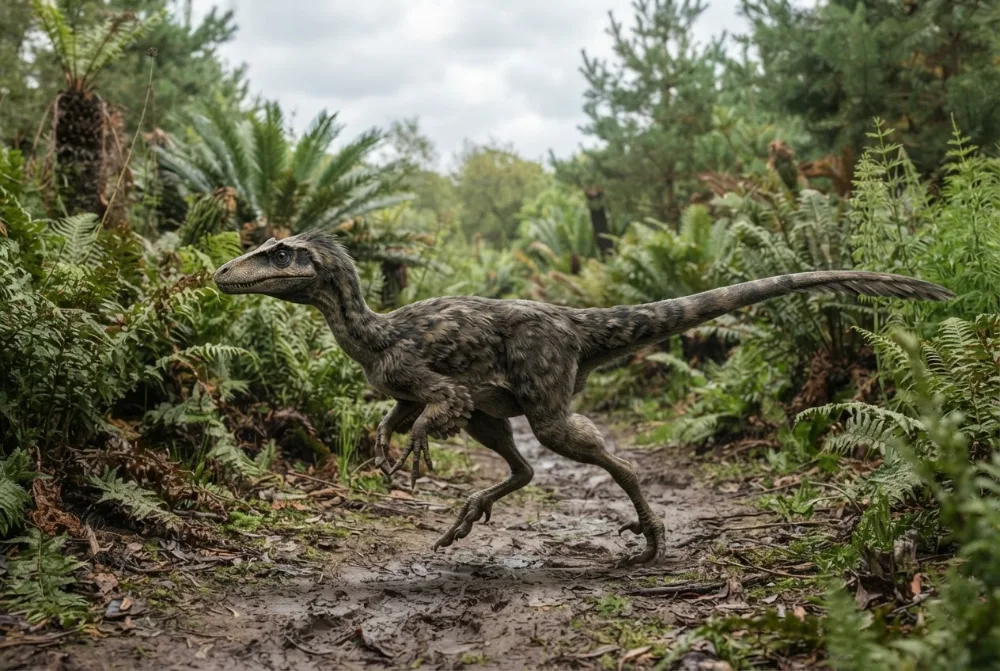
Mibvunzo inonyanya kubvunzwa nezve Aristosuchus
?How big was Aristosuchus?
About 2 metres (6.6 feet) long. Its weight is uncertain: estimates range from 7 to 30 kilograms (15 to 66 pounds).1
?What did Aristosuchus eat?
It was a meat-eater (carnivore) that hunted small animals in its environment.13
?Why is it called Aristosuchus?
Its name means 'best crocodile' in Greek, because scientists first thought it was a crocodile. Later they learned it was a dinosaur.1
?Where did Aristosuchus live?
It lived on the Isle of Wight in England, which was a warm, swampy floodplain with rivers and lakes during the Early Cretaceous.1
Mubvisi wengano
Ngano: Aristosuchus was a crocodile.
Chokwadi: Aristosuchus was actually a small theropod dinosaur, not a crocodile. Early scientists mistook it for a crocodile because of its name and some bone features.1
Zvevanyanzvi vemadhino
- Zita resainzi
- Aristosuchus
- Akaripa zita:
- Seeley 18874
- Boka
- Madhino anodya nyama
- Mhuri / boka
- Compsognathidae4
- Kurongwa kwemhuka
- Theropoda > Compsognathidae4
- Zera rematombo
- makore mamiriyoni 126 kusvika 120 (Barremian / Aptian)4
- Nyika
- United Kingdom4
- Zvinyorwa zvemafosiri
- 1 mu The Paleobiology Database4
- Kuwanikwa
- The fossils were discovered by Reverend William D. Fox on the Isle of Wight, England. Richard Owen first named them Poekilopleuron pusillus in 1876, but Harry Govier Seeley gave them the new name Aristosuchus in 1887.1
- Zvichiri kupokanwa
- Scientists still debate whether Aristosuchus is really a distinct species or if its fossils belong to another dinosaur.2
Kunobva chokwadi
- Aristosuchus (en.wikipedia.org)
- The historical taxonomy of the Lower Cretaceous theropods (Dinosauria) Calamospondylus and Aristosuchus from the Isle of Wight (darrennaish.wordpress.com)
- Aristosuchus, an Isle of Wight tyrannosauroid? - DinoWight (dinowight.org.uk)
- Aristosuchus in The Paleobiology Database (CC BY 4.0): zera, nzvimbo, mapoka ematombo, kurongwa kwemhuka.
Chokwadi chega chega papeji ino chine nhamba inoratidza kwachakabva. Kana takakanganisa chimwe chinhu, ruregerero, tiri vanoda madhino, kwete magazini yesainzi. Tiudze pa [email protected] tichazvigadzirisa.
 Rex ane nzara! Dino Wiki ipurojekiti yababa yemwanakomana wavo anoda madhino, mahara, pasina kushambadza uye pasina zvinokutevera. Vakuru vanogona kupa Rex chekudyadya kuti vabatsire kuchengeta saiti iri pamhepo.Fudza Rex
 Allosaurus
 Carnotaurus
 Dilophosaurus
 Giganotosaurus
 Compsognathus
 Paronychodon
 Stegosaurus
 Iguanodon
 Archaeopteryx
 Microraptor
 Deinonychus
 Baryonyx