 Uri dhino ripi? Kwizi
 Hondo yemadhino
 Mujaho wemadhino
 Mitambo midiki yemadhino
 Arubhamu yemasitika
 Rondedzero dzeTOP dzemadhino
 Ndishamise!
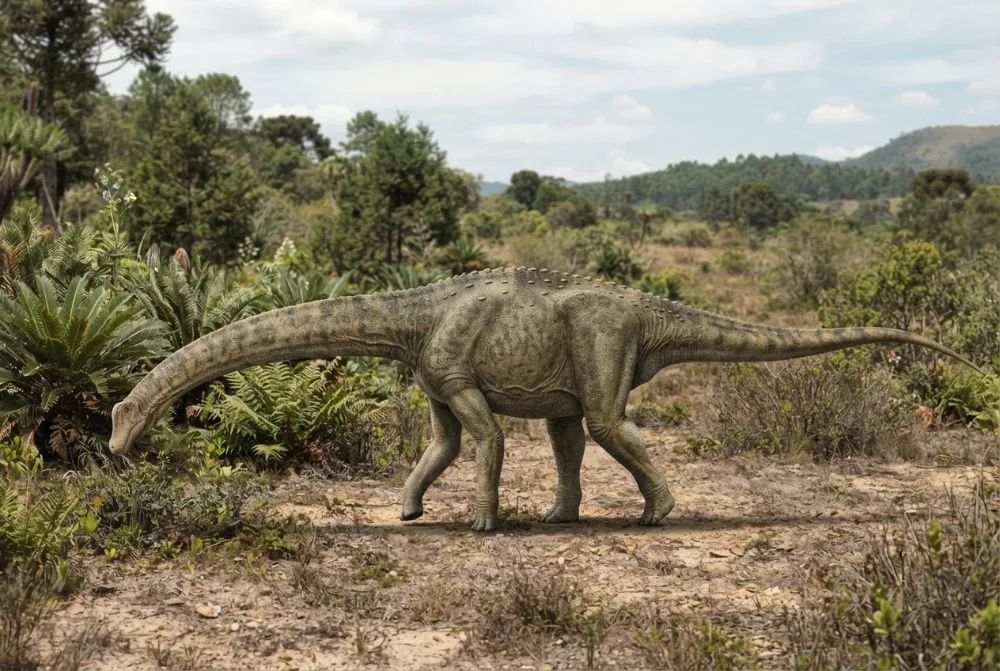
Arrudatitan
Arrudatitan was a huge, long-necked plant-eater that lived in Brazil during the Late Cretaceous. It was a titanosaur, a group of sauropods that included some of the biggest land animals ever. Even though it was giant, Arrudatitan was more slender and graceful than many of its relatives.1
Rairarama rini?
Raiva hombe sei?
Raiva refu zvakadii?
Raiva rakakwirira zvakadii?
fungidziro
Rairema zvakadii?

 kureba semotokari 3 dzakamiswa dzakatevedzana🍌kureba semabhanana 83 akatevedzanakurema semotokari 8🍉kurema semanwiwa 2500🎒kurema semakirasi 15 akazara evana vechikoro🐻❄️kurema semabere echando 27🏃raigona kumhanya mamita 100 mumasekonzi 26 (munhu anomhanya kupfuura vose anoda 9.6)
Arrudatitan raiva hombe sei kana richienzaniswa NEWE?
Masvomhu chete mubrowser yako. Hapana chinochengetwa kana kutumirwa kupi zvako.
Raimhanya zvakadii?


Zvinonakidza
Arrudatitan was first thought to be a species of Aeolosaurus, but scientists later gave it its own genus name in 2021.12
The first fossils were found in 1997 by a farmer and his 12-year-old nephew in a field in Cândido Rodrigues, Brazil.1
Its femur (thigh bone) was 1.55 metres (5.1 feet) long, which helps scientists estimate its total length at about 15 metres (49 feet).1
Crocodylomorph and theropod teeth were found near the Arrudatitan skeleton, but there were no bite marks on the bones.1
Arrudatitan lived during the Campanian to Maastrichtian stages of the Late Cretaceous, about 72 to 68 million years ago.1
The name Arrudatitan honors Brazilian paleontologist Antônio Celso de Arruda Campos.1
Mibvunzo inonyanya kubvunzwa nezve Arrudatitan
?How big was Arrudatitan?
Arrudatitan grew up to about 15 metres (49 feet) long, based on its fossils. Its thigh bone was 1.55 metres (5.1 feet) long.1
?What did Arrudatitan eat?
It was a plant-eater, or herbivore. As a titanosaur sauropod, it ate plants.4
?When did Arrudatitan live?
Arrudatitan lived during the Late Cretaceous, about 72 to 68 million years ago.1
?Where was Arrudatitan found?
Its fossils were found in the Adamantina Formation of Brazil, in a field near Cândido Rodrigues.1
Zvevanyanzvi vemadhino
- Zita resainzi
- Arrudatitan
- Akaripa zita:
- Silva Junior et al. 20224
- Boka
- Madhino emitsipa mirefu
- Mhuri / boka
- Rinconsauria4
- Kurongwa kwemhuka
- Sauropodomorpha > Sauropoda > Titanosauria > Macronaria4
- Zera rematombo
- makore mamiriyoni 84 kusvika 66 (Campanian / Maastrichtian)4
- Mapoka ematombo
- Adamantina4
- Nyika
- Brazil4
- Zvinyorwa zvemafosiri
- 1 mu The Paleobiology Database4
- Kuwanikwa
- The first fossils were found in 1997 by Ademir Frare and his 12-year-old nephew Luiz Augusto dos Santos Frare in a field in Cândido Rodrigues, Brazil. They told paleontologist Antônio Celso de Arruda Campos, and the bones were collected by staff of the Museu de Paleontologia de Monte Alto. The species was first named Aeolosaurus maximus in 2011, but moved to its own genus Arrudatitan in 2021.1
- Zvichiri kupokanwa
- Scientists are still debating exactly how Arrudatitan is related to other titanosaurs, and whether it belongs in the group Rinconsauria or is closer to other South American giants.14
Kunobva chokwadi
- Arrudatitan (en.wikipedia.org)
- Reassessment of Aeolosaurus maximus, a titanosaur dinosaur from the Late Cretaceous of Southeastern Brazil (exa.ai)
- Arrudatitan maximus | Dinosaur Database by DinoAnimals.com (dinoanimals.com)
- Arrudatitan in The Paleobiology Database (CC BY 4.0): zera, nzvimbo, mapoka ematombo, kurongwa kwemhuka.
Chokwadi chega chega papeji ino chine nhamba inoratidza kwachakabva. Kana takakanganisa chimwe chinhu, ruregerero, tiri vanoda madhino, kwete magazini yesainzi. Tiudze pa [email protected] tichazvigadzirisa.
 Rex ane nzara! Dino Wiki ipurojekiti yababa yemwanakomana wavo anoda madhino, mahara, pasina kushambadza uye pasina zvinokutevera. Vakuru vanogona kupa Rex chekudyadya kuti vabatsire kuchengeta saiti iri pamhepo.Fudza Rex
 Brachiosaurus
 Diplodocus
 Brontosaurus
 Argentinosaurus
 Camarasaurus
 Morosaurus
 Tyrannosaurus
 Triceratops
 Velociraptor
 Spinosaurus
 Ankylosaurus
 Parasaurolophus