 Uri dhino ripi? Kwizi
 Hondo yemadhino
 Mujaho wemadhino
 Mitambo midiki yemadhino
 Arubhamu yemasitika
 Rondedzero dzeTOP dzemadhino
 Ndishamise!
Rairarama rini?

Raiva hombe sei?
Raiva refu zvakadii?
Raiva rakakwirira zvakadii?
 kureba seimbwa 4 kubva pamhino kusvika kumuswe🍌kureba semabhanana 19 akatevedzana🏃raigona kumhanya mamita 100 mumasekonzi 7.2 (munhu anomhanya kupfuura vose anoda 9.6)
Bagaraatan raiva hombe sei kana richienzaniswa NEWE?
Masvomhu chete mubrowser yako. Hapana chinochengetwa kana kutumirwa kupi zvako.
Raimhanya zvakadii?


Zvinonakidza
Bagaraatan had a tail that was not very flexible near the body, because many bones in the tail were locked together.2
The first fossil of Bagaraatan was found in 1970 by Zofia Kielan-Jaworowska during a Polish-Mongolian expedition.2
At first, scientists thought Bagaraatan was a mix of different dinosaur parts, but later studies showed it is likely a small relative of Tyrannosaurus.1
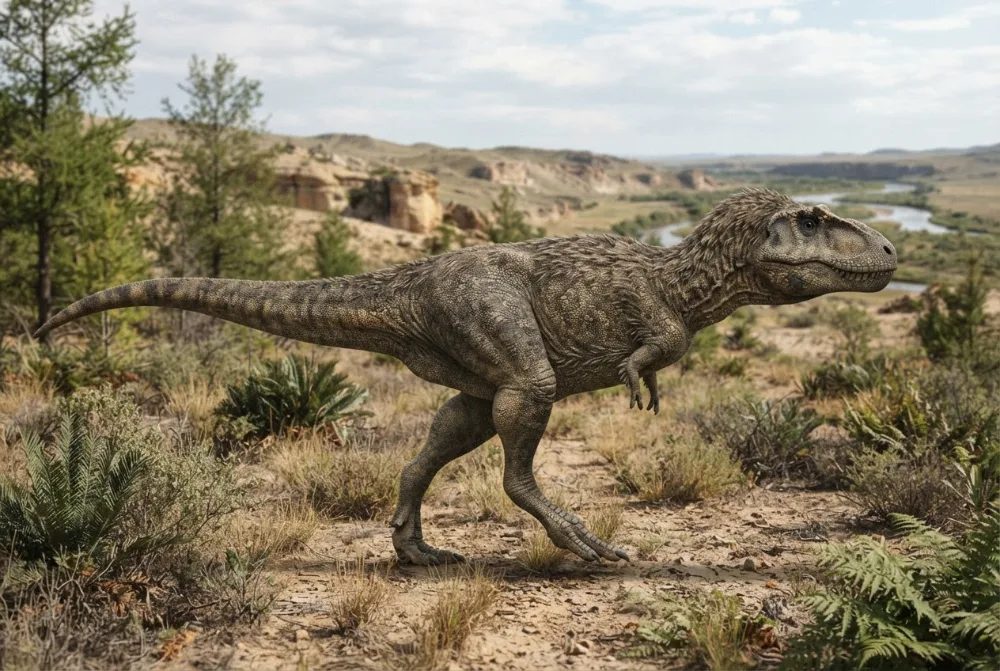
Bagaraatan was about 3 to 3.5 meters long, which is similar to a large Deinonychus.2
The shin and ankle bones of Bagaraatan were fused together, giving it a strong lower leg.2
Bagaraatan had two holes in the back part of its lower jaw, which is unusual among theropod dinosaurs.2
Mibvunzo inonyanya kubvunzwa nezve Bagaraatan
?How big was Bagaraatan?
About 3 to 3.5 metres (10 to 11.5 feet) long, which is about as long as a small car. It stood less than 1 metre (3.3 feet) tall at the hips.12
?What did Bagaraatan eat?
It was a meat-eater. It had strong jaws with sharp teeth and long legs for chasing prey, so it was probably an active predator or scavenger.2
?Was Bagaraatan a dinosaur?
Yes, it was a theropod dinosaur from the Late Cretaceous period. It lived in what is now Mongolia.1
Mubvisi wengano
Ngano: Bagaraatan was a bird-like dinosaur with feathers.
Chokwadi: Scientists have not found any evidence of feathers for Bagaraatan, and it is now thought to be a small tyrannosaurid, which probably had scaly skin like other tyrannosaurs.1
Zvevanyanzvi vemadhino
- Zita resainzi
- Bagaraatan
- Akaripa zita:
- Osmólska 19964
- Boka
- Matiranosauro
- Mhuri / boka
- Tyrannosauridae4
- Kurongwa kwemhuka
- Theropoda > Tyrannosauroidea > Tyrannosauridae4
- Zera rematombo
- makore mamiriyoni 72 kusvika 66 (Maastrichtian)4
- Mapoka ematombo
- Nemegt4
- Nyika
- Mongolia4
- Zvinyorwa zvemafosiri
- 1 mu The Paleobiology Database4
- Kuwanikwa
- Bagaraatan was named in 1996 by Halszka Osmólska based on a partial skeleton found in Mongolia. The skeleton was discovered by Zofia Kielan-Jaworowska in 1970.42
- Zvichiri kupokanwa
- Scientists are still debating whether Bagaraatan is a true tyrannosaurid or a close relative, and whether the fossils include bones from more than one animal.1
Kunobva chokwadi
- Bagaraatan (en.wikipedia.org)
- An unusual theropod dinosaur from the Late Cretaceous Nemegt Formation of Mongolia (app.pan.pl)
- Reassessment of the enigmatic Late Cretaceous theropod dinosaur, Bagaraatan ostromi | Zoological Journal of the Linnean Society | Oxford Academic (academic.oup.com)
- Bagaraatan in The Paleobiology Database (CC BY 4.0): zera, nzvimbo, mapoka ematombo, kurongwa kwemhuka.
Chokwadi chega chega papeji ino chine nhamba inoratidza kwachakabva. Kana takakanganisa chimwe chinhu, ruregerero, tiri vanoda madhino, kwete magazini yesainzi. Tiudze pa [email protected] tichazvigadzirisa.
 Rex ane nzara! Dino Wiki ipurojekiti yababa yemwanakomana wavo anoda madhino, mahara, pasina kushambadza uye pasina zvinokutevera. Vakuru vanogona kupa Rex chekudyadya kuti vabatsire kuchengeta saiti iri pamhepo.Fudza Rex
 Tyrannosaurus
 Tarbosaurus
 Albertosaurus
 Daspletosaurus
 Gorgosaurus
 Alectrosaurus
 Triceratops
 Velociraptor
 Spinosaurus
 Ankylosaurus
 Parasaurolophus
 Pteranodon