 Uri dhino ripi? Kwizi
 Hondo yemadhino
 Mujaho wemadhino
 Mitambo midiki yemadhino
 Arubhamu yemasitika
 Rondedzero dzeTOP dzemadhino
 Ndishamise!
Bannykus
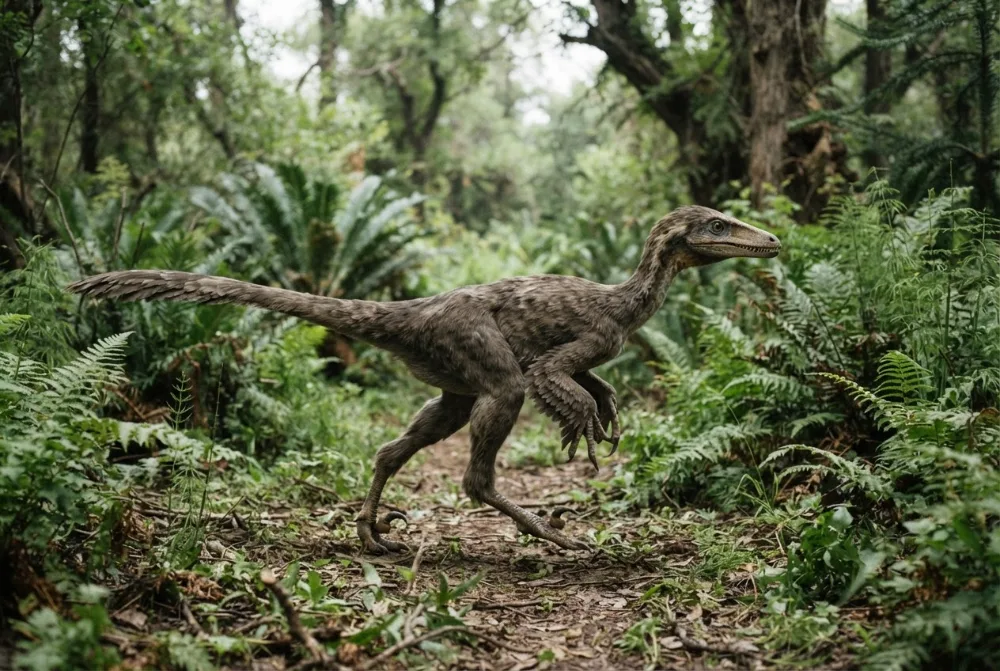
Bannykus was a meat-eating dinosaur about the size of a large dog. It lived during the Early Cretaceous period, around 125 to 113 million years ago, in what is now Inner Mongolia, China. Bannykus is special because its arms are halfway between those of earlier, longer-armed alvarezsaurians and later ones with very short arms.123
Rairarama rini?
Raiva hombe sei?
Raiva refu zvakadii?
Raiva rakakwirira zvakadii?
fungidziro
Rairema zvakadii?

 kureba seimbwa 3 kubva pamhino kusvika kumuswe🍌kureba semabhanana 15 akatevedzana🍉kurema semanwiwa 6🏃raigona kumhanya mamita 100 mumasekonzi 7.8 (munhu anomhanya kupfuura vose anoda 9.6)
Bannykus raiva hombe sei kana richienzaniswa NEWE?
Masvomhu chete mubrowser yako. Hapana chinochengetwa kana kutumirwa kupi zvako.
Raimhanya zvakadii?


Zvinonakidza
Bannykus lived about 125 to 113 million years ago during the Aptian age of the Early Cretaceous.3
Its arm bones are halfway between the longer arms of older alvarezsaurian dinosaurs and the very short, strong arms of later ones like Shuvuuia.12
The only known Bannykus skeleton belonged to an 8-year-old sub-adult that still had some growing to do.1
Its thumb, or digit II, was much larger than its ring finger, or digit IV, but not as extreme as in later alvarezsaurids.1
Bannykus could move its arms in many directions and probably used them for different kinds of digging.2
Scientists found the fossil in 2009, and in 2012 it was displayed in Japan under the nickname 'Wulatesaurus' before getting its official name in 2018.2
Mibvunzo inonyanya kubvunzwa nezve Bannykus
?What did Bannykus eat?
Bannykus probably ate meat. Scientists found bone fragments in its stomach, which suggests it was a carnivore.2
?How big was Bannykus?
Bannykus was about 2.77 metres (9.1 feet) long and weighed around 24 to 30 kilograms (53 to 66 pounds). That is about the size of a large dog.2
?Could Bannykus dig?
Yes, Bannykus could probably dig. Its arms were good for different kinds of digging motions, but not as specialized as later relatives.2
Zvevanyanzvi vemadhino
- Zita resainzi
- Bannykus
- Akaripa zita:
- Xu et al. 20184
- Boka
- Madhino anodya nyama
- Mhuri / boka
- Alvarezsauroidea4
- Kurongwa kwemhuka
- Theropoda4
- Zera rematombo
- makore mamiriyoni 121 kusvika 113 (Aptian)4
- Mapoka ematombo
- Bayangobi4
- Nyika
- China4
- Zvinyorwa zvemafosiri
- 1 mu The Paleobiology Database4
- Kuwanikwa
- Bannykus was named in 2018 by Xu Xing and colleagues. The holotype skeleton was found in 2009 at Chaoge, Inner Mongolia, China, and was displayed in Japan in 2012 under the informal name 'Wulatesaurus'.123
Kunobva chokwadi
- Two Early Cretaceous Fossils Document Transitional Stages in Alvarezsaurian Dinosaur Evolution: Current Biology (cell.com)
- Bannykus (en.wikipedia.org)
- PBDB Taxon (paleobiodb.org)
- Bannykus in The Paleobiology Database (CC BY 4.0): zera, nzvimbo, mapoka ematombo, kurongwa kwemhuka.
Chokwadi chega chega papeji ino chine nhamba inoratidza kwachakabva. Kana takakanganisa chimwe chinhu, ruregerero, tiri vanoda madhino, kwete magazini yesainzi. Tiudze pa [email protected] tichazvigadzirisa.
 Rex ane nzara! Dino Wiki ipurojekiti yababa yemwanakomana wavo anoda madhino, mahara, pasina kushambadza uye pasina zvinokutevera. Vakuru vanogona kupa Rex chekudyadya kuti vabatsire kuchengeta saiti iri pamhepo.Fudza Rex
 Allosaurus
 Carnotaurus
 Dilophosaurus
 Giganotosaurus
 Compsognathus
 Paronychodon
 Stegosaurus
 Iguanodon
 Archaeopteryx
 Microraptor
 Deinonychus
 Baryonyx