 Uri dhino ripi? Kwizi
 Hondo yemadhino
 Mujaho wemadhino
 Mitambo midiki yemadhino
 Arubhamu yemasitika
 Rondedzero dzeTOP dzemadhino
 Ndishamise!
Bonapartesaurus
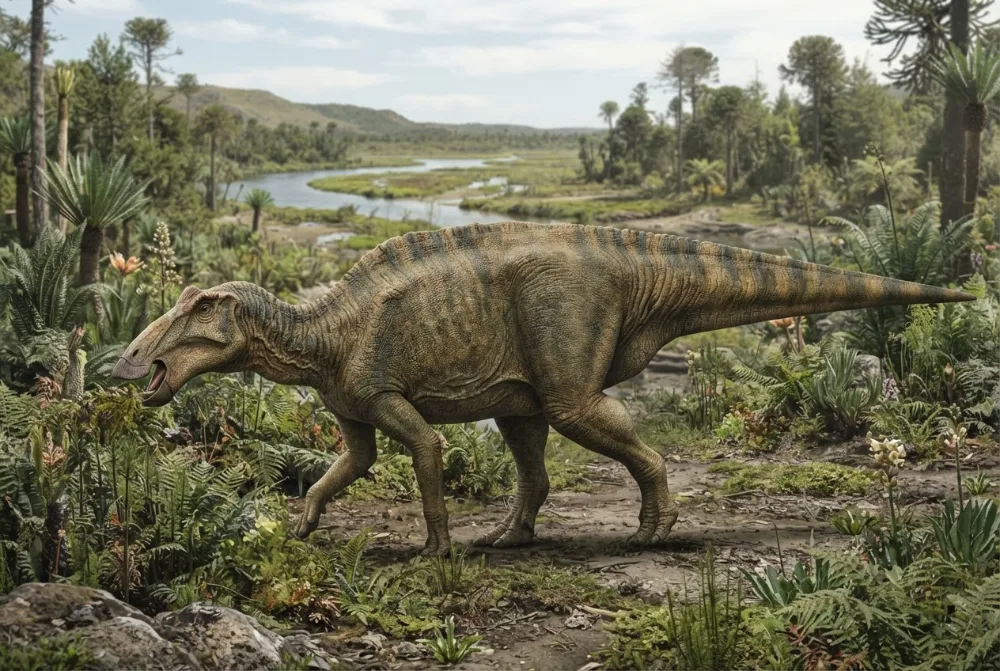
Bonapartesaurus was a duck-billed dinosaur that lived in what is now Argentina, about 72 to 66 million years ago. It walked on two legs or all fours and used its wide, toothless beak to snip off plants. This dinosaur was a hadrosaur, a group known for their amazing teeth that could grind up tough leaves.41
Rairarama rini?
Raiva hombe sei?
Raiva refu zvakadii?
Raiva rakakwirira zvakadii?
fungidziro
Rairema zvakadii?

 kureba seimbwa 7 kubva pamhino kusvika kumuswe🍌kureba semabhanana 38 akatevedzanakurema seimbwa 92🍉kurema semanwiwa 370🧸kurema sevana vekireshi 97🎒kurema sevana vechikoro 58🐻❄️kurema semabere echando 4🏃raigona kumhanya mamita 100 mumasekonzi 13 (munhu anomhanya kupfuura vose anoda 9.6)
Bonapartesaurus raiva hombe sei kana richienzaniswa NEWE?
Masvomhu chete mubrowser yako. Hapana chinochengetwa kana kutumirwa kupi zvako.
Raimhanya zvakadii?


Zvinonakidza
Bonapartesaurus had very long neural spines on its tail vertebrae, up to four times the height of the backbone center. This may have supported a tall tail fin or sail.2
Its name honors José Bonaparte, a famous Argentine paleontologist who discovered many South American dinosaurs.1
The only known skeleton is a partial, articulated specimen that includes parts of the spine, hips, legs, and feet.1
Bonapartesaurus belongs to the group Saurolophini, which includes duck-billed dinosaurs like Saurolophus and Prosaurolophus.42
Scientists think Bonapartesaurus or its ancestors migrated from North America to South America during the Late Cretaceous.2
Mibvunzo inonyanya kubvunzwa nezve Bonapartesaurus
?How big was Bonapartesaurus?
No exact size is given in the sources, but it was a medium-sized hadrosaur, probably around 6 to 8 metres long based on related duck-billed dinosaurs.12
?What did Bonapartesaurus eat?
It was a herbivore that ate plants. It used its wide, toothless beak to snip off leaves and branches, and its cheek teeth ground up tough plant material.1
Zvevanyanzvi vemadhino
- Zita resainzi
- Bonapartesaurus
- Akaripa zita:
- Cruzado-Caballero and Powell 20174
- Boka
- Miromo-yedhadha
- Mhuri / boka
- Hadrosauridae4
- Kurongwa kwemhuka
- Ornithischia > Ornithopoda > Iguanodontia > Hadrosauridae4
- Zera rematombo
- makore mamiriyoni 72 kusvika 66 (Maastrichtian)4
- Mapoka ematombo
- Allen4
- Nyika
- Ajentina4
- Zvinyorwa zvemafosiri
- 1 mu The Paleobiology Database4
- Kuwanikwa
- The fossils were first dug up in 1984 by paleontologist Jaime Powell and his team. In 2017, scientists Cruzado-Caballero and Powell named the new genus Bonapartesaurus after studying the bones.14
- Zvichiri kupokanwa
- Scientists are not sure exactly how Bonapartesaurus is related to other duck-billed dinosaurs, because its skeleton is incomplete.2
Kunobva chokwadi
- Bonapartesaurus (en.wikipedia.org)
- Bonapartesaurus rionegrensis, a new hadrosaurine dinosaur from South America: implications for phylogenetic and biogeographic relations with North America (rid.unrn.edu.ar)
- Bonapartesaurus rionegrensis | Dinosaur Database by DinoAnimals.com (dinoanimals.com)
- Bonapartesaurus in The Paleobiology Database (CC BY 4.0): zera, nzvimbo, mapoka ematombo, kurongwa kwemhuka.
Chokwadi chega chega papeji ino chine nhamba inoratidza kwachakabva. Kana takakanganisa chimwe chinhu, ruregerero, tiri vanoda madhino, kwete magazini yesainzi. Tiudze pa [email protected] tichazvigadzirisa.
 Rex ane nzara! Dino Wiki ipurojekiti yababa yemwanakomana wavo anoda madhino, mahara, pasina kushambadza uye pasina zvinokutevera. Vakuru vanogona kupa Rex chekudyadya kuti vabatsire kuchengeta saiti iri pamhepo.Fudza Rex
 Parasaurolophus
 Edmontosaurus
 Saurolophus
 Hypacrosaurus
 Corythosaurus
 Kritosaurus
 Tyrannosaurus
 Triceratops
 Velociraptor
 Spinosaurus
 Ankylosaurus
 Pteranodon