 Uri dhino ripi? Kwizi
 Hondo yemadhino
 Mujaho wemadhino
 Mitambo midiki yemadhino
 Arubhamu yemasitika
 Rondedzero dzeTOP dzemadhino
 Ndishamise!
Duriavenator
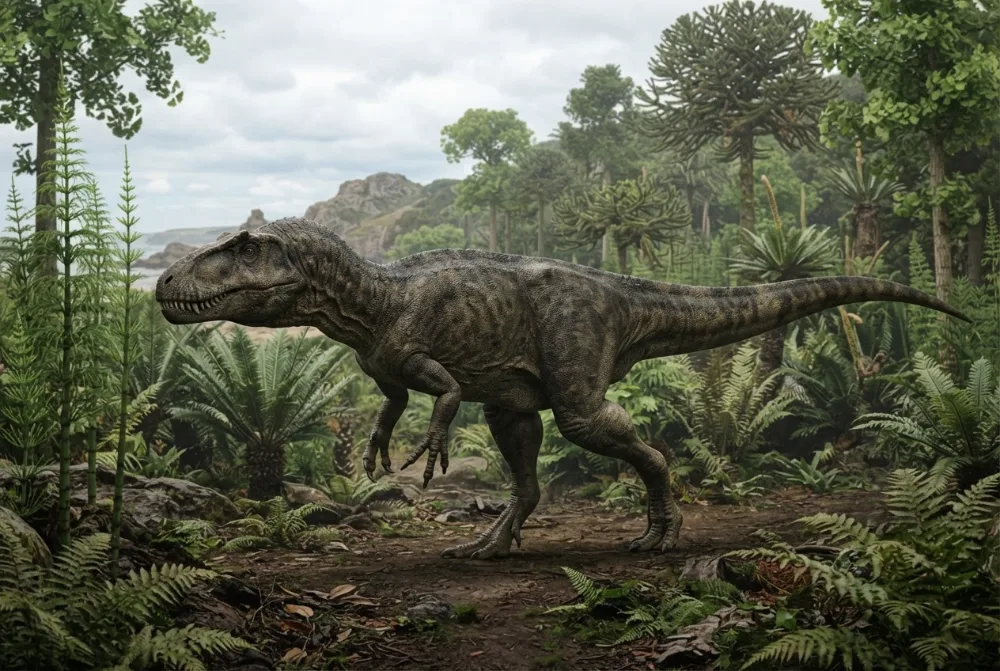
Duriavenator was a meat-eating dinosaur that lived in what is now England about 168 million years ago. It was a medium-sized predator with a big head and strong arms. Scientists think it hunted other dinosaurs like a sneaky ambush predator.1
Rairarama rini?
Raiva hombe sei?
Raiva refu zvakadii?
Raiva rakakwirira zvakadii?
fungidziro
Rairema zvakadii?
 kureba seimbwa 7 kubva pamhino kusvika kumuswe🍌kureba semabhanana 39 akatevedzana🍉kurema semanwiwa 200🧸kurema sevana vekireshi 53🎒kurema sevana vechikoro 31🐻❄️kurema semabere echando 2🏃raigona kumhanya mamita 100 mumasekonzi 10 (munhu anomhanya kupfuura vose anoda 9.6)
Duriavenator raiva hombe sei kana richienzaniswa NEWE?
Masvomhu chete mubrowser yako. Hapana chinochengetwa kana kutumirwa kupi zvako.
Raimhanya zvakadii?


Zvinonakidza
Duriavenator was first thought to be a Megalosaurus, but scientists later gave it its own name in 2008.1
The only known fossils of Duriavenator are parts of its skull and jaws, found in a quarry in 1882.1
Duriavenator had a deep groove on its upper jaw bone with many air-filled holes, which is a unique feature.1
It had about 4 teeth in the front of its upper jaw, 14 to 16 in the back of the upper jaw, and 14 to 15 in the lower jaw.1
The front teeth of Duriavenator were longer and pointed forward, which may have helped it grab food.1
Duriavenator lived during the Middle Jurassic period, about 168 million years ago, making it one of the oldest known tetanuran theropods.1
Mibvunzo inonyanya kubvunzwa nezve Duriavenator
?How big was Duriavenator?
It was about 5 to 7 metres long (16 to 23 feet) and weighed around 1 tonne (2,200 pounds). That is about as heavy as a small car.1
?What did Duriavenator eat?
It was a meat-eater that probably hunted other dinosaurs, like sauropods and stegosaurs. Scientists think it was an ambush predator.1
?When did Duriavenator live?
It lived about 168 million years ago, during the Middle Jurassic period. That is long before T. rex appeared.1
?Where was Duriavenator found?
Its only known fossils were discovered in a quarry near Sherborne in Dorset, England, in 1882. They are now at the Natural History Museum in London.1
Zvevanyanzvi vemadhino
- Zita resainzi
- Duriavenator
- Akaripa zita:
- Benson 20082
- Boka
- Madhino anodya nyama
- Mhuri / boka
- Megalosauridae2
- Kurongwa kwemhuka
- Theropoda2
- Zera rematombo
- makore mamiriyoni 169 kusvika 168 (Bajocian)2
- Mapoka ematombo
- Upper Inferior Oolite2
- Nyika
- United Kingdom2
- Zvinyorwa zvemafosiri
- 1 mu The Paleobiology Database2
- Kuwanikwa
- In 1882, Edward Cleminshaw found skull bones near Sherborne, England. The fossils were first called Megalosaurus, but in 2008 Roger Benson renamed them Duriavenator.1
- Zvichiri kupokanwa
- Scientists are not sure exactly how big Duriavenator was because only a few skull bones have been found. The size estimates are based on related dinosaurs.1
Kunobva chokwadi
- Duriavenator (en.wikipedia.org)
- Duriavenator in The Paleobiology Database (CC BY 4.0): zera, nzvimbo, mapoka ematombo, kurongwa kwemhuka.
Chokwadi chega chega papeji ino chine nhamba inoratidza kwachakabva. Kana takakanganisa chimwe chinhu, ruregerero, tiri vanoda madhino, kwete magazini yesainzi. Tiudze pa [email protected] tichazvigadzirisa.
 Rex ane nzara! Dino Wiki ipurojekiti yababa yemwanakomana wavo anoda madhino, mahara, pasina kushambadza uye pasina zvinokutevera. Vakuru vanogona kupa Rex chekudyadya kuti vabatsire kuchengeta saiti iri pamhepo.Fudza Rex
 Allosaurus
 Carnotaurus
 Dilophosaurus
 Giganotosaurus
 Compsognathus
 Paronychodon
 Ichthyosaurus
 Khudiakovia
 Ophthalmosaurus
 Pterodactylus
 Peloneustes
 Rhamphocephalus