 Uri dhino ripi? Kwizi
 Hondo yemadhino
 Mujaho wemadhino
 Mitambo midiki yemadhino
 Arubhamu yemasitika
 Rondedzero dzeTOP dzemadhino
 Ndishamise!
Ophthalmosaurus
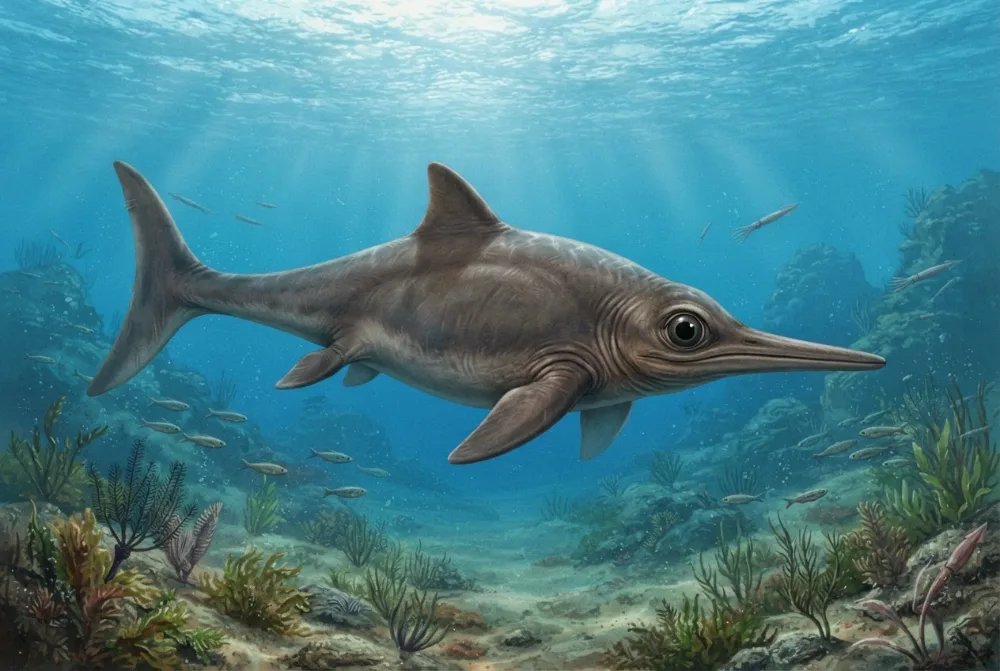
Ophthalmosaurus was a sleek, fast-swimming marine reptile with enormous eyes, almost as big as dinner plates. It lived in the warm seas of the Jurassic period and hunted small fish and squid. Even though it looked like a dolphin, it was actually an ichthyosaur, not a dinosaur.1
Rairarama rini?
Raiva hombe sei?
Raiva refu zvakadii?
Rairema zvakadii?
 kureba seimbwa 4 kubva pamhino kusvika kumuswe🍌kureba semabhanana 22 akatevedzana🍉kurema semanwiwa 190🧸kurema sevana vekireshi 50🎒kurema sevana vechikoro 30🐻❄️kurema semabere echando 2🏊raigona kushambira kureba kwedziva guru rekushambira (50 m) mumasekonzi 4
Ophthalmosaurus raiva hombe sei kana richienzaniswa NEWE?
Masvomhu chete mubrowser yako. Hapana chinochengetwa kana kutumirwa kupi zvako.
Raimhanya zvakadii?


Zvinonakidza
Ophthalmosaurus had eyes that measured about 22 to 23 centimetres (8.7 to 9.1 inches) across, which is bigger than a human head.1
It could dive to depths of 600 metres (2,000 feet) or more, reaching the twilight zone of the ocean, and stay underwater for about 20 minutes.1
Its tail ended in a two-lobed fin, with the lower half supported by the backbone and the upper half made only of soft tissue, helping it swim fast.1
Ophthalmosaurus had short, rounded limbs, with the front ones bigger than the back ones, which it used for steering rather than paddling.1
Fossils show it lived in shallow seas, like the Oxford Clay in England, which was only about 50 metres (160 feet) deep at the time.1
Some scientists think Ophthalmosaurus could swim at about 2 metres per second (6.6 feet per second) when chasing prey.1
Mubvisi wengano
Ngano: Ophthalmosaurus was a dinosaur that lived in the water.
Chokwadi: Ophthalmosaurus was an ichthyosaur, a marine reptile, not a dinosaur. Ichthyosaurs were a different group of reptiles that lived in the oceans.1
Zvevanyanzvi vemadhino
- Zita resainzi
- Ophthalmosaurus
- Akaripa zita:
- Seeley 18742
- Boka
- Maikitiyosauro
- Mhuri / boka
- Ophthalmosauridae2
- Kurongwa kwemhuka
- Ichthyosauria > Ichthyosauromorpha2
- Zera rematombo
- makore mamiriyoni 201 kusvika 133 (Hettangian / Valanginian)2
- Mapoka ematombo
- Oxford Clay, Sundance, Vaca Muerta2
- Nyika
- United Kingdom, Ajentina, Amerika, Russia, France, Greenland2
- Zvinyorwa zvemafosiri
- 27 mu The Paleobiology Database2
- Rinonziwo
- Ancanamunia, Yasykovia (mazita ekare zvino oonekwa semhuka imwe chete)2
- Kuwanikwa
- Ophthalmosaurus was first described by Harry Seeley in 1874, based on fossils from the Oxford Clay in England. He focused on the shape of the collarbone bones.12
- Zvichiri kupokanwa
- Scientists still debate whether some species, like Ophthalmosaurus natans from North America, are really separate species or just close relatives.1
Kunobva chokwadi
- Ophthalmosaurus (en.wikipedia.org)
- Ophthalmosaurus in The Paleobiology Database (CC BY 4.0): zera, nzvimbo, mapoka ematombo, kurongwa kwemhuka.
Chokwadi chega chega papeji ino chine nhamba inoratidza kwachakabva. Kana takakanganisa chimwe chinhu, ruregerero, tiri vanoda madhino, kwete magazini yesainzi. Tiudze pa [email protected] tichazvigadzirisa.
 Rex ane nzara! Dino Wiki ipurojekiti yababa yemwanakomana wavo anoda madhino, mahara, pasina kushambadza uye pasina zvinokutevera. Vakuru vanogona kupa Rex chekudyadya kuti vabatsire kuchengeta saiti iri pamhepo.Fudza Rex
 Ichthyosaurus
 Platypterygius
 Stenopterygius
 Khudiakovia
 Chonespondylus
 Cymbospondylus
 Pterodactylus
 Peloneustes
 Rhamphocephalus
 Gongbusaurus
 Shunosaurus
 Bishanopliosaurus