 Uri dhino ripi? Kwizi
 Hondo yemadhino
 Mujaho wemadhino
 Mitambo midiki yemadhino
 Arubhamu yemasitika
 Rondedzero dzeTOP dzemadhino
 Ndishamise!
Dysalotosaurus
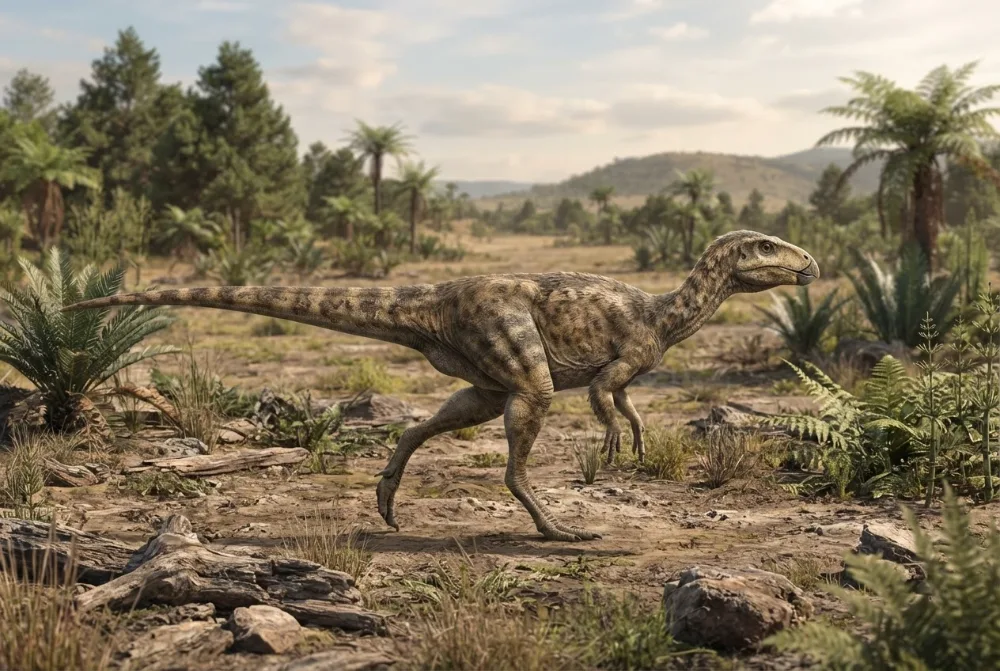
Dysalotosaurus was a small, fast plant-eater that lived in Africa during the Late Jurassic. It ran on two strong legs and had a long tail to help it balance. Thousands of its bones have been found together, suggesting it lived in big herds.1
Rairarama rini?
Raiva hombe sei?
Raiva refu zvakadii?
Raiva rakakwirira zvakadii?
fungidziro
Rairema zvakadii?
 kureba seimbwa 2.5 kubva pamhino kusvika kumuswe🍌kureba semabhanana 14 akatevedzana🍉kurema semanwiwa 16🧸kurema sevana vekireshi 4🎒kurema sevana vechikoro 2.5🏃raigona kumhanya mamita 100 mumasekonzi 7.8 (munhu anomhanya kupfuura vose anoda 9.6)
Dysalotosaurus raiva hombe sei kana richienzaniswa NEWE?
Masvomhu chete mubrowser yako. Hapana chinochengetwa kana kutumirwa kupi zvako.
Raimhanya zvakadii?


Zvinonakidza
Dysalotosaurus lived about 152 to 149 million years ago, during the Kimmeridgian stage of the Late Jurassic.2
Thousands of Dysalotosaurus bones have been found in Tanzania, and scientists think a whole herd died together in a single event.1
Dysalotosaurus had a life expectancy of about 20 years and lived in mixed-age herds.1
Young Dysalotosaurus had different teeth than adults, suggesting they ate a mix of plants and small animals before becoming full herbivores.1
Dysalotosaurus held its head pointing straight forward when not feeding, based on CT scans of its braincase.1
All known Dysalotosaurus specimens were not yet fully grown when they died.1
Mibvunzo inonyanya kubvunzwa nezve Dysalotosaurus
?How big was Dysalotosaurus?
Dysalotosaurus was about 2.5 metres (8.2 ft) long and weighed around 80 kilograms (180 lb).1
?What did Dysalotosaurus eat?
It was a plant-eater, but young Dysalotosaurus may have also eaten small animals before becoming full herbivores.1
?Did Dysalotosaurus live in herds?
Yes, thousands of bones found together suggest it lived in big herds, and a whole herd may have died together.1
?How fast could Dysalotosaurus run?
Its long, powerful hind legs suggest it was a fast runner, but no exact speed is known.1
Zvevanyanzvi vemadhino
- Zita resainzi
- Dysalotosaurus
- Akaripa zita:
- Virchow 19193
- Boka
- Vanodya miriwo vane miromo
- Mhuri / boka
- Dryosauridae3
- Kurongwa kwemhuka
- Ornithischia > Ornithopoda > Iguanodontia3
- Zera rematombo
- makore mamiriyoni 152 kusvika 149 (Kimmeridgian)3
- Mapoka ematombo
- Tendaguru3
- Nyika
- Tanzania3
- Zvinyorwa zvemafosiri
- 1 mu The Paleobiology Database3
- Kuwanikwa
- Dysalotosaurus was named by Hans Virchow in 1919. The fossils were found between 1909 and 1913 in Tanzania, Africa. The species name honors German army officer Paul von Lettow-Vorbeck.1
- Zvichiri kupokanwa
- Scientists still debate whether Dysalotosaurus was a separate genus or the same as Dryosaurus.1
Kunobva chokwadi
- Dysalotosaurus (en.wikipedia.org)
- PBDB Taxon (paleobiodb.org)
- Dysalotosaurus in The Paleobiology Database (CC BY 4.0): zera, nzvimbo, mapoka ematombo, kurongwa kwemhuka.
Chokwadi chega chega papeji ino chine nhamba inoratidza kwachakabva. Kana takakanganisa chimwe chinhu, ruregerero, tiri vanoda madhino, kwete magazini yesainzi. Tiudze pa [email protected] tichazvigadzirisa.
 Rex ane nzara! Dino Wiki ipurojekiti yababa yemwanakomana wavo anoda madhino, mahara, pasina kushambadza uye pasina zvinokutevera. Vakuru vanogona kupa Rex chekudyadya kuti vabatsire kuchengeta saiti iri pamhepo.Fudza Rex
 Iguanodon
 Tenontosaurus
 Thescelosaurus
 Zalmoxes
 Camptosaurus
 Rhabdodon
 Brachiosaurus
 Diplodocus
 Allosaurus
 Brontosaurus
 Compsognathus
 Camarasaurus