 Uri dhino ripi? Kwizi
 Hondo yemadhino
 Mujaho wemadhino
 Mitambo midiki yemadhino
 Arubhamu yemasitika
 Rondedzero dzeTOP dzemadhino
 Ndishamise!
Ekrixinatosaurus
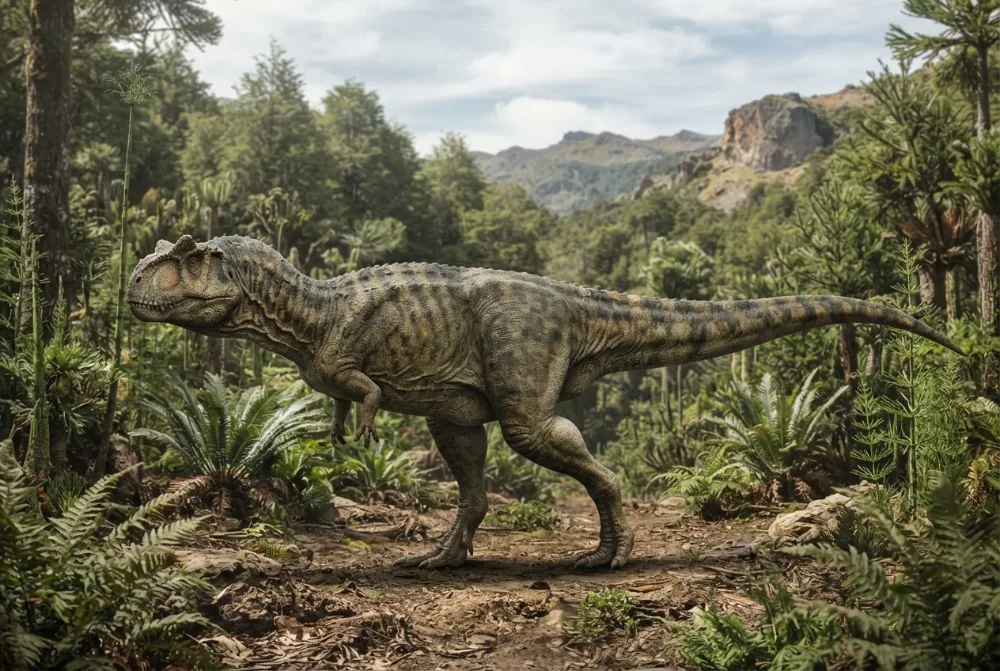
Ekrixinatosaurus was a big, meat-eating dinosaur with a boxy head and strong legs. It lived in what is now Argentina during the Early Cretaceous period. Its fossils were found when workers were building a gas pipeline and used dynamite, which is how it got its name!1
Rairarama rini?
Raiva hombe sei?
Raiva refu zvakadii?
Raiva rakakwirira zvakadii?
fungidziro
Rairema zvakadii?
 kureba seimbwa 8 kubva pamhino kusvika kumuswe🍌kureba semabhanana 44 akatevedzana🍉kurema semanwiwa 160🧸kurema sevana vekireshi 42🎒kurema sevana vechikoro 25🏃raigona kumhanya mamita 100 mumasekonzi 9.5 (munhu anomhanya kupfuura vose anoda 9.6)
Ekrixinatosaurus raiva hombe sei kana richienzaniswa NEWE?
Masvomhu chete mubrowser yako. Hapana chinochengetwa kana kutumirwa kupi zvako.
Raimhanya zvakadii?


Zvinonakidza
Ekrixinatosaurus was an abelisaurid, a family of theropod dinosaurs with short, deep skulls and tiny arms. Its skull was about 83 centimetres long.1
The only known skeleton of Ekrixinatosaurus was found scattered over an area of 15 square metres. It included parts of the skull, backbone, hips, legs and feet.1
Ekrixinatosaurus lived alongside the giant meat-eater Giganotosaurus and the long-necked sauropods Andesaurus and Limaysaurus. Scientists think they may have competed for food.1
The bones of Ekrixinatosaurus were discovered because of a gas pipeline project. Workers used dynamite to blast through the rock, which is why the dinosaur was named 'explosion-born reptile'.1
Ekrixinatosaurus had a boxy skull with a bump above its eye and a jaw that curved upward. Its face bones were covered in small holes and spikes, which may have supported a tough, wrinkly skin.1
Some scientists once thought Ekrixinatosaurus was the largest abelisaurid, bigger than Carnotaurus. But later studies showed that Carnotaurus was actually larger, just with a smaller head.1
Mibvunzo inonyanya kubvunzwa nezve Ekrixinatosaurus
?How big was Ekrixinatosaurus?
It was about 6.5 to 8 metres long (21 to 26 feet) and weighed around 800 kilograms (1,800 pounds). Some scientists once thought it was bigger, but later studies showed it was smaller than Carnotaurus.1
?What did Ekrixinatosaurus eat?
It was a meat-eater that probably hunted smaller dinosaurs and animals. It lived alongside giant plant-eaters like Andesaurus and may have competed with the huge predator Giganotosaurus for food.1
?When did Ekrixinatosaurus live?
It lived during the Early Cretaceous period, about 111 to 106 million years ago.1
?Where was Ekrixinatosaurus found?
Its fossils were found in Argentina, in a place called the Candeleros Formation. Workers building a gas pipeline blasted the rock with dynamite, which is how the dinosaur got its name 'explosion-born reptile'.1
?Was Ekrixinatosaurus bigger than Carnotaurus?
No, Carnotaurus was actually larger. Some scientists once thought Ekrixinatosaurus was bigger because of its large skull, but comparing the leg bones shows Carnotaurus was the bigger dinosaur.1
?Did Ekrixinatosaurus have feathers?
The sources do not say whether it had feathers. Its face bones had small holes and spikes that may have supported tough, wrinkly skin, but no information about feathers is given.1
Zvevanyanzvi vemadhino
- Zita resainzi
- Ekrixinatosaurus
- Akaripa zita:
- Calvo et al. 20042
- Boka
- Madhino anodya nyama
- Mhuri / boka
- Abelisauridae2
- Kurongwa kwemhuka
- Theropoda > Ceratosauria > Abelisauridae2
- Zera rematombo
- makore mamiriyoni 113 kusvika 110 (Albian)2
- Mapoka ematombo
- Candeleros2
- Nyika
- Ajentina2
- Zvinyorwa zvemafosiri
- 1 mu The Paleobiology Database2
- Kuwanikwa
- Ekrixinatosaurus was named in 2004 by paleontologists Jorge Calvo, David Rubilar-Rogers and Karen Moreno. The fossils were found in the Candeleros Formation of Argentina during construction of a gas pipeline.12
- Zvichiri kupokanwa
- Scientists are not sure exactly how big Ekrixinatosaurus was. Some think it was 6.5 to 8 metres long, while others estimate it could have been 10 to 11 metres based on its skull size.1
Kunobva chokwadi
- Ekrixinatosaurus (en.wikipedia.org)
- Ekrixinatosaurus in The Paleobiology Database (CC BY 4.0): zera, nzvimbo, mapoka ematombo, kurongwa kwemhuka.
Chokwadi chega chega papeji ino chine nhamba inoratidza kwachakabva. Kana takakanganisa chimwe chinhu, ruregerero, tiri vanoda madhino, kwete magazini yesainzi. Tiudze pa [email protected] tichazvigadzirisa.
 Rex ane nzara! Dino Wiki ipurojekiti yababa yemwanakomana wavo anoda madhino, mahara, pasina kushambadza uye pasina zvinokutevera. Vakuru vanogona kupa Rex chekudyadya kuti vabatsire kuchengeta saiti iri pamhepo.Fudza Rex
 Allosaurus
 Carnotaurus
 Dilophosaurus
 Giganotosaurus
 Compsognathus
 Paronychodon
 Stegosaurus
 Iguanodon
 Archaeopteryx
 Microraptor
 Deinonychus
 Baryonyx