 Uri dhino ripi? Kwizi
 Hondo yemadhino
 Mujaho wemadhino
 Mitambo midiki yemadhino
 Arubhamu yemasitika
 Rondedzero dzeTOP dzemadhino
 Ndishamise!
Falcarius
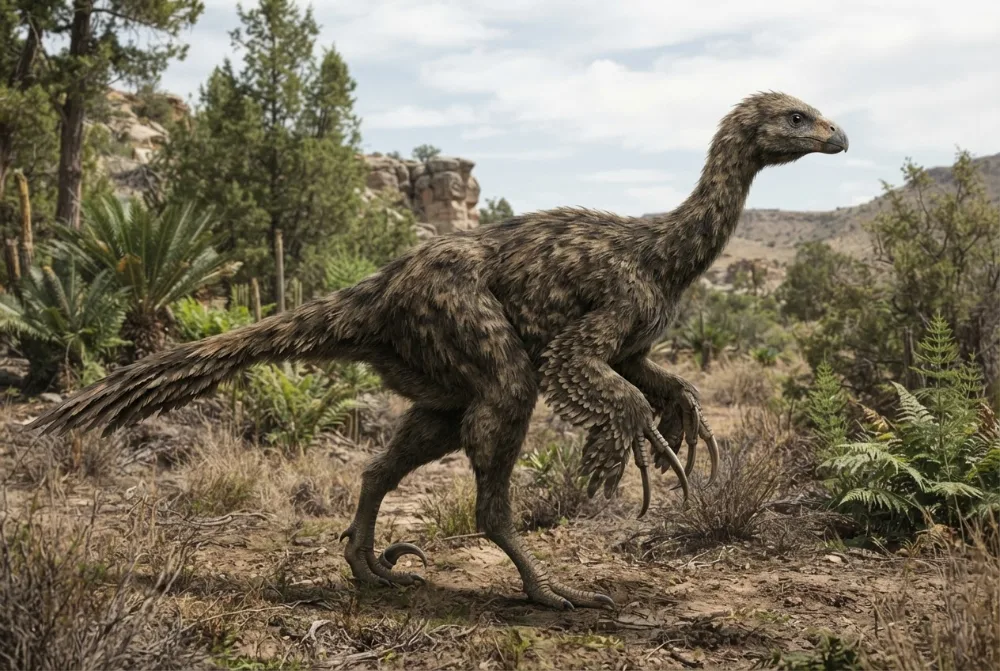
Falcarius was a strange dinosaur that looked like a mix between an ostrich, a gorilla, and Edward Scissorhands! It had a small head, a long neck, and huge curved claws on its hands. This dinosaur lived in what is now Utah, USA, about 139 to 134 million years ago.1
Rairarama rini?
Raiva hombe sei?
Raiva refu zvakadii?
Raiva rakakwirira zvakadii?
Rairema zvakadii?
 kureba seimbwa 5 kubva pamhino kusvika kumuswe🍌kureba semabhanana 28 akatevedzana🍉kurema semanwiwa 20🧸kurema sevana vekireshi 5🎒kurema sevana vechikoro 3🏃raigona kumhanya mamita 100 mumasekonzi 12 (munhu anomhanya kupfuura vose anoda 9.6)
Falcarius raiva hombe sei kana richienzaniswa NEWE?
Masvomhu chete mubrowser yako. Hapana chinochengetwa kana kutumirwa kupi zvako.
Raimhanya zvakadii?


Zvinonakidza
Falcarius is one of the most primitive therizinosaurs ever found. It helps scientists understand how meat-eating dinosaurs turned into plant-eaters.2
Over 3,000 bones of Falcarius have been dug up from a single quarry in Utah. That's a lot of fossils!1
Falcarius had a long neck that let it reach leaves about 1.5 metres (5 feet) off the ground.1
Its hand claws were huge and curved, like sickles. That's how it got its name, which means 'sickle cutter'.1
Falcarius probably had feathers, like its close relatives from Asia.1
The smallest Falcarius was less than 1 metre (3.3 feet) long, but adults grew to about 4 to 5 metres (13 to 16 feet).1
Mibvunzo inonyanya kubvunzwa nezve Falcarius
?How big was Falcarius?
About 4 metres (13 feet) long and about 1.4 metres (4.5 feet) tall at the hip, weighing around 100 kilograms (220 pounds). The smallest known individual was less than 1 metre (3.3 feet) long.14
?What did Falcarius eat?
Mostly plants. Its leaf-shaped, serrated teeth were good for shredding leaves, but the pointed front teeth suggest it might have also eaten small animals like lizards sometimes.1
?Did Falcarius have feathers?
Scientists think yes. No feathers were found with its fossils, but its close feathered relatives from China make it very likely Falcarius had shaggy, hair-like proto-feathers.4
?How fast could Falcarius run?
Probably not very fast. Its lower legs were stubby, which suggests it no longer needed to run after prey like its meat-eating relatives did.4
Zvevanyanzvi vemadhino
- Zita resainzi
- Falcarius
- Akaripa zita:
- Kirkland et al. 20055
- Boka
- Madhino ane minhenga anoshamisa
- Mhuri / boka
- Therizinosauria5
- Kurongwa kwemhuka
- Theropoda > Therizinosauria5
- Zera rematombo
- makore mamiriyoni 143 kusvika 133 (Berriasian / Valanginian)5
- Mapoka ematombo
- Cedar Mountain5
- Nyika
- Amerika5
- Zvinyorwa zvemafosiri
- 2 mu The Paleobiology Database5
- Kuwanikwa
- Falcarius was discovered in 1999 by fossil collector Lawrence Walker in Utah. Scientists named it in 2005.1
- Zvichiri kupokanwa
- Scientists are not sure if Falcarius was a pure plant-eater or if it also ate meat. Its front teeth are sharp and pointed, which might mean it ate small animals too.1
Kunobva chokwadi
- Falcarius (en.wikipedia.org)
- A primitive therizinosauroid dinosaur from the Early Cretaceous of Utah | Nature (nature.com)
- A Primitive Therizinosauroid Dinosaur from the Early Cretaceous of Utah - DocsLib (docslib.org)
- Falcarius Utahensis - Utah Geological Survey (geology.utah.gov)
- Falcarius in The Paleobiology Database (CC BY 4.0): zera, nzvimbo, mapoka ematombo, kurongwa kwemhuka.
Chokwadi chega chega papeji ino chine nhamba inoratidza kwachakabva. Kana takakanganisa chimwe chinhu, ruregerero, tiri vanoda madhino, kwete magazini yesainzi. Tiudze pa [email protected] tichazvigadzirisa.
 Rex ane nzara! Dino Wiki ipurojekiti yababa yemwanakomana wavo anoda madhino, mahara, pasina kushambadza uye pasina zvinokutevera. Vakuru vanogona kupa Rex chekudyadya kuti vabatsire kuchengeta saiti iri pamhepo.Fudza Rex
 Therizinosaurus
 Oviraptor
 Chirostenotes
 Citipes
 Leptorhynchos
 Avimimus
 Stegosaurus
 Iguanodon
 Archaeopteryx
 Giganotosaurus
 Microraptor
 Deinonychus