 Uri dhino ripi? Kwizi
 Hondo yemadhino
 Mujaho wemadhino
 Mitambo midiki yemadhino
 Arubhamu yemasitika
 Rondedzero dzeTOP dzemadhino
 Ndishamise!
Rairarama rini?

Raiva hombe sei?
Raiva refu zvakadii?
Raiva rakakwirira zvakadii?
Rairema zvakadii?

 kureba seimbwa 2.5 kubva pamhino kusvika kumuswe🍌kureba semabhanana 14 akatevedzana🍉kurema semanwiwa 4🏃raigona kumhanya mamita 100 mumasekonzi 9.5 (munhu anomhanya kupfuura vose anoda 9.6)
Citipes raiva hombe sei kana richienzaniswa NEWE?
Masvomhu chete mubrowser yako. Hapana chinochengetwa kana kutumirwa kupi zvako.
Raimhanya zvakadii?


Zvinonakidza
Citipes was named in 2020, but its fossils were first discovered in 1926 and were thought to belong to other dinosaurs like Ornithomimus.1
A fossil of a young Gorgosaurus was found with the legs of at least two Citipes inside its stomach, showing that Citipes was hunted by this larger dinosaur.1
The Citipes legs inside the Gorgosaurus were from babies less than one year old, and the Gorgosaurus seemed to prefer eating the muscular hind legs.1
Citipes had a fused ankle and strong leg muscles, which made it a very fast runner.1
One Citipes fossil shows a broken hip bone that had healed, meaning the animal survived a serious injury.1
Citipes lived alongside two other similar dinosaurs, Caenagnathus and Chirostenotes, but they were different sizes and probably ate different foods to avoid competing.1
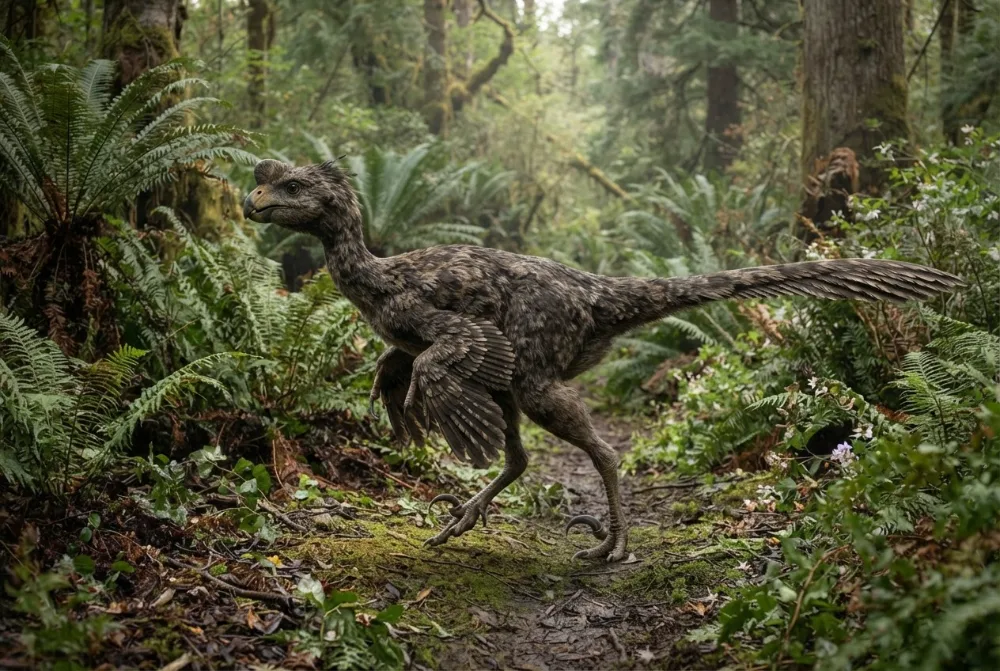
Mibvunzo inonyanya kubvunzwa nezve Citipes
?How big was Citipes?
Citipes was a small dinosaur, roughly the size of an emu when fully grown. The juveniles found in the Gorgosaurus stomach were about the size of a turkey.2
?What did Citipes eat?
Citipes probably ate plants and small animals, since it had a beak like a parrot. It lived alongside two similar dinosaurs that ate different foods to avoid competing.1
?Did Citipes have feathers?
Yes, scientists think Citipes was covered in feathers, like many other bird-like dinosaurs. It was a caenagnathid, a type of feathered theropod.1
Mubvisi wengano
Ngano: Citipes is often confused with the dinosaur Citipati, which has a similar name.
Chokwadi: Citipes and Citipati are different dinosaurs. Citipati is an oviraptorid from Mongolia, while Citipes is a caenagnathid from North America.1
Zvevanyanzvi vemadhino
- Zita resainzi
- Citipes
- Akaripa zita:
- Funston 20203
- Boka
- Madhino ane minhenga anoshamisa
- Mhuri / boka
- Caenagnathidae3
- Kurongwa kwemhuka
- Theropoda > Oviraptorosauria3
- Zera rematombo
- makore mamiriyoni 84 kusvika 66 (Campanian / Maastrichtian)3
- Mapoka ematombo
- Dinosaur Park, Hell Creek3
- Nyika
- Kanada, Amerika3
- Zvinyorwa zvemafosiri
- 12 mu The Paleobiology Database3
- Kuwanikwa
- The first Citipes fossils were found in 1926 in Alberta, Canada, by a University of Toronto expedition. They were named Ornithomimus elegans by William Parks in 1933, but later moved to their own genus Citipes by Gregory Funston in 2020.1
- Zvichiri kupokanwa
- Scientists are not sure exactly what Citipes ate. It had a beak but no teeth, so it may have eaten plants, small animals, or both.1
Kunobva chokwadi
- Citipes (en.wikipedia.org)
- Young tyrannosaur found with baby dinosaurs in its stomach | CBC News (cbc.ca)
- Citipes in The Paleobiology Database (CC BY 4.0): zera, nzvimbo, mapoka ematombo, kurongwa kwemhuka.
Chokwadi chega chega papeji ino chine nhamba inoratidza kwachakabva. Kana takakanganisa chimwe chinhu, ruregerero, tiri vanoda madhino, kwete magazini yesainzi. Tiudze pa [email protected] tichazvigadzirisa.
 Rex ane nzara! Dino Wiki ipurojekiti yababa yemwanakomana wavo anoda madhino, mahara, pasina kushambadza uye pasina zvinokutevera. Vakuru vanogona kupa Rex chekudyadya kuti vabatsire kuchengeta saiti iri pamhepo.Fudza Rex
 Therizinosaurus
 Oviraptor
 Chirostenotes
 Leptorhynchos
 Avimimus
 Caenagnathus
 Tyrannosaurus
 Triceratops
 Velociraptor
 Spinosaurus
 Ankylosaurus
 Parasaurolophus