 Uri dhino ripi? Kwizi
 Hondo yemadhino
 Mujaho wemadhino
 Mitambo midiki yemadhino
 Arubhamu yemasitika
 Rondedzero dzeTOP dzemadhino
 Ndishamise!
Rairarama rini?

Raiva hombe sei?
Raiva refu zvakadii?
Raiva rakakwirira zvakadii?
fungidziro
Rairema zvakadii?

 kureba seimbwa 8 kubva pamhino kusvika kumuswe🍌kureba semabhanana 44 akatevedzanakurema seimbwa 150🍉kurema semanwiwa 600🎒kurema semakirasi 4 akazara evana vechikoro🐻❄️kurema semabere echando 7🏃raigona kumhanya mamita 100 mumasekonzi 14 (munhu anomhanya kupfuura vose anoda 9.6)
Gryposaurus raiva hombe sei kana richienzaniswa NEWE?
Masvomhu chete mubrowser yako. Hapana chinochengetwa kana kutumirwa kupi zvako.
Raimhanya zvakadii?


Zvinonakidza
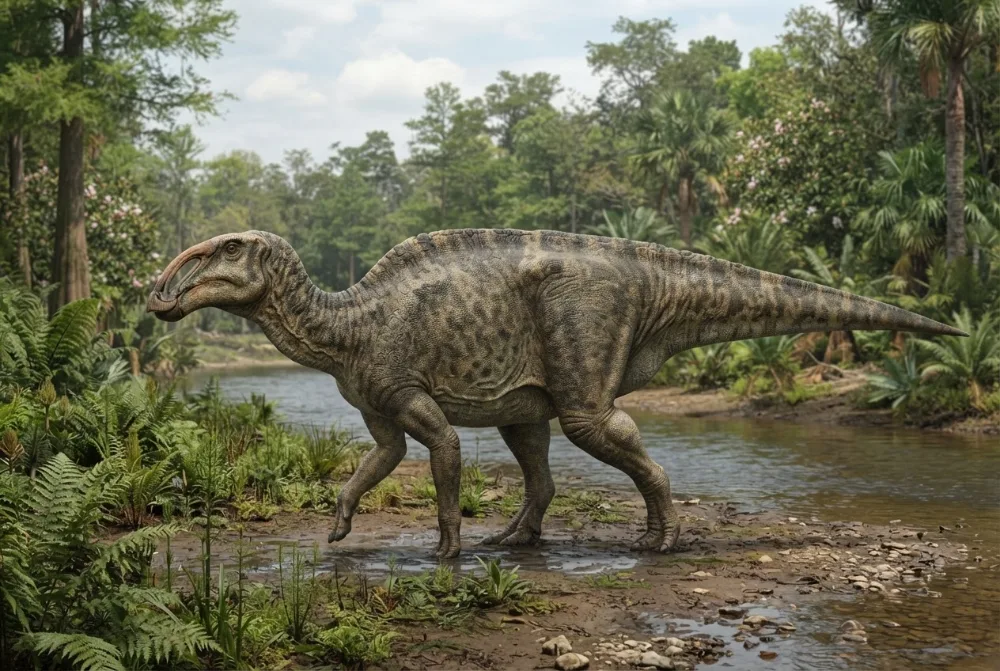
Gryposaurus had a narrow, arching hump on its nose that looked like a Roman nose, which might have been used to tell species apart or to fight others of the same kind.1
Some Gryposaurus fossils even include skin impressions that show it had pyramid-shaped scales running along the middle of its back.1
Its teeth were packed into batteries of hundreds, and only a few were in use at a time, constantly being replaced like a conveyor belt.1
Gryposaurus probably lived near rivers, and it disappeared from the Dinosaur Park Formation before another duckbill called Prosaurolophus showed up.1
The species G. monumentensis was named one of the top 10 new species of 2008 by the International Institute for Species Exploration.1
Gryposaurus could reach food from the ground up to about 4 metres (13 feet) high, using its beak and cheek-like organs to hold plants.1
Mibvunzo inonyanya kubvunzwa nezve Gryposaurus
?How big was Gryposaurus?
Gryposaurus was about 8 meters (26 feet) long. One nearly complete skeleton measured about 8.2 meters (27 feet) long.1
?What did Gryposaurus eat?
Gryposaurus was a herbivore that ate plants. It had hundreds of teeth in dental batteries and could feed from the ground up to about 4 meters (13 feet) high.1
?Did Gryposaurus have a crest?
Gryposaurus had a narrow, arching hump on its nose, often described as a 'Roman nose.' It might have been used for species recognition or combat.1
?Could Gryposaurus swim?
Gryposaurus probably lived near rivers and may have preferred river settings. It could walk on two legs or all fours, but there is no direct evidence it swam.1
?When did Gryposaurus live?
Gryposaurus lived about 80 to 75 million years ago, during the Late Cretaceous. A possible species from Texas may have lived until 66 million years ago.1
?Was Gryposaurus a dinosaur?
Yes, Gryposaurus was a duck-billed dinosaur, a type of hadrosaurid. It was a plant-eating dinosaur that lived in North America.1
Zvevanyanzvi vemadhino
- Zita resainzi
- Gryposaurus
- Akaripa zita:
- Lambe 19142
- Boka
- Miromo-yedhadha
- Mhuri / boka
- Hadrosauridae2
- Kurongwa kwemhuka
- Ornithischia > Ornithopoda > Iguanodontia > Hadrosauridae2
- Zera rematombo
- makore mamiriyoni 84 kusvika 66 (Campanian / Maastrichtian)2
- Mapoka ematombo
- Dinosaur Park, Kaiparowits, Two Medicine2
- Nyika
- Kanada, Amerika2
- Zvinyorwa zvemafosiri
- 22 mu The Paleobiology Database2
- Kuwanikwa
- Gryposaurus was named by Lawrence Lambe in 1914, based on a skull and partial skeleton collected by George F. Sternberg in 1913 from the Dinosaur Park Formation in Alberta, Canada.12
- Zvichiri kupokanwa
- Scientists still debate whether Gryposaurus and Kritosaurus are the same dinosaur, because their skulls are very similar.1
Kunobva chokwadi
- Gryposaurus (en.wikipedia.org)
- Gryposaurus in The Paleobiology Database (CC BY 4.0): zera, nzvimbo, mapoka ematombo, kurongwa kwemhuka.
Chokwadi chega chega papeji ino chine nhamba inoratidza kwachakabva. Kana takakanganisa chimwe chinhu, ruregerero, tiri vanoda madhino, kwete magazini yesainzi. Tiudze pa [email protected] tichazvigadzirisa.
 Rex ane nzara! Dino Wiki ipurojekiti yababa yemwanakomana wavo anoda madhino, mahara, pasina kushambadza uye pasina zvinokutevera. Vakuru vanogona kupa Rex chekudyadya kuti vabatsire kuchengeta saiti iri pamhepo.Fudza Rex
 Parasaurolophus
 Edmontosaurus
 Saurolophus
 Hypacrosaurus
 Corythosaurus
 Kritosaurus
 Tyrannosaurus
 Triceratops
 Velociraptor
 Spinosaurus
 Ankylosaurus
 Pteranodon