 Uri dhino ripi? Kwizi
 Hondo yemadhino
 Mujaho wemadhino
 Mitambo midiki yemadhino
 Arubhamu yemasitika
 Rondedzero dzeTOP dzemadhino
 Ndishamise!
Gspsaurus
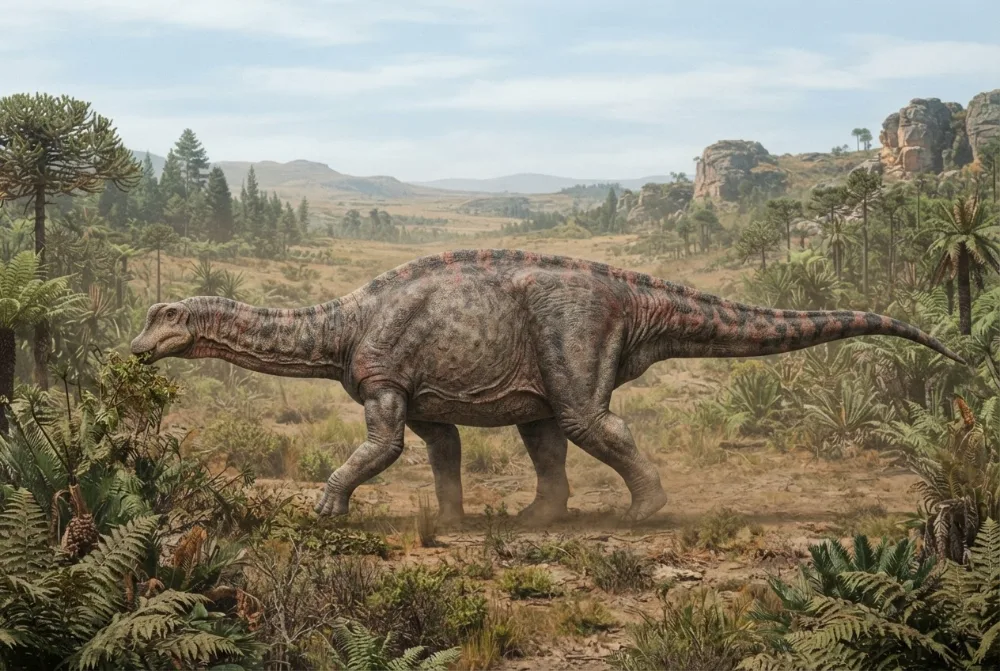
Gspsaurus was a medium-sized, stocky sauropod dinosaur that lived in what is now Pakistan and India. It had a small, spongy skull and a long neck, and it munched on plants with its slender, slightly curved teeth.21
Rairarama rini?
Raiva hombe sei?
Raiva refu zvakadii?
Raiva rakakwirira zvakadii?
 kureba semotokari 22 dzakamiswa dzakatevedzana🍌kureba semabhanana 560 akatevedzana🦒kukwirira setwiza 18 dzakamira pamusoro peimwe neimwe🏢rakakwirira zvekudongorera muhwindo riri pafuroo nhamba 34🏃raigona kumhanya mamita 100 mumasekonzi 24 (munhu anomhanya kupfuura vose anoda 9.6)
Gspsaurus raiva hombe sei kana richienzaniswa NEWE?
Masvomhu chete mubrowser yako. Hapana chinochengetwa kana kutumirwa kupi zvako.
Raimhanya zvakadii?


Zvinonakidza
Gspsaurus is one of the few titanosaurs from the Indo-Pakistan subcontinent where a skull has been found together with the rest of the skeleton.1
Its teeth were circular to subcircular in cross-section, slender, and slightly recurved, with the thickness decreasing from base to tip.2
The name Gspsaurus honors the Geological Survey of Pakistan (GSP).1
Gspsaurus belonged to a group called Poripuchia, which means 'full tail' in the Saraiki language, because all the tail vertebrae were hollow on the front side.1
Its fossils were found in rocks that are about 68 to 66 million years old, from the very end of the Cretaceous Period.1
Mibvunzo inonyanya kubvunzwa nezve Gspsaurus
?How big was Gspsaurus?
It was a medium-sized sauropod, but no exact length or weight is given in the sources.13
?What did Gspsaurus eat?
It was a plant-eater that used its slender, slightly curved teeth to munch on plants.13
?When did Gspsaurus live?
It lived at the very end of the Cretaceous Period, about 68 to 66 million years ago.1
?Where was Gspsaurus found?
Its fossils have been found in Pakistan and India, in the Vitakri and Lameta Formations.13
?How is Gspsaurus pronounced?
It is pronounced GSP saurus, because it stands for Geological Survey of Pakistan.1
?What does the name Gspsaurus mean?
The name honors the Geological Survey of Pakistan, and 'saurus' means lizard.1
Zvevanyanzvi vemadhino
- Zita resainzi
- Gspsaurus
- Akaripa zita:
- Malkani 20144
- Boka
- Madhino emitsipa mirefu
- Mhuri / boka
- Gspsauridae4
- Kurongwa kwemhuka
- Sauropodomorpha > Sauropoda > Titanosauria > Macronaria4
- Zera rematombo
- makore mamiriyoni 72 kusvika 66 (Maastrichtian)4
- Mapoka ematombo
- Vitakri4
- Nyika
- Pakistan4
- Zvinyorwa zvemafosiri
- 7 mu The Paleobiology Database4
- Rinonziwo
- Maojandino (mazita ekare zvino oonekwa semhuka imwe chete)4
- Kuwanikwa
- Gspsaurus was named by Pakistani paleontologist M. S. Malkani in 2014, based on a partial skull and other bones found at Alam Kali Kakor in Balochistan, Pakistan.22
- Zvichiri kupokanwa
- Scientists are still debating exactly how Gspsaurus is related to other titanosaurs, because its skull and skeleton show a mix of features.1
Kunobva chokwadi
- First Skull of Medium Sized Titanosaur in Indo-Pakistan Subcontinent Found from the Latest Maastrichtian Vitakri Formation of Pakistan; Associated Cranial and Postcranial Skeletons of Gspsaurus pakistani (Poripuchia, Stocky Titanosauria, Sauropoda) from Pakistan and India (scirp.org)
- PBDB Taxon (paleobiodb.org)
- Medium Sized Stocky Titanosaur from South Asia (scirp.org)
- Gspsaurus in The Paleobiology Database (CC BY 4.0): zera, nzvimbo, mapoka ematombo, kurongwa kwemhuka.
Chokwadi chega chega papeji ino chine nhamba inoratidza kwachakabva. Kana takakanganisa chimwe chinhu, ruregerero, tiri vanoda madhino, kwete magazini yesainzi. Tiudze pa [email protected] tichazvigadzirisa.
 Rex ane nzara! Dino Wiki ipurojekiti yababa yemwanakomana wavo anoda madhino, mahara, pasina kushambadza uye pasina zvinokutevera. Vakuru vanogona kupa Rex chekudyadya kuti vabatsire kuchengeta saiti iri pamhepo.Fudza Rex
 Brachiosaurus
 Diplodocus
 Brontosaurus
 Argentinosaurus
 Camarasaurus
 Morosaurus
 Tyrannosaurus
 Triceratops
 Velociraptor
 Spinosaurus
 Ankylosaurus
 Parasaurolophus