 Uri dhino ripi? Kwizi
 Hondo yemadhino
 Mujaho wemadhino
 Mitambo midiki yemadhino
 Arubhamu yemasitika
 Rondedzero dzeTOP dzemadhino
 Ndishamise!
Himeoolithus
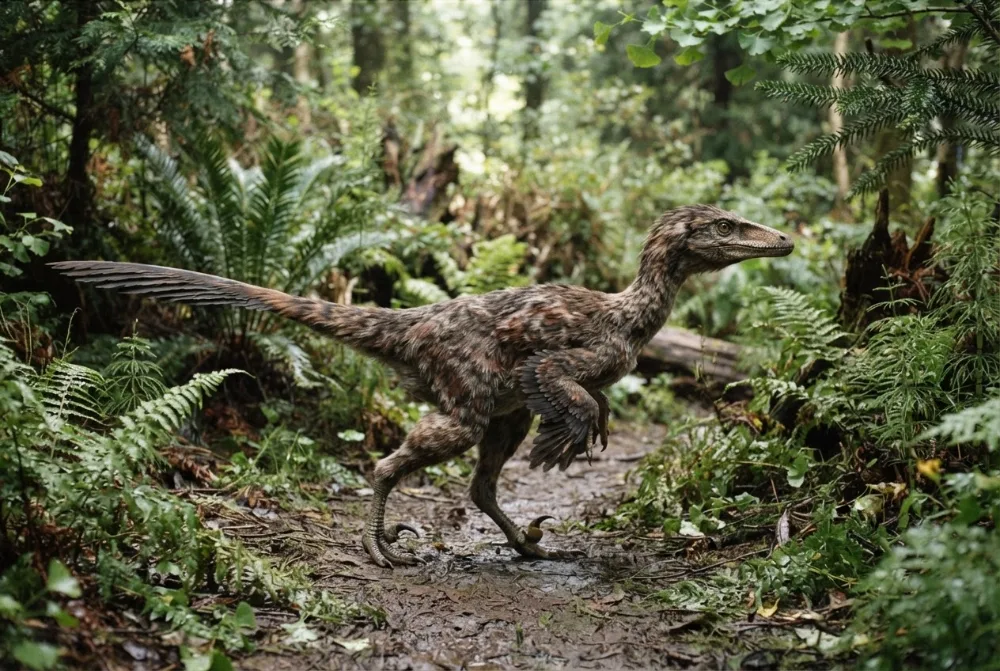
Himeoolithus was a tiny meat-eating dinosaur that lived in what is now Japan about 110 million years ago. It is known from its eggs, which are some of the smallest theropod eggs ever found, about the size of a quail egg. These eggs show that small dinosaurs lived alongside the giants!2
Rairarama rini?
Raimhanya zvakadii?


Zvinonakidza
Himeoolithus eggs are the smallest non-avian theropod eggs known, with an estimated mass of only 9.9 grams, about the size of a modern quail egg.1
The eggs are unusually elongated for their size, with a length-to-width ratio of 2.25, which is more typical of larger theropod eggs.1
The nest was found in place, not moved by water or wind, because most eggshell fragments were positioned concave-up, which happens when they break in place.2
Over 1,300 eggshell fragments from Himeoolithus were found at the Kamitaki Egg Quarry, along with other small theropod eggs.2
The high diversity of small theropod eggs at this site makes it one of the most diverse Early Cretaceous egg localities known.2
Mubvisi wengano
Ngano: Some people think all dinosaurs were huge, but Himeoolithus shows that many were small.
Chokwadi: Himeoolithus eggs are tiny, and the dinosaur that laid them was likely small, showing that dinosaurs came in many sizes.2
Zvevanyanzvi vemadhino
- Zita resainzi
- Himeoolithus
- Akaripa zita:
- Tanaka et al. 20203
- Boka
- Madhino anodya nyama
- Mhuri / boka
- Theropoda3
- Kurongwa kwemhuka
- Theropoda3
- Zera rematombo
- makore mamiriyoni 113 kusvika 110 (Albian)3
- Mapoka ematombo
- Ohyamashimo3
- Nyika
- Japan3
- Zvinyorwa zvemafosiri
- 1 mu The Paleobiology Database3
- Kuwanikwa
- The eggs were first discovered in 2015 at the Kamitaki Egg Quarry in Japan, and the species was named by Tanaka and colleagues in 2020.23
- Zvichiri kupokanwa
- Scientists are not sure exactly which theropod dinosaur laid the eggs, since no bones of the adult have been found yet.2
Kunobva chokwadi
- Exceptionally small theropod eggs from the Lower Cretaceous Ohyamashimo Formation of Tamba, Hyogo Prefecture, Japan (sciencedirect.com)
- Tiny Japanese Dinosaur Eggs Help Unscramble Cretaceous Ecosystem | Research News - University of Tsukuba (tsukuba.ac.jp)
- Himeoolithus in The Paleobiology Database (CC BY 4.0): zera, nzvimbo, mapoka ematombo, kurongwa kwemhuka.
Chokwadi chega chega papeji ino chine nhamba inoratidza kwachakabva. Kana takakanganisa chimwe chinhu, ruregerero, tiri vanoda madhino, kwete magazini yesainzi. Tiudze pa [email protected] tichazvigadzirisa.
 Rex ane nzara! Dino Wiki ipurojekiti yababa yemwanakomana wavo anoda madhino, mahara, pasina kushambadza uye pasina zvinokutevera. Vakuru vanogona kupa Rex chekudyadya kuti vabatsire kuchengeta saiti iri pamhepo.Fudza Rex
 Allosaurus
 Carnotaurus
 Dilophosaurus
 Giganotosaurus
 Compsognathus
 Paronychodon
 Stegosaurus
 Iguanodon
 Archaeopteryx
 Microraptor
 Deinonychus
 Baryonyx