 Uri dhino ripi? Kwizi
 Hondo yemadhino
 Mujaho wemadhino
 Mitambo midiki yemadhino
 Arubhamu yemasitika
 Rondedzero dzeTOP dzemadhino
 Ndishamise!
Ibirania
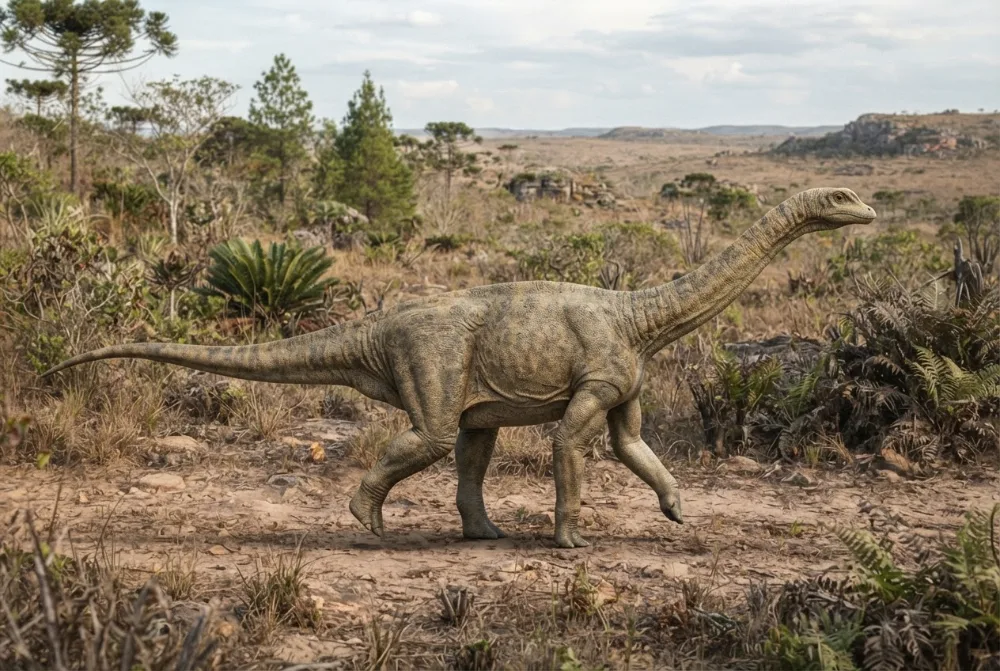
Ibirania was a tiny sauropod, one of the smallest long-necked dinosaurs ever found. It lived in a dry, inland part of Brazil about 80 million years ago. Despite its small size, it had air-filled bones just like its giant relatives.12
Rairarama rini?
Raiva hombe sei?
Raiva refu zvakadii?
Raiva rakakwirira zvakadii?
fungidziro
 kureba seimbwa 6 kubva pamhino kusvika kumuswe🍌kureba semabhanana 32 akatevedzana🏃raigona kumhanya mamita 100 mumasekonzi 11 (munhu anomhanya kupfuura vose anoda 9.6)
Ibirania raiva hombe sei kana richienzaniswa NEWE?
Masvomhu chete mubrowser yako. Hapana chinochengetwa kana kutumirwa kupi zvako.
Raimhanya zvakadii?


Zvinonakidza
Its bones were extremely hollow and filled with air sacs, like a bird's, which helped make it lighter.1
Scientists found fossilised parasites inside the bone canals of one Ibirania leg bone, the first time such parasites have been seen in a dinosaur.1
One Ibirania specimen had a bone infection called acute osteomyelitis, which scientists studied using CT scans and thin slices of the bone.1
Ibirania lived in a dry, inland environment, and its small size may have been an adaptation to scarce resources, not island life like other dwarf sauropods.1
Mibvunzo inonyanya kubvunzwa nezve Ibirania
?How big was Ibirania?
About 5.7 metres (18.7 feet) long, making it one of the smallest sauropods ever found.12
?What did Ibirania eat?
It was a plant-eater. Its name means 'tree wanderer,' which hints that it browsed on trees and shrubs.1
?Did Ibirania have feathers?
No, it did not. Ibirania was a sauropod, and sauropods had scaly skin, not feathers.1
?Why was Ibirania so small?
Scientists think its small size was an adaptation to living in a dry, inland environment with scarce resources, not because it lived on an island.1
Zvevanyanzvi vemadhino
- Zita resainzi
- Ibirania
- Akaripa zita:
- Navarro et al. 20224
- Boka
- Madhino emitsipa mirefu
- Mhuri / boka
- Saltasauridae4
- Kurongwa kwemhuka
- Sauropodomorpha > Sauropoda > Titanosauria > Macronaria4
- Zera rematombo
- makore mamiriyoni 86 kusvika 72 (Santonian / Campanian)4
- Mapoka ematombo
- São José do Rio Preto4
- Nyika
- Brazil4
- Zvinyorwa zvemafosiri
- 3 mu The Paleobiology Database4
- Kuwanikwa
- Ibirania was named in 2022 by Navarro and colleagues based on fossils found on a farm in Ibirá, São Paulo, Brazil. The name means 'little tree wanderer' after the town and its small size.12
- Zvichiri kupokanwa
- Scientists are still studying the tiny parasites found in Ibirania's bones to figure out exactly what they were.1
Kunobva chokwadi
- Ibirania (en.wikipedia.org)
- A NEW NANOID TITANOSAUR (DINOSAURIA: SAUROPODA) FROM THE UPPER CRETACEOUS OF BRAZIL | Ameghiniana (web.archive.org)
- PBDB Taxon (paleobiodb.org)
- Ibirania in The Paleobiology Database (CC BY 4.0): zera, nzvimbo, mapoka ematombo, kurongwa kwemhuka.
Chokwadi chega chega papeji ino chine nhamba inoratidza kwachakabva. Kana takakanganisa chimwe chinhu, ruregerero, tiri vanoda madhino, kwete magazini yesainzi. Tiudze pa [email protected] tichazvigadzirisa.
 Rex ane nzara! Dino Wiki ipurojekiti yababa yemwanakomana wavo anoda madhino, mahara, pasina kushambadza uye pasina zvinokutevera. Vakuru vanogona kupa Rex chekudyadya kuti vabatsire kuchengeta saiti iri pamhepo.Fudza Rex
 Brachiosaurus
 Diplodocus
 Brontosaurus
 Argentinosaurus
 Camarasaurus
 Morosaurus
 Tyrannosaurus
 Triceratops
 Velociraptor
 Spinosaurus
 Ankylosaurus
 Parasaurolophus