 Uri dhino ripi? Kwizi
 Hondo yemadhino
 Mujaho wemadhino
 Mitambo midiki yemadhino
 Arubhamu yemasitika
 Rondedzero dzeTOP dzemadhino
 Ndishamise!
Incisivosaurus
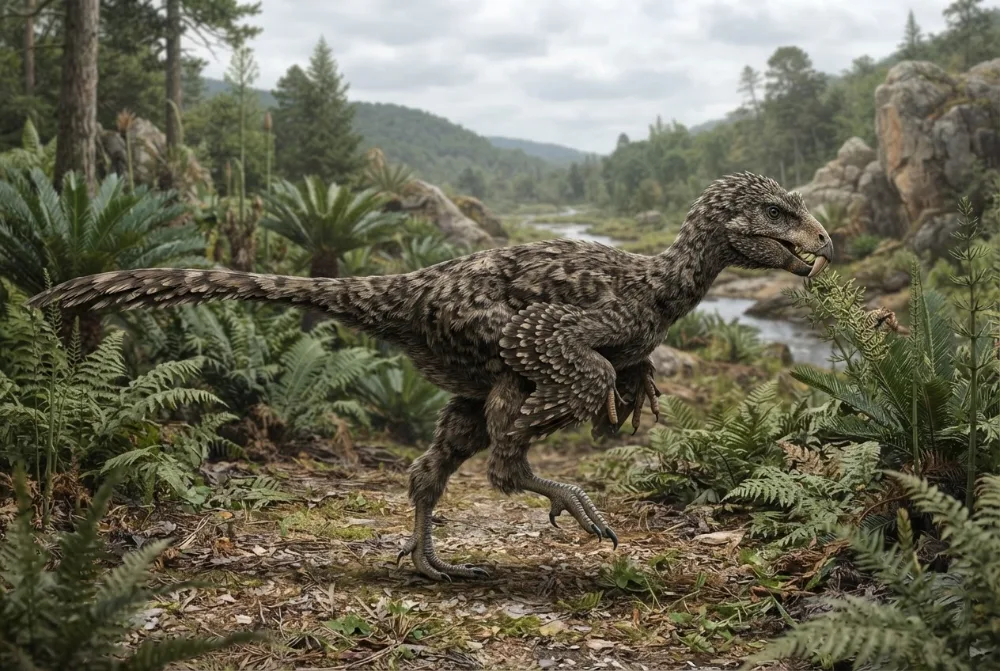
Incisivosaurus was a small, feathered dinosaur with a pair of big front teeth that looked like a rodent's incisors. It used these teeth to gnaw on plants, making it one of the first meat-eating dinosaurs known to eat mostly plants.12
Rairarama rini?
Raiva hombe sei?
Raiva refu zvakadii?
Raiva rakakwirira zvakadii?
fungidziro
 kureba sekatsi dzemumba 3 kubva pamhino kusvika kumuswe🍌kureba semabhanana 8 akatevedzana🏃raigona kumhanya mamita 100 mumasekonzi 9.5 (munhu anomhanya kupfuura vose anoda 9.6)
Incisivosaurus raiva hombe sei kana richienzaniswa NEWE?
Masvomhu chete mubrowser yako. Hapana chinochengetwa kana kutumirwa kupi zvako.
Raimhanya zvakadii?


Zvinonakidza
Incisivosaurus had a pair of very large, chisel-like front teeth that stuck out forward, just like a beaver or rabbit. No other meat-eating dinosaur had teeth like that.12
Its cheek teeth were small and shaped like lance heads, with big wear facets from chewing plants. This shows Incisivosaurus chewed its food, unlike many other dinosaurs.12
Incisivosaurus lived about 128 million years ago, making it the oldest known oviraptorosaur dinosaur. It was a basal member of this group.12
Its skull was low and had teeth, unlike later oviraptorosaurs which had short, toothless beaks. This helps scientists understand how oviraptorosaurs evolved.12
The name Incisivosaurus means 'incisor lizard' because of its rodent-like front teeth. The species name gauthieri honors paleontologist Jacques Gauthier.12
Incisivosaurus is known from a nearly complete skull and a neck vertebra. Its body size is estimated from the skull, which is about 10 cm long.2
It was a feathered dinosaur, like other oviraptorosaurs, and probably walked on two legs. It was a small dinosaur, about the size of a turkey.4
Mibvunzo inonyanya kubvunzwa nezve Incisivosaurus
?What did Incisivosaurus eat?
It ate plants. Its rodent-like front teeth and worn cheek teeth show it was adapted for herbivory.31
?Did Incisivosaurus have feathers?
Yes, it had feathers. Two juvenile specimens show long vaned feathers on the hands and tail, and downy feathers on the body.3
Zvevanyanzvi vemadhino
- Zita resainzi
- Incisivosaurus
- Akaripa zita:
- Xu et al. 20024
- Boka
- Madhino ane minhenga anoshamisa
- Mhuri / boka
- Oviraptorosauria4
- Kurongwa kwemhuka
- Theropoda > Oviraptorosauria4
- Zera rematombo
- makore mamiriyoni 126 kusvika 100 (Barremian / Albian)4
- Mapoka ematombo
- Fuxin, Yixian, Shahai4
- Nyika
- China4
- Zvinyorwa zvemafosiri
- 4 mu The Paleobiology Database4
- Kuwanikwa
- Incisivosaurus was named in 2002 by Xing Xu and colleagues from a skull and neck vertebra found in Liaoning, China. The fossils came from the Yixian Formation, which is about 128 million years old.12
- Zvichiri kupokanwa
- Scientists are not sure if Incisivosaurus had feathers all over its body or just on some parts, because only the skull and a neck bone have been found.4
Kunobva chokwadi
- An unusual oviraptorosaurian dinosaur from China | Nature (nature.com)
- An unusual oviraptorosaurian dinosaur from China (ivpp.cas.cn)
- Incisivosaurus (en.wikipedia.org)
- Incisivosaurus in The Paleobiology Database (CC BY 4.0): zera, nzvimbo, mapoka ematombo, kurongwa kwemhuka.
Chokwadi chega chega papeji ino chine nhamba inoratidza kwachakabva. Kana takakanganisa chimwe chinhu, ruregerero, tiri vanoda madhino, kwete magazini yesainzi. Tiudze pa [email protected] tichazvigadzirisa.
 Rex ane nzara! Dino Wiki ipurojekiti yababa yemwanakomana wavo anoda madhino, mahara, pasina kushambadza uye pasina zvinokutevera. Vakuru vanogona kupa Rex chekudyadya kuti vabatsire kuchengeta saiti iri pamhepo.Fudza Rex
 Therizinosaurus
 Oviraptor
 Chirostenotes
 Citipes
 Leptorhynchos
 Avimimus
 Stegosaurus
 Iguanodon
 Archaeopteryx
 Giganotosaurus
 Microraptor
 Deinonychus