 Uri dhino ripi? Kwizi
 Hondo yemadhino
 Mujaho wemadhino
 Mitambo midiki yemadhino
 Arubhamu yemasitika
 Rondedzero dzeTOP dzemadhino
 Ndishamise!
Rairarama rini?

Raiva hombe sei?
Raiva refu zvakadii?
Raiva rakakwirira zvakadii?
Rairema zvakadii?
 kureba seimbwa 7 kubva pamhino kusvika kumuswe🍌kureba semabhanana 39 akatevedzana🍉kurema semanwiwa 240🧸kurema sevana vekireshi 63🎒kurema sevana vechikoro 38🐻❄️kurema semabere echando 2.5🏃raigona kumhanya mamita 100 mumasekonzi 10 (munhu anomhanya kupfuura vose anoda 9.6)
Indosuchus raiva hombe sei kana richienzaniswa NEWE?
Masvomhu chete mubrowser yako. Hapana chinochengetwa kana kutumirwa kupi zvako.
Raimhanya zvakadii?


Zvinonakidza
Indosuchus is known only from a few skull bones, so scientists are still learning about it.1
Its name means 'Indian crocodile', even though it was a dinosaur, not a crocodile.1
At first, scientists thought Indosuchus was related to Allosaurus or Tyrannosaurus, but now they know it was an abelisaurid.1
Indosuchus had a crested skull that was flattened on top, which helped tell it apart from other dinosaurs.1
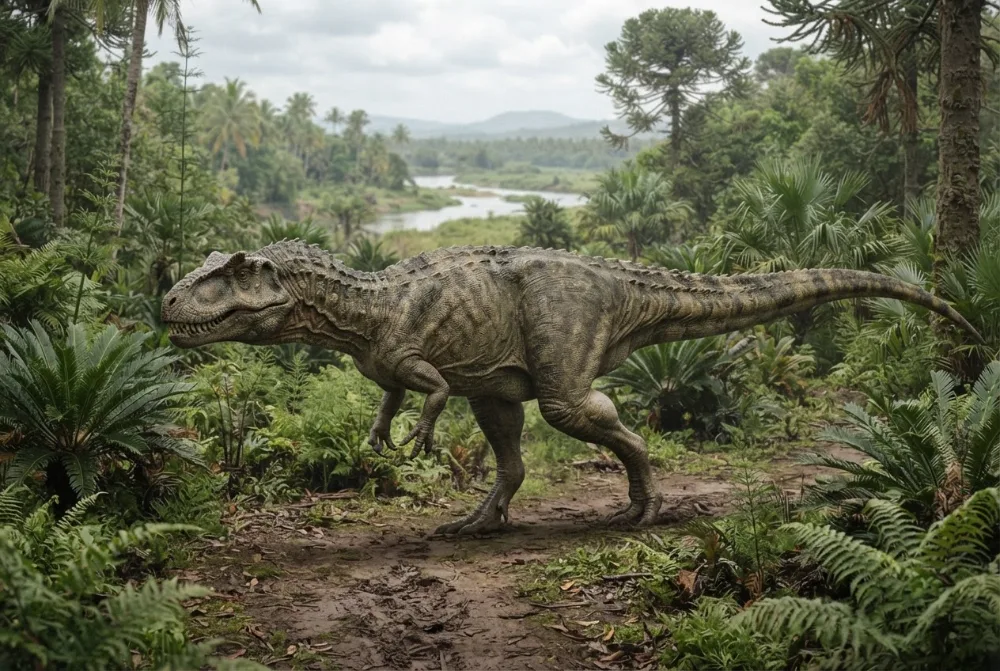
Mibvunzo inonyanya kubvunzwa nezve Indosuchus
?How big was Indosuchus?
Indosuchus was about 7 metres (23 feet) long and weighed about 1.2 tonnes (1.3 short tons). That is about as long as a large car.42
?What did Indosuchus eat?
Indosuchus was a carnivore, so it ate meat. It probably hunted other dinosaurs or scavenged for food.42
?When did Indosuchus live?
Indosuchus lived during the Late Cretaceous Period, about 70 to 66 million years ago, right before the dinosaurs went extinct.42
?Where was Indosuchus found?
Indosuchus fossils were found in India, near Jabalpur in Madhya Pradesh, in rocks of the Lameta Formation.42
?Why is it called Indosuchus?
Its name means 'Indian crocodile' in Greek, because it was found in India and its skull reminded scientists of a crocodile. But it was a dinosaur, not a crocodile.42
?Did Indosuchus have feathers?
Nobody knows for sure. No feathers have been found with Indosuchus fossils, and since it was an abelisaurid, it might have had scales like other abelisaurids.4
Mubvisi wengano
Ngano: Indosuchus was a crocodile because its name means 'Indian crocodile'.
Chokwadi: Indosuchus was a dinosaur, not a crocodile. The name just refers to its crocodile-like snout.1
Zvevanyanzvi vemadhino
- Zita resainzi
- Indosuchus
- Akaripa zita:
- Huene 19335
- Boka
- Madhino anodya nyama
- Mhuri / boka
- Abelisauridae5
- Kurongwa kwemhuka
- Theropoda > Ceratosauria > Abelisauridae5
- Zera rematombo
- makore mamiriyoni 72 kusvika 66 (Maastrichtian)5
- Mapoka ematombo
- Lameta5
- Nyika
- India5
- Zvinyorwa zvemafosiri
- 1 mu The Paleobiology Database5
- Kuwanikwa
- Indosuchus was named by German paleontologist Friedrich von Huene in 1932, and described by Huene and Charles Alfred Matley in 1933 from three partial skulls found near Jabalpur, India.1
- Zvichiri kupokanwa
- Scientists still debate exactly how Indosuchus is related to other abelisaurids, because only a few skull bones have been found.1
Kunobva chokwadi
- Indosuchus (en.wikipedia.org)
- Indosuchus (nhm.ac.uk)
- Indosuchus| The Late Cretaceous Predator of Ancient India (thedinosaurs.org)
- Indosuchus - Wikipedia (en.m.wikipedia.org)
- Indosuchus in The Paleobiology Database (CC BY 4.0): zera, nzvimbo, mapoka ematombo, kurongwa kwemhuka.
Chokwadi chega chega papeji ino chine nhamba inoratidza kwachakabva. Kana takakanganisa chimwe chinhu, ruregerero, tiri vanoda madhino, kwete magazini yesainzi. Tiudze pa [email protected] tichazvigadzirisa.
 Rex ane nzara! Dino Wiki ipurojekiti yababa yemwanakomana wavo anoda madhino, mahara, pasina kushambadza uye pasina zvinokutevera. Vakuru vanogona kupa Rex chekudyadya kuti vabatsire kuchengeta saiti iri pamhepo.Fudza Rex
 Allosaurus
 Carnotaurus
 Dilophosaurus
 Giganotosaurus
 Compsognathus
 Paronychodon
 Tyrannosaurus
 Triceratops
 Velociraptor
 Spinosaurus
 Ankylosaurus
 Parasaurolophus