 Uri dhino ripi? Kwizi
 Hondo yemadhino
 Mujaho wemadhino
 Mitambo midiki yemadhino
 Arubhamu yemasitika
 Rondedzero dzeTOP dzemadhino
 Ndishamise!
Kank
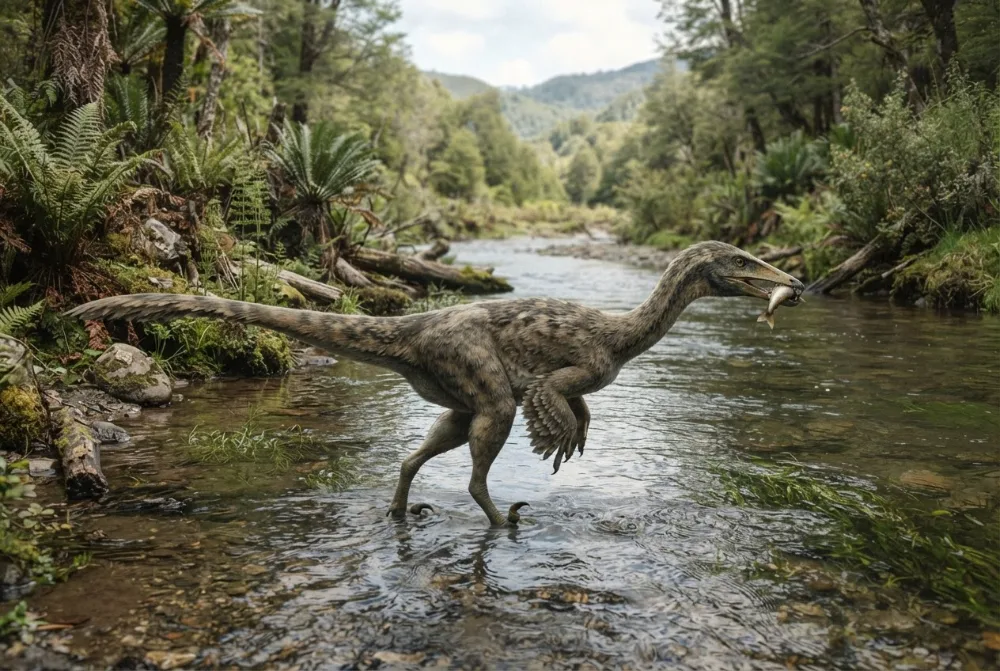
Kank was a fish-eating dinosaur that lived like a modern heron. It waded in rivers and streams in southern Patagonia, using its long neck to snatch fish. This raptor-like dinosaur was about the size of a small car.1
Rairarama rini?
Raiva hombe sei?
Raiva refu zvakadii?
Raiva rakakwirira zvakadii?
fungidziro
 kureba seimbwa 3 kubva pamhino kusvika kumuswe🍌kureba semabhanana 17 akatevedzana🏃raigona kumhanya mamita 100 mumasekonzi 7.2 (munhu anomhanya kupfuura vose anoda 9.6)
Kank raiva hombe sei kana richienzaniswa NEWE?
Masvomhu chete mubrowser yako. Hapana chinochengetwa kana kutumirwa kupi zvako.
Raimhanya zvakadii?


Zvinonakidza
Kank lived about 70 million years ago in a warm, wet place with rivers and ponds.1
Its neck bones had air chambers inside, making them light and strong.1
Kank had a big claw on its second toe, like other raptors, but it probably used it for fishing, not hunting on land.1
The first Kank fossils were found in 2018, but scientists needed more bones to know it was a new species.1
Kank shared its home with giant predators like Maip macrothorax, a megaraptorid over 10 metres long.1
Kank is part of a group called unenlagiids, which are found in South America, Antarctica, Australia and Madagascar.1
Mibvunzo inonyanya kubvunzwa nezve Kank
?What did Kank eat?
Kank mostly ate fish, like a modern heron. It may have also eaten frogs, lizards, turtles and small mammals that lived in its wetland home.12
?Did Kank have feathers?
Scientists think Kank probably had feathers, because it belongs to a group of dinosaurs called unenlagiids that are closely related to birds. No direct feather fossils of Kank have been found yet.2
?When did Kank live?
Kank lived about 70 million years ago, during the Late Cretaceous period. That was near the very end of the age of dinosaurs.12
?Where was Kank found?
Kank was discovered at La Anita farm near El Calafate in Santa Cruz, Argentina. The fossils come from the Chorrillo Formation in southern Patagonia.12
?Was Kank bigger than Velociraptor?
Yes, Kank was a bit bigger. Velociraptor was about 2 metres long, while Kank grew up to 3 metres long.1
Mubvisi wengano
Ngano: All raptor-like dinosaurs were fast land hunters like Velociraptor.
Chokwadi: Kank was a fish-eater that behaved like a heron, not a speedy land predator.1
Zvevanyanzvi vemadhino
- Zita resainzi
- Kank
- Akaripa zita:
- Motta et al. 20263
- Boka
- Madhino anodya nyama
- Mhuri / boka
- Unenlagiidae3
- Kurongwa kwemhuka
- Theropoda3
- Zera rematombo
- makore mamiriyoni 72 kusvika 66 (Maastrichtian)3
- Mapoka ematombo
- Chorrillo3
- Nyika
- Ajentina3
- Zvinyorwa zvemafosiri
- 2 mu The Paleobiology Database3
- Kuwanikwa
- Kank was named by Matías Motta and his team in 2026, based on fossils found at La Anita farm in Argentina from 2018 to 2024.1
- Zvichiri kupokanwa
- Scientists are not sure if Kank also ate other animals like frogs or mammals, or only fish.1
Kunobva chokwadi
- Heron-like, fish-eating dinosaur from 70 million years ago discovered in Argentina | EurekAlert! (eurekalert.org)
- Kank (Wikipedia) (Wikipedia)
- Kank in The Paleobiology Database (CC BY 4.0): zera, nzvimbo, mapoka ematombo, kurongwa kwemhuka.
Chokwadi chega chega papeji ino chine nhamba inoratidza kwachakabva. Kana takakanganisa chimwe chinhu, ruregerero, tiri vanoda madhino, kwete magazini yesainzi. Tiudze pa [email protected] tichazvigadzirisa.
 Rex ane nzara! Dino Wiki ipurojekiti yababa yemwanakomana wavo anoda madhino, mahara, pasina kushambadza uye pasina zvinokutevera. Vakuru vanogona kupa Rex chekudyadya kuti vabatsire kuchengeta saiti iri pamhepo.Fudza Rex
 Allosaurus
 Carnotaurus
 Dilophosaurus
 Giganotosaurus
 Compsognathus
 Paronychodon
 Tyrannosaurus
 Triceratops
 Velociraptor
 Spinosaurus
 Ankylosaurus
 Parasaurolophus