 Uri dhino ripi? Kwizi
 Hondo yemadhino
 Mujaho wemadhino
 Mitambo midiki yemadhino
 Arubhamu yemasitika
 Rondedzero dzeTOP dzemadhino
 Ndishamise!
Kunbarrasaurus
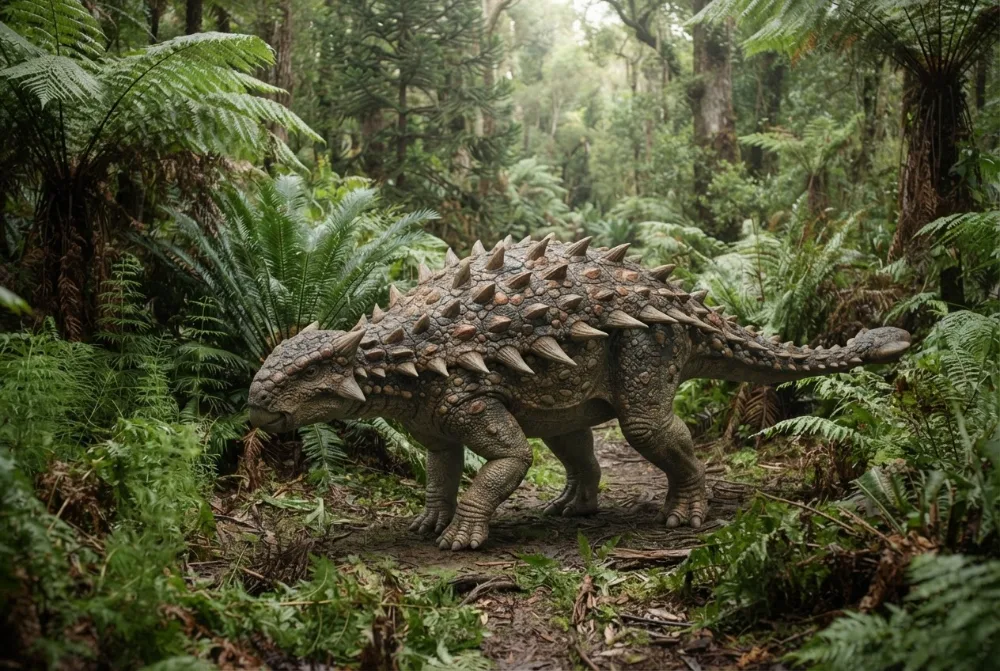
Kunbarrasaurus was a small, armoured dinosaur that walked on four legs and munched on plants. It had bony plates and spikes all over its body, like a walking tank. This dinosaur lived in Australia during the Early Cretaceous, about 105 million years ago.13
Rairarama rini?
Raiva hombe sei?
Raiva refu zvakadii?
Raiva rakakwirira zvakadii?
fungidziro
 kureba seimbwa 4 kubva pamhino kusvika kumuswe🍌kureba semabhanana 19 akatevedzana🏃raigona kumhanya mamita 100 mumasekonzi 16 (munhu anomhanya kupfuura vose anoda 9.6)
Kunbarrasaurus raiva hombe sei kana richienzaniswa NEWE?
Masvomhu chete mubrowser yako. Hapana chinochengetwa kana kutumirwa kupi zvako.
Raimhanya zvakadii?


Zvinonakidza
Kunbarrasaurus is one of the most complete armoured dinosaurs ever found, with most of its skeleton and skull preserved.1
Its gut contents show it ate fibrous plant parts, seeds, and fruiting bodies, and it probably chopped food in its mouth instead of using stomach stones.1
The dinosaur had a ring of scutes around its neck, and its body was covered with small, keeled plates and spikes.1
Kunbarrasaurus had a very large inner ear, unlike any other dinosaur known, which may have helped with balance or hearing.2
The fossil was found in marine rocks, so the dinosaur may have washed out to sea after death.1
It is the second genus of armoured dinosaur from Australia, and its name means 'shield lizard' in the local Aboriginal language.1
Mibvunzo inonyanya kubvunzwa nezve Kunbarrasaurus
?How big was Kunbarrasaurus?
About 2.5 to 3.5 metres long. That is roughly the size of a large motorcycle.1
?What did Kunbarrasaurus eat?
It ate plants, including fibrous leaves, seeds and fruiting bodies. Scientists know this because its last meal was preserved inside its fossil.1
?Did Kunbarrasaurus have a tail club?
Probably not. Its tail is not fully preserved, but some of its relatives had a flat, blade-like structure at the tail tip instead of a club.1
?Where was Kunbarrasaurus found?
In Queensland, Australia, near Richmond. The fossil was discovered in marine rocks, so the dinosaur may have washed out to sea after death.1
?When did Kunbarrasaurus live?
It lived during the Early Cretaceous, about 105 million years ago.1
?Is Kunbarrasaurus a dinosaur?
Yes, it is a small armoured dinosaur called an ankylosaurian.1
Mubvisi wengano
Ngano: Kunbarrasaurus used its tail like a club to defend itself.
Chokwadi: There is no evidence of a tail club in Kunbarrasaurus. Its tail had triangular plates and scutes, but no club.1
Zvevanyanzvi vemadhino
- Zita resainzi
- Kunbarrasaurus
- Akaripa zita:
- Leahey et al. 20153
- Boka
- Madhino ane nhovo
- Mhuri / boka
- Parankylosauria3
- Kurongwa kwemhuka
- Ornithischia > Ankylosauria > Thyreophora3
- Zera rematombo
- makore mamiriyoni 106 kusvika 100 (Albian)3
- Mapoka ematombo
- Toolebuc3
- Nyika
- Australia3
- Zvinyorwa zvemafosiri
- 2 mu The Paleobiology Database3
- Kuwanikwa
- The skeleton was found in 1989 by Ian Ievers on Marathon Station in Queensland, Australia. It was named Kunbarrasaurus ieversi in 2015 by scientists including Lucy Leahey.1
- Zvichiri kupokanwa
- Scientists are still debating whether Kunbarrasaurus is a primitive or derived ankylosaur, because it has a mix of both ancient and advanced features.2
Kunobva chokwadi
- Kunbarrasaurus (en.wikipedia.org)
- doi:10.7717/peerj.1475 (people.ohio.edu)
- Kunbarrasaurus in The Paleobiology Database (CC BY 4.0): zera, nzvimbo, mapoka ematombo, kurongwa kwemhuka.
Chokwadi chega chega papeji ino chine nhamba inoratidza kwachakabva. Kana takakanganisa chimwe chinhu, ruregerero, tiri vanoda madhino, kwete magazini yesainzi. Tiudze pa [email protected] tichazvigadzirisa.
 Rex ane nzara! Dino Wiki ipurojekiti yababa yemwanakomana wavo anoda madhino, mahara, pasina kushambadza uye pasina zvinokutevera. Vakuru vanogona kupa Rex chekudyadya kuti vabatsire kuchengeta saiti iri pamhepo.Fudza Rex
 Ankylosaurus
 Sauropelta
 Pinacosaurus
 Scutellosaurus
 Struthiosaurus
 Euoplocephalus
 Stegosaurus
 Iguanodon
 Archaeopteryx
 Giganotosaurus
 Microraptor
 Deinonychus