 Uri dhino ripi? Kwizi
 Hondo yemadhino
 Mujaho wemadhino
 Mitambo midiki yemadhino
 Arubhamu yemasitika
 Rondedzero dzeTOP dzemadhino
 Ndishamise!
Linhevenator
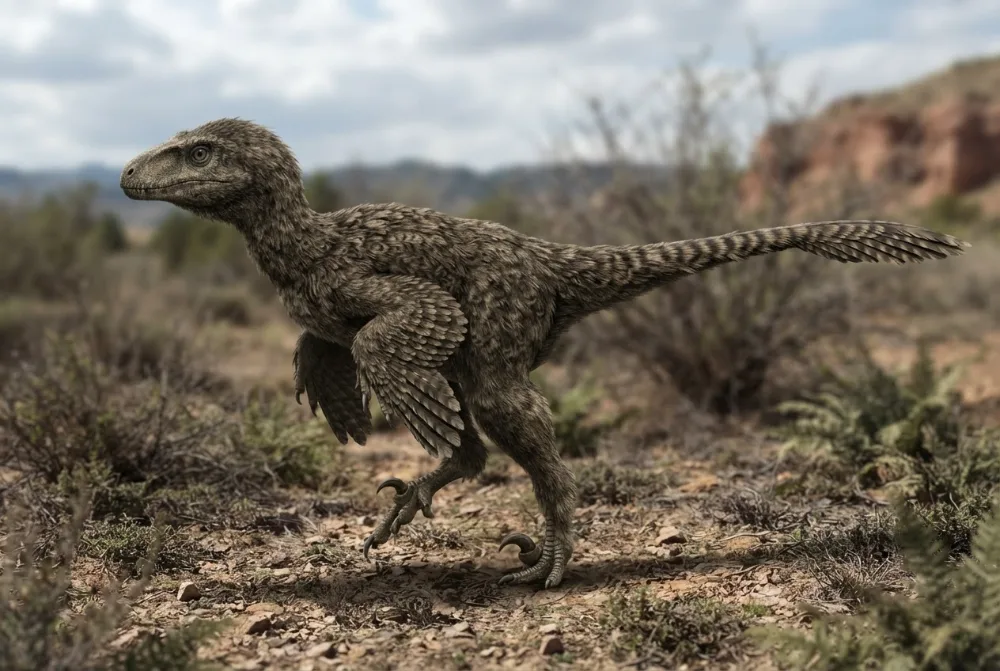
Linhevenator was a small, bird-like dinosaur that lived in what is now China. It had short, strong arms and a big claw on its foot, just like its cousins the raptors. It probably used its arms and claws to catch food.1
Rairarama rini?
Raiva hombe sei?
Raiva refu zvakadii?
Raiva rakakwirira zvakadii?
fungidziro
Rairema zvakadii?

 kureba seimbwa 2.5 kubva pamhino kusvika kumuswe🍌kureba semabhanana 15 akatevedzana🍉kurema semanwiwa 5🏃raigona kumhanya mamita 100 mumasekonzi 8.2 (munhu anomhanya kupfuura vose anoda 9.6)
Linhevenator raiva hombe sei kana richienzaniswa NEWE?
Masvomhu chete mubrowser yako. Hapana chinochengetwa kana kutumirwa kupi zvako.
Raimhanya zvakadii?


Zvinonakidza
Linhevenator had a humerus, the upper arm bone, that was much shorter and sturdier than in most other troodontids.1
Its second toe had a big, curved claw, similar to the killer claw of dromaeosaurids like Velociraptor.1
The deltopectoral crest, a bump on the upper arm bone where muscles attach, was large, suggesting strong arm muscles.1
Linhevenator lived about 83 to 72 million years ago, during the Campanian age of the Late Cretaceous.2
The only known skeleton is partly articulated, meaning some bones were still connected when found.1
Scientists think Linhevenator might have used its strong arms for digging or climbing, not just for catching prey.1
Mibvunzo inonyanya kubvunzwa nezve Linhevenator
?How big was Linhevenator?
Linhevenator was about 1.9 to 2.7 metres long (6.2 to 8.9 feet), with an average of 2.2 metres (7.2 feet). It weighed around 23 kilograms (51 pounds).3
?What did Linhevenator eat?
Scientists are not sure. Some think troodontids like Linhevenator ate plants because of their teeth, while others think they were meat-eaters. The strong arms and big claw suggest it could catch prey.43
?Did Linhevenator have feathers?
The sources do not say for sure, but troodontids were bird-like dinosaurs closely related to birds, so many scientists think they probably had feathers.3
?When did Linhevenator live?
Linhevenator lived about 83 to 72 million years ago, during the Campanian age of the Late Cretaceous.3
Mubvisi wengano
Ngano: Some people think all raptors had long, grasping arms.
Chokwadi: Linhevenator shows that some troodontids had short, strong arms, so not all raptor-like dinosaurs had long arms.1
Zvevanyanzvi vemadhino
- Zita resainzi
- Linhevenator
- Akaripa zita:
- Xu et al. 20115
- Boka
- Maraputa
- Mhuri / boka
- Troodontidae5
- Kurongwa kwemhuka
- Theropoda > Troodontidae5
- Zera rematombo
- makore mamiriyoni 84 kusvika 72 (Campanian)5
- Mapoka ematombo
- Wulansuhai5
- Nyika
- China5
- Zvinyorwa zvemafosiri
- 1 mu The Paleobiology Database5
- Kuwanikwa
- Linhevenator was named by Xu and colleagues in 2011 based on a partial skeleton found in the Wulansuhai Formation in Inner Mongolia, China.21
- Zvichiri kupokanwa
- Scientists are not sure if Linhevenator was mainly a meat-eater or if it also ate plants, because its teeth have large serrations that some researchers link to herbivory.1
Kunobva chokwadi
- A Short-Armed Troodontid Dinosaur from the Upper (ivpp.cas.cn)
- PBDB Taxon (paleobiodb.org)
- Linhevenator (en.wikipedia.org)
- A Short-Armed Troodontid Dinosaur from the Upper Cretaceous of Inner Mongolia and Its Implications for Troodontid Evolution | PLOS One (journals.plos.org)
- Linhevenator in The Paleobiology Database (CC BY 4.0): zera, nzvimbo, mapoka ematombo, kurongwa kwemhuka.
Chokwadi chega chega papeji ino chine nhamba inoratidza kwachakabva. Kana takakanganisa chimwe chinhu, ruregerero, tiri vanoda madhino, kwete magazini yesainzi. Tiudze pa [email protected] tichazvigadzirisa.
 Rex ane nzara! Dino Wiki ipurojekiti yababa yemwanakomana wavo anoda madhino, mahara, pasina kushambadza uye pasina zvinokutevera. Vakuru vanogona kupa Rex chekudyadya kuti vabatsire kuchengeta saiti iri pamhepo.Fudza Rex
 Velociraptor
 Microraptor
 Deinonychus
 Asiamericana
 Richardoestesia
 Saurornitholestes
 Tyrannosaurus
 Triceratops
 Spinosaurus
 Ankylosaurus
 Parasaurolophus
 Pteranodon