 Uri dhino ripi? Kwizi
 Hondo yemadhino
 Mujaho wemadhino
 Mitambo midiki yemadhino
 Arubhamu yemasitika
 Rondedzero dzeTOP dzemadhino
 Ndishamise!
Martinectes
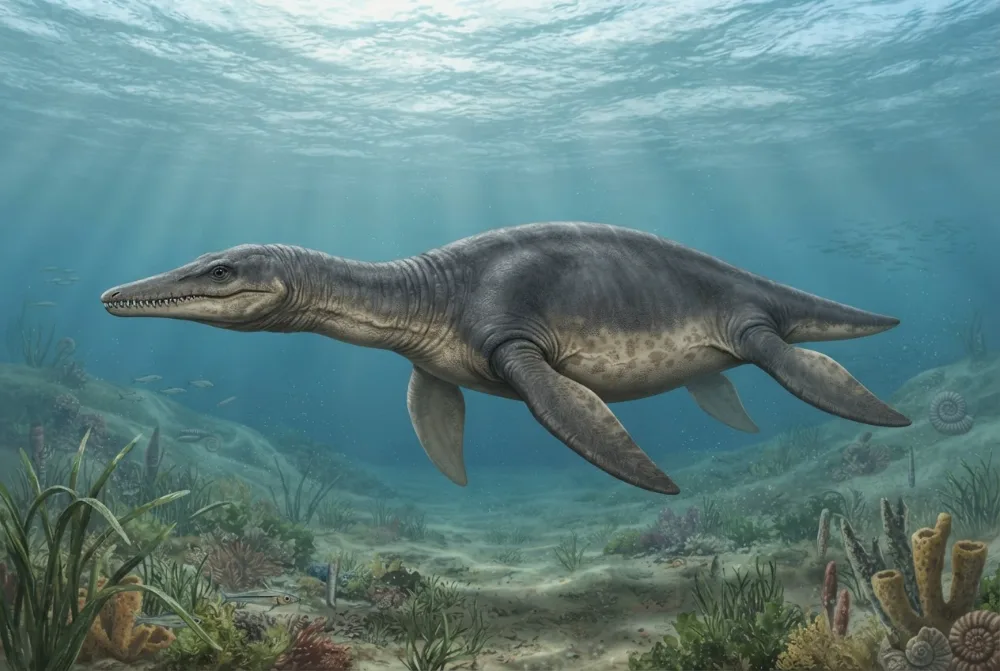
Martinectes was a small, fast-swimming marine reptile that lived in the shallow seas of North America during the time of the dinosaurs. It had a short neck, a long snout, and four big flippers that helped it chase after fish and squid.1
Rairarama rini?
Raiva hombe sei?
Raiva refu zvakadii?
Rairema zvakadii?
 kureba seimbwa 2.5 kubva pamhino kusvika kumuswe🍌kureba semabhanana 14 akatevedzana🍉kurema semanwiwa 250🧸kurema sevana vekireshi 67🎒kurema sevana vechikoro 40🐻❄️kurema semabere echando 3🏊raigona kushambira kureba kwedziva guru rekushambira (50 m) mumasekonzi 6.9
Martinectes raiva hombe sei kana richienzaniswa NEWE?
Masvomhu chete mubrowser yako. Hapana chinochengetwa kana kutumirwa kupi zvako.
Raimhanya zvakadii?


Zvinonakidza
Martinectes was one of the smallest adult polycotylid plesiosaurs ever found, measuring only about 2.3 to 2.6 metres long.1
It had large eyes with a bony ledge above them, which may have shaded its eyes from sunlight while hunting near the water's surface.1
Martinectes lived about 80 million years ago in the Western Interior Seaway, a huge ocean that split North America in two.1
Its name means 'Martin's swimmer', honoring the person who helped discover its fossils.1
Martinectes was originally thought to be a species of Dolichorhynchops, but scientists gave it its own genus in 2024.1
It had unusually wide bones in its spine and a very short back part of its skull, which helped scientists tell it apart from other plesiosaurs.1
Mibvunzo inonyanya kubvunzwa nezve Martinectes
?How big was Martinectes?
Martinectes was a large polycotylid plesiosaur, measuring at least around 5 metres (16 ft) long. Some estimates suggest it could reach up to 6 to 7 metres (20 to 23 ft), while a 2026 estimate put it at about 4.95 metres (16.2 ft) long.2
?Was Martinectes a dinosaur?
No, Martinectes was a plesiosaur, a marine reptile that lived in the seas during the time of the dinosaurs. It was not a dinosaur.2
?What did Martinectes eat?
Martinectes likely chased after fish and squid, using its long snout and four big flippers to swim fast. Its small teeth and narrow jaws suggest it ate small, slippery prey.2
Zvevanyanzvi vemadhino
- Zita resainzi
- Martinectes
- Akaripa zita:
- Clark et al. 20243
- Boka
- Mapresiosauro
- Mhuri / boka
- Polycotylidae3
- Kurongwa kwemhuka
- Plesiosauria > Sauropterygia3
- Zera rematombo
- makore mamiriyoni 84 kusvika 72 (Campanian)3
- Mapoka ematombo
- Pierre Shale, Taylor Marl3
- Nyika
- Amerika3
- Zvinyorwa zvemafosiri
- 3 mu The Paleobiology Database3
- Kuwanikwa
- Martinectes was named in 2024 by Robert O. Clark, F. Robin O'Keefe, and Sara E. Slack. They studied fossils that had been found in Wyoming and South Dakota, USA, and realized they belonged to a new genus.31
- Zvichiri kupokanwa
- Scientists are still debating exactly how Martinectes used its unusual eye ledges and wide skull for hunting.1
Kunobva chokwadi
- A new genus of small polycotylid plesiosaur from the Upper Cretaceous of the Western Interior Seaway and a clarification of the genus Dolichorhynchops (sciencedirect.com)
- Martinectes (en.wikipedia.org)
- Martinectes in The Paleobiology Database (CC BY 4.0): zera, nzvimbo, mapoka ematombo, kurongwa kwemhuka.
Chokwadi chega chega papeji ino chine nhamba inoratidza kwachakabva. Kana takakanganisa chimwe chinhu, ruregerero, tiri vanoda madhino, kwete magazini yesainzi. Tiudze pa [email protected] tichazvigadzirisa.
 Rex ane nzara! Dino Wiki ipurojekiti yababa yemwanakomana wavo anoda madhino, mahara, pasina kushambadza uye pasina zvinokutevera. Vakuru vanogona kupa Rex chekudyadya kuti vabatsire kuchengeta saiti iri pamhepo.Fudza Rex
 Elasmosaurus
 Pliosaurus
 Plesiosaurus
 Cimoliasaurus
 Colymbosaurus
 Trinacromerum
 Tyrannosaurus
 Triceratops
 Velociraptor
 Spinosaurus
 Ankylosaurus
 Parasaurolophus