 Uri dhino ripi? Kwizi
 Hondo yemadhino
 Mujaho wemadhino
 Mitambo midiki yemadhino
 Arubhamu yemasitika
 Rondedzero dzeTOP dzemadhino
 Ndishamise!
Miragaia
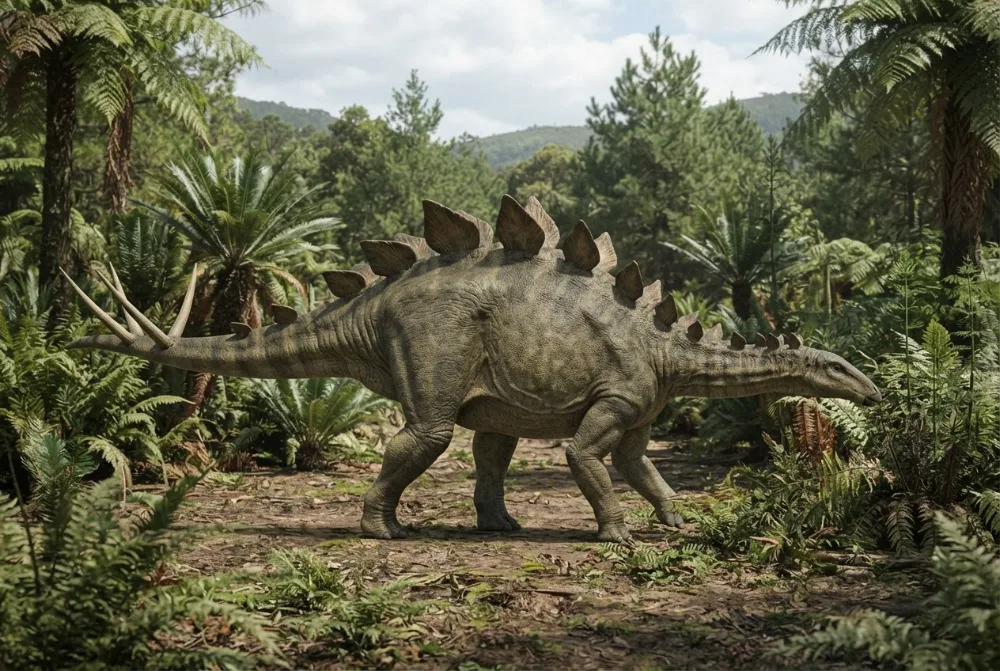
Miragaia was a stegosaur, a plant-eating dinosaur with plates and spines on its back. It had an unusually long neck, much longer than most other stegosaurs. This gentle giant lived in what is now Portugal and the United States during the Late Jurassic period.12
Rairarama rini?
Raiva hombe sei?
Raiva refu zvakadii?
Raiva rakakwirira zvakadii?
fungidziro
 kureba seimbwa 6 kubva pamhino kusvika kumuswe🍌kureba semabhanana 36 akatevedzana🏃raigona kumhanya mamita 100 mumasekonzi 24 (munhu anomhanya kupfuura vose anoda 9.6)
Miragaia raiva hombe sei kana richienzaniswa NEWE?
Masvomhu chete mubrowser yako. Hapana chinochengetwa kana kutumirwa kupi zvako.
Raimhanya zvakadii?


Zvinonakidza
Miragaia had at least 17 neck vertebrae, giving it a very long neck for a stegosaur. Most stegosaurs had fewer than 13.1
The name Miragaia comes from the village where it was found, Miragaia in Portugal, and also means 'wonderful goddess of the Earth'.1
Miragaia belonged to a group called Dacentrurinae, which includes its close relative Dacentrurus. Scientists used to think many stegosaur fossils from Portugal and Spain were Dacentrurus, but now they know some are Miragaia.1
A nearly complete skeleton of Miragaia was discovered in 1959 in Atouguia da Baleia, Peniche, Portugal, but it was not described until many years later.1
Miragaia shared features with a stegosaur from Wyoming called Alcovasaurus longispinus, suggesting that a land bridge once connected North America and Iberia (Portugal and Spain).1
The plates on Miragaia's back were probably used for display, and the spines on its tail (called a thagomizer) could have been a weapon against predators.1
Mubvisi wengano
Ngano: Miragaia is sometimes thought to be a species of Dacentrurus.
Chokwadi: Scientists now agree that Miragaia is a separate, valid genus, different from Dacentrurus in many ways, such as its longer neck and different vertebrae.1
Zvevanyanzvi vemadhino
- Zita resainzi
- Miragaia
- Akaripa zita:
- Mateus et al. 20093
- Boka
- Madhino ane mahwendefa
- Mhuri / boka
- Stegosauridae3
- Kurongwa kwemhuka
- Ornithischia > Stegosauria > Thyreophora3
- Zera rematombo
- makore mamiriyoni 155 kusvika 121 (Kimmeridgian / Barremian)3
- Mapoka ematombo
- Morrison3
- Nyika
- Amerika3
- Zvinyorwa zvemafosiri
- 31 mu The Paleobiology Database3
- Kuwanikwa
- Miragaia was named in 2009 by Octávio Mateus and colleagues, based on a partial skeleton found near the village of Miragaia in the Lourinhã Formation of Portugal. The holotype specimen includes much of the front half of the skeleton.1
- Zvichiri kupokanwa
- Scientists still debate exactly how many species of Miragaia existed, and whether some fossils from North America belong to this genus or to its close relative Dacentrurus.2
Kunobva chokwadi
- Dacentrurine stegosaurs (Dinosauria): A new specimen of Miragaia longicollum from the Late Jurassic of Portugal resolves taxonomical validity and shows the occurrence of the clade in North America (pmc.ncbi.nlm.nih.gov)
- Dacentrurine Stegosaurs in North America: New Occurrences from the Upper Jurassic of USA (Morrison Formation) (dinodata.de)
- Miragaia in The Paleobiology Database (CC BY 4.0): zera, nzvimbo, mapoka ematombo, kurongwa kwemhuka.
Chokwadi chega chega papeji ino chine nhamba inoratidza kwachakabva. Kana takakanganisa chimwe chinhu, ruregerero, tiri vanoda madhino, kwete magazini yesainzi. Tiudze pa [email protected] tichazvigadzirisa.
 Rex ane nzara! Dino Wiki ipurojekiti yababa yemwanakomana wavo anoda madhino, mahara, pasina kushambadza uye pasina zvinokutevera. Vakuru vanogona kupa Rex chekudyadya kuti vabatsire kuchengeta saiti iri pamhepo.Fudza Rex
 Stegosaurus
 Diracodon
 Hypsirophus
 Dacentrurus
 Kentrosaurus
 Hesperosaurus
 Iguanodon
 Archaeopteryx
 Giganotosaurus
 Microraptor
 Deinonychus
 Baryonyx