 Uri dhino ripi? Kwizi
 Hondo yemadhino
 Mujaho wemadhino
 Mitambo midiki yemadhino
 Arubhamu yemasitika
 Rondedzero dzeTOP dzemadhino
 Ndishamise!
Rairarama rini?

Raiva hombe sei?
Raiva refu zvakadii?
 kureba seimbwa 4 kubva pamhino kusvika kumuswe🍌kureba semabhanana 22 akatevedzana🏃raigona kumhanya mamita 100 mumasekonzi 15 (munhu anomhanya kupfuura vose anoda 9.6)
Nipponosaurus raiva hombe sei kana richienzaniswa NEWE?
Masvomhu chete mubrowser yako. Hapana chinochengetwa kana kutumirwa kupi zvako.
Raimhanya zvakadii?


Zvinonakidza
Nipponosaurus was the first dinosaur ever named from Japanese territory, though Sakhalin Island was later annexed by the Soviet Union.1
The only known skeleton is about 60% complete and belonged to a juvenile, not a full-grown adult.1
Scientists used bone histology (looking at thin slices of bone under a microscope) to confirm that the Nipponosaurus fossil was a youngster.1
Nipponosaurus lived near the coast, and its body was buried in marine sediments, meaning it probably died close to the shore.1
For many years, some scientists thought Nipponosaurus might be the same as other Asian duck-billed dinosaurs, but newer studies show it is a valid, distinct species.1
The fossil was discovered in 1934 by miners digging a hospital foundation on Sakhalin Island.1
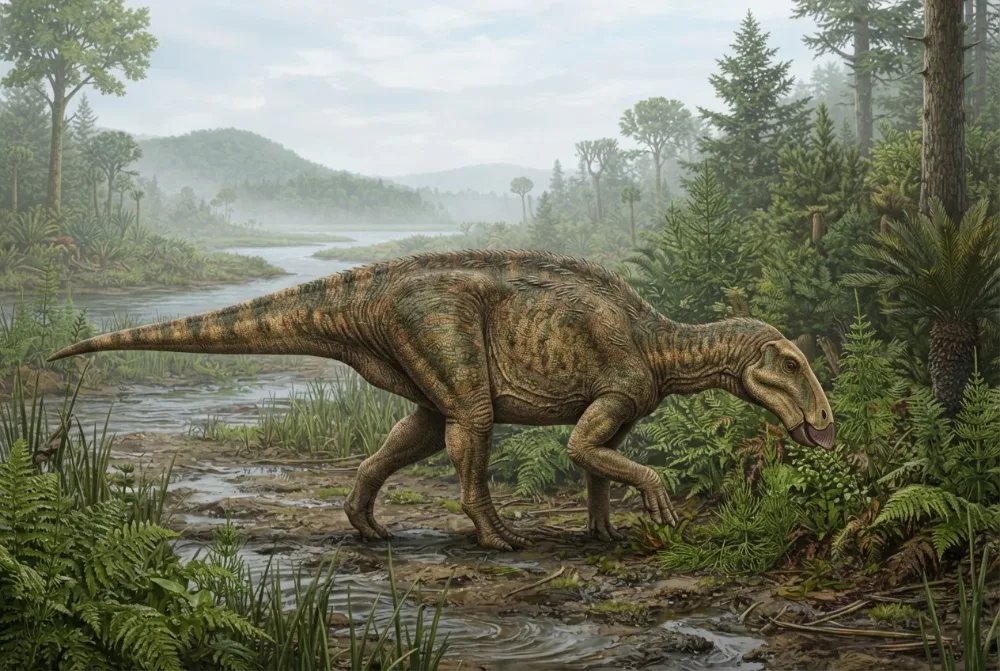
Mibvunzo inonyanya kubvunzwa nezve Nipponosaurus
?How big was Nipponosaurus?
The only known skeleton is about 4 metres (13 feet) long, but it was a juvenile, so adults may have been bigger.1
?What did Nipponosaurus eat?
It was a herbivore, meaning it ate plants. It had a big, flat beak like a duck for cropping vegetation.2
?When did Nipponosaurus live?
It lived during the Late Cretaceous, about 89 to 84 million years ago, or around 80 million years ago according to some estimates.21
?Where was Nipponosaurus found?
Its fossil was found on Sakhalin Island, which is now part of Russia, but was Japanese territory when it was discovered in 1934.12
?Was Nipponosaurus a dinosaur?
Yes, it was a type of duck-billed dinosaur called a hadrosaur, specifically a lambeosaurine.2
Mubvisi wengano
Ngano: Nipponosaurus was a full-grown adult when it died.
Chokwadi: The skeleton is from a juvenile, as shown by its small size and microscopic bone features.1
Zvevanyanzvi vemadhino
- Zita resainzi
- Nipponosaurus
- Akaripa zita:
- Nagao 19363
- Boka
- Miromo-yedhadha
- Mhuri / boka
- Hadrosauridae3
- Kurongwa kwemhuka
- Ornithischia > Ornithopoda > Iguanodontia > Hadrosauridae3
- Zera rematombo
- makore mamiriyoni 86 kusvika 72 (Santonian / Campanian)3
- Nyika
- Russia3
- Zvinyorwa zvemafosiri
- 1 mu The Paleobiology Database3
- Kuwanikwa
- Nipponosaurus was named in 1936 by Japanese paleontologist Takumi Nagao, based on a skeleton found in 1934 on Sakhalin Island.13
- Zvichiri kupokanwa
- Scientists are not sure exactly how big a full-grown Nipponosaurus was, because only a juvenile skeleton has been found.1
Kunobva chokwadi
- Nipponosaurus (en.wikipedia.org)
- Nipponosaurus (nhm.ac.uk)
- Nipponosaurus in The Paleobiology Database (CC BY 4.0): zera, nzvimbo, mapoka ematombo, kurongwa kwemhuka.
Chokwadi chega chega papeji ino chine nhamba inoratidza kwachakabva. Kana takakanganisa chimwe chinhu, ruregerero, tiri vanoda madhino, kwete magazini yesainzi. Tiudze pa [email protected] tichazvigadzirisa.
 Rex ane nzara! Dino Wiki ipurojekiti yababa yemwanakomana wavo anoda madhino, mahara, pasina kushambadza uye pasina zvinokutevera. Vakuru vanogona kupa Rex chekudyadya kuti vabatsire kuchengeta saiti iri pamhepo.Fudza Rex
 Parasaurolophus
 Edmontosaurus
 Saurolophus
 Hypacrosaurus
 Corythosaurus
 Kritosaurus
 Tyrannosaurus
 Triceratops
 Velociraptor
 Spinosaurus
 Ankylosaurus
 Pteranodon