 Uri dhino ripi? Kwizi
 Hondo yemadhino
 Mujaho wemadhino
 Mitambo midiki yemadhino
 Arubhamu yemasitika
 Rondedzero dzeTOP dzemadhino
 Ndishamise!
Platypterygius
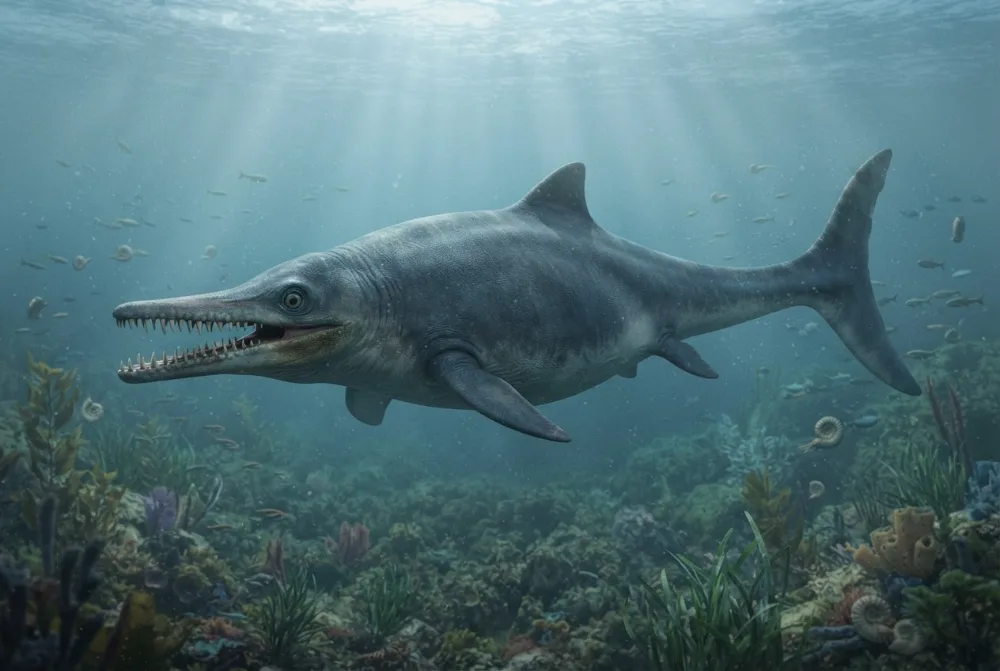
Platypterygius was a giant marine reptile that swam in the seas during the time of the dinosaurs. It looked a bit like a dolphin but had a long snout full of sharp teeth. It was a fast hunter that ate fish, sea turtles, and even baby birds.1
Rairarama rini?
Raiva hombe sei?
Raiva refu zvakadii?
 kureba seimbwa 7 kubva pamhino kusvika kumuswe🍌kureba semabhanana 39 akatevedzana🏊raigona kushambira kureba kwedziva guru rekushambira (50 m) mumasekonzi 4.4
Platypterygius raiva hombe sei kana richienzaniswa NEWE?
Masvomhu chete mubrowser yako. Hapana chinochengetwa kana kutumirwa kupi zvako.
Raimhanya zvakadii?


Zvinonakidza
Platypterygius means 'flat fin' because its flippers were wide and flat, like paddles.1
It lived from about 161 to 94 million years ago, during the Jurassic and Cretaceous periods.3
Fossils of Platypterygius have been found on every continent except Antarctica.3
Some Platypterygius fossils have baby sea turtles and bird bones in their stomachs, showing what it ate.1
Scientists think Platypterygius was a fast swimmer that chased prey in the open ocean.3
The name Platypterygius has been used for many different ichthyosaurs, and some scientists think it might include several different species.1
Mibvunzo inonyanya kubvunzwa nezve Platypterygius
?How big was Platypterygius?
Different species reached different sizes. Platypterygius platydactylus was about 5 metres (16 ft) long, while Platypterygius australis was about 7 metres (23 ft) long.1
?What did Platypterygius eat?
It was a large predator that ate fish, squid, and other marine animals. One fossil even had baby sea turtles and bird bones in its stomach.12
?Is Platypterygius a dinosaur?
No, it is not a dinosaur. It is an ichthyosaur, a marine reptile that lived in the sea at the same time as dinosaurs.12
?When did Platypterygius live?
Platypterygius lived during the Cretaceous period, from about 141 million years ago to 65 million years ago.2
Zvevanyanzvi vemadhino
- Zita resainzi
- Platypterygius
- Akaripa zita:
- von Huene 19223
- Boka
- Maikitiyosauro
- Mhuri / boka
- Ophthalmosauridae3
- Kurongwa kwemhuka
- Ichthyosauria > Ichthyosauromorpha3
- Zera rematombo
- makore mamiriyoni 162 kusvika 94 (Oxfordian / Cenomanian)3
- Mapoka ematombo
- Toolebuc, Zapata, Marnes bleues3
- Nyika
- Australia, France, Amerika, Chile, Russia, Germany3
- Zvinyorwa zvemafosiri
- 62 mu The Paleobiology Database3
- Rinonziwo
- Longirostria, Myobradypterygius, Myopterygius, Plutoniosaurus, Tenuirostria (mazita ekare zvino oonekwa semhuka imwe chete)3
- Kuwanikwa
- Platypterygius was named by German paleontologist Friedrich von Huene in 1922. The first fossils were found in Germany.3
- Zvichiri kupokanwa
- Scientists are not sure which species really belong to Platypterygius, because many different ichthyosaurs have been lumped into this group.1
Kunobva chokwadi
- Platypterygius (en.wikipedia.org)
- Dinosaurs - Platypterygius longmani - The Australian Museum (australian.museum)
- Platypterygius in The Paleobiology Database (CC BY 4.0): zera, nzvimbo, mapoka ematombo, kurongwa kwemhuka.
Chokwadi chega chega papeji ino chine nhamba inoratidza kwachakabva. Kana takakanganisa chimwe chinhu, ruregerero, tiri vanoda madhino, kwete magazini yesainzi. Tiudze pa [email protected] tichazvigadzirisa.
 Rex ane nzara! Dino Wiki ipurojekiti yababa yemwanakomana wavo anoda madhino, mahara, pasina kushambadza uye pasina zvinokutevera. Vakuru vanogona kupa Rex chekudyadya kuti vabatsire kuchengeta saiti iri pamhepo.Fudza Rex
 Ichthyosaurus
 Stenopterygius
 Khudiakovia
 Ophthalmosaurus
 Chonespondylus
 Cymbospondylus
 Stegosaurus
 Iguanodon
 Archaeopteryx
 Giganotosaurus
 Microraptor
 Deinonychus