 Uri dhino ripi? Kwizi
 Hondo yemadhino
 Mujaho wemadhino
 Mitambo midiki yemadhino
 Arubhamu yemasitika
 Rondedzero dzeTOP dzemadhino
 Ndishamise!
Ornatops
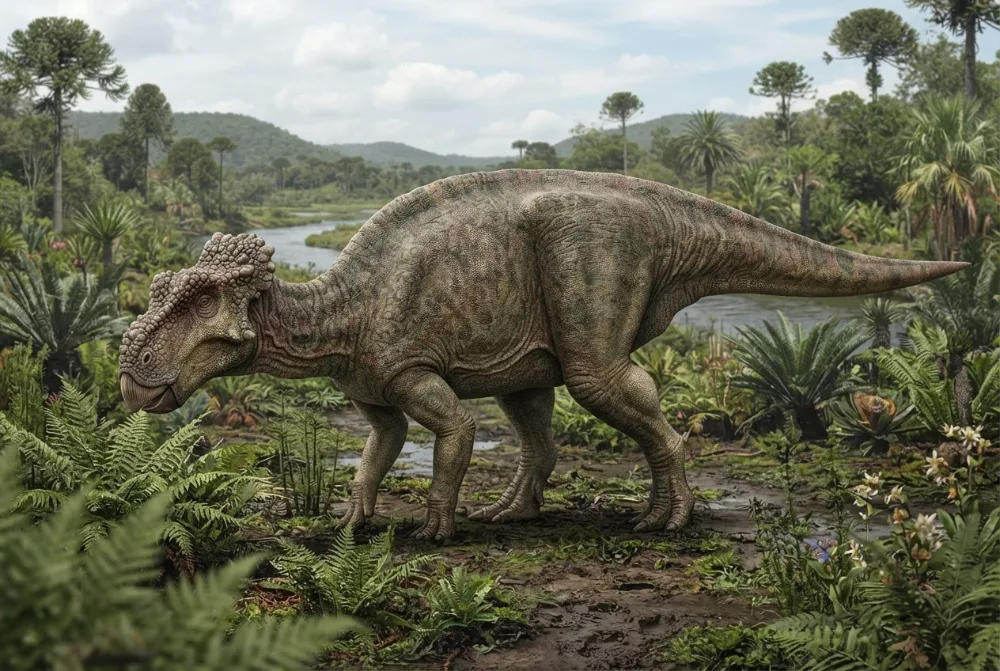
Ornatops was a duck-billed dinosaur that lived in what is now New Mexico, USA, about 78 million years ago. It had a fancy, bumpy skull that may have supported a small crest. This plant-eater is the first crested brachylophosaurin found in the southern part of its range.12
Rairarama rini?
Raiva hombe sei?
Raiva refu zvakadii?
Raiva rakakwirira zvakadii?
fungidziro
Rairema zvakadii?
 kureba semotokari 2 dzakamiswa dzakatevedzana🍌kureba semabhanana 53 akatevedzana
 kurema seimbwa 200🍉kurema semanwiwa 800🎒kurema semakirasi 5 akazara evana vechikoro🐻❄️kurema semabere echando 9🏃raigona kumhanya mamita 100 mumasekonzi 16 (munhu anomhanya kupfuura vose anoda 9.6)
Ornatops raiva hombe sei kana richienzaniswa NEWE?
Masvomhu chete mubrowser yako. Hapana chinochengetwa kana kutumirwa kupi zvako.
Raimhanya zvakadii?


Zvinonakidza
Ornatops was discovered in 2018 by staff and volunteers from the Western Science Center, Zuni Dinosaur Institute for Geosciences, and Southwest Paleontological Society.1
Its scientific name Ornatops incantatus means 'ornate face' and 'enchanted', a nod to New Mexico's nickname 'Land of Enchantment'.1
The holotype skull has a unique pair of bumps on the nasofrontal suture, suggesting it had a small crest in life.12
Ornatops is the southernmost brachylophosaurin dinosaur ever found, showing these duck-billed dinosaurs were widespread across North America.2
The fossil includes a well-preserved skull, parts of the backbone, ribs, shoulder blade, arm bones, and hip bones.1
Scientists think Ornatops was an intermediate species between Probrachylophosaurus and Brachylophosaurus.1
Mibvunzo inonyanya kubvunzwa nezve Ornatops
?What did Ornatops eat?
Ornatops was a plant-eater, like other duck-billed dinosaurs. It likely ate tough plants with its wide beak and many cheek teeth.1
?How big was Ornatops?
Scientists do not know the exact size yet because the paper describing it only studied the skull. A future study of the rest of the skeleton will give more details.1
?When did Ornatops live?
Ornatops lived about 78 million years ago, during the Late Cretaceous Period.1
Zvevanyanzvi vemadhino
- Zita resainzi
- Ornatops
- Akaripa zita:
- McDonald et al. 20214
- Boka
- Miromo-yedhadha
- Mhuri / boka
- Hadrosauridae4
- Kurongwa kwemhuka
- Ornithischia > Ornithopoda > Iguanodontia > Hadrosauridae4
- Zera rematombo
- makore mamiriyoni 84 kusvika 72 (Campanian)4
- Mapoka ematombo
- Menefee4
- Nyika
- Amerika4
- Zvinyorwa zvemafosiri
- 1 mu The Paleobiology Database4
- Kuwanikwa
- Ornatops was discovered in 2018 in the Menefee Formation of New Mexico by a team from the Western Science Center, Zuni Dinosaur Institute for Geosciences, and Southwest Paleontological Society. It was named Ornatops incantatus in 2021 by McDonald and colleagues.12
- Zvichiri kupokanwa
- Scientists are not sure about the exact size and proportions of Ornatops because the original description focused only on the skull. A future study of the rest of the skeleton is planned.1
Kunobva chokwadi
- Ornatops (en.wikipedia.org)
- A new brachylophosaurin (Dinosauria: Hadrosauridae) from the Upper Cretaceous Menefee Formation of New Mexico - PMC (pmc.ncbi.nlm.nih.gov)
- Ornatops incantatus | Dinosaur Database by DinoAnimals.com (dinoanimals.com)
- Ornatops in The Paleobiology Database (CC BY 4.0): zera, nzvimbo, mapoka ematombo, kurongwa kwemhuka.
Chokwadi chega chega papeji ino chine nhamba inoratidza kwachakabva. Kana takakanganisa chimwe chinhu, ruregerero, tiri vanoda madhino, kwete magazini yesainzi. Tiudze pa [email protected] tichazvigadzirisa.
 Rex ane nzara! Dino Wiki ipurojekiti yababa yemwanakomana wavo anoda madhino, mahara, pasina kushambadza uye pasina zvinokutevera. Vakuru vanogona kupa Rex chekudyadya kuti vabatsire kuchengeta saiti iri pamhepo.Fudza Rex
 Parasaurolophus
 Edmontosaurus
 Saurolophus
 Hypacrosaurus
 Corythosaurus
 Kritosaurus
 Tyrannosaurus
 Triceratops
 Velociraptor
 Spinosaurus
 Ankylosaurus
 Pteranodon