 Uri dhino ripi? Kwizi
 Hondo yemadhino
 Mujaho wemadhino
 Mitambo midiki yemadhino
 Arubhamu yemasitika
 Rondedzero dzeTOP dzemadhino
 Ndishamise!
Sauroplites
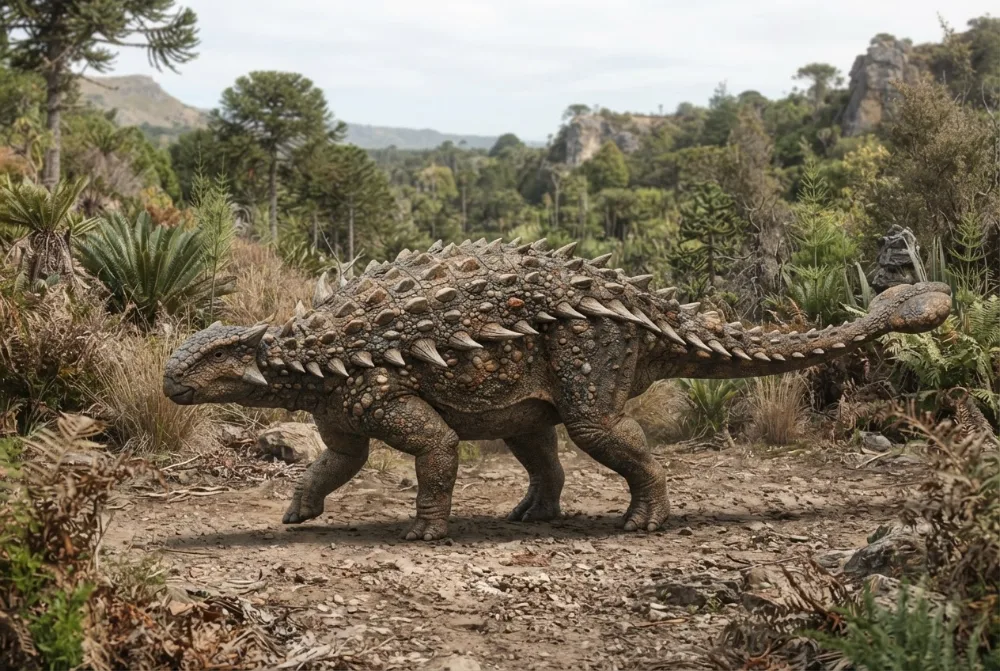
Sauroplites was an armoured dinosaur that walked on four legs and ate plants. Its back and hips were covered with a shield made of bony plates, like a suit of armour. It lived in what is now Inner Mongolia, China, during the Early Cretaceous period.14
Rairarama rini?
Raiva hombe sei?
Raiva refu zvakadii?
Raiva rakakwirira zvakadii?
 kureba seimbwa 6 kubva pamhino kusvika kumuswe🍌kureba semabhanana 31 akatevedzana🏃raigona kumhanya mamita 100 mumasekonzi 22 (munhu anomhanya kupfuura vose anoda 9.6)
Sauroplites raiva hombe sei kana richienzaniswa NEWE?
Masvomhu chete mubrowser yako. Hapana chinochengetwa kana kutumirwa kupi zvako.
Raimhanya zvakadii?


Zvinonakidza
Sauroplites had a special shield on its hips made of fused rosettes. Each rosette had one large central bony plate surrounded by a single ring of smaller plates. No other armoured dinosaur had this exact pattern.12
The largest bony plates on its back could be up to 40 centimetres (about 16 inches) long. The plates on its sides were about 30 centimetres (12 inches) across.1
The fossils of Sauroplites were discovered in 1930 by Swedish paleontologist Anders Birger Bohlin during an expedition in Inner Mongolia. The dinosaur was named and described by Bohlin in 1953.1
The original fossil bones of Sauroplites are lost today, but some casts (copies) are kept at the American Museum of Natural History in New York.1
For a long time, scientists thought Sauroplites might be a doubtful name because the fossils were so fragmentary. But in 2014, researcher Victoria Megan Arbour found a unique feature on the hip shield that proved it was a real, valid dinosaur.1
Mibvunzo inonyanya kubvunzwa nezve Sauroplites
?How big was Sauroplites?
Nobody knows for sure because the fossils are very fragmentary. The largest bony plates on its back could be up to 40 centimetres (about 16 inches) long, but no complete skeleton has been found to estimate its full size.1
?What did Sauroplites eat?
Sauroplites was an herbivore, meaning it ate plants. It had a plant-eating dinosaur's body and teeth suited for chewing vegetation.1
?Is Sauroplites a dinosaur?
Yes, Sauroplites is a dinosaur. It is an ankylosaurian dinosaur from the Early Cretaceous of China.1
Zvevanyanzvi vemadhino
- Zita resainzi
- Sauroplites
- Akaripa zita:
- Bohlin 19534
- Boka
- Madhino ane nhovo
- Mhuri / boka
- Nodosauridae4
- Kurongwa kwemhuka
- Ornithischia > Ankylosauria > Nodosauridae > Thyreophora4
- Zera rematombo
- makore mamiriyoni 121 kusvika 113 (Aptian)4
- Nyika
- China4
- Zvinyorwa zvemafosiri
- 1 mu The Paleobiology Database4
- Kuwanikwa
- Swedish paleontologist Anders Birger Bohlin discovered the fossils of Sauroplites in 1930 near Tebch in Inner Mongolia, during the Swedish-Chinese expeditions of Sven Hedin. He named and described the dinosaur in 1953.1
- Zvichiri kupokanwa
- Scientists are not sure whether Sauroplites belonged to the Nodosauridae family or the Ankylosauridae family. Some studies place it with nodosaurids because of its hip shield, but nodosaurids are rare in Asia.1
Kunobva chokwadi
- Sauroplites (en.wikipedia.org)
- PBDB Taxon (paleobiodb.org)
- Sauroplites — Facts, Size, Diet & Pronunciation | Types of Dinosaurs (typesofdinosaurs.com)
- Sauroplites in The Paleobiology Database (CC BY 4.0): zera, nzvimbo, mapoka ematombo, kurongwa kwemhuka.
Chokwadi chega chega papeji ino chine nhamba inoratidza kwachakabva. Kana takakanganisa chimwe chinhu, ruregerero, tiri vanoda madhino, kwete magazini yesainzi. Tiudze pa [email protected] tichazvigadzirisa.
 Rex ane nzara! Dino Wiki ipurojekiti yababa yemwanakomana wavo anoda madhino, mahara, pasina kushambadza uye pasina zvinokutevera. Vakuru vanogona kupa Rex chekudyadya kuti vabatsire kuchengeta saiti iri pamhepo.Fudza Rex
 Ankylosaurus
 Sauropelta
 Pinacosaurus
 Scutellosaurus
 Struthiosaurus
 Euoplocephalus
 Stegosaurus
 Iguanodon
 Archaeopteryx
 Giganotosaurus
 Microraptor
 Deinonychus