 Uri dhino ripi? Kwizi
 Hondo yemadhino
 Mujaho wemadhino
 Mitambo midiki yemadhino
 Arubhamu yemasitika
 Rondedzero dzeTOP dzemadhino
 Ndishamise!
Shingopana
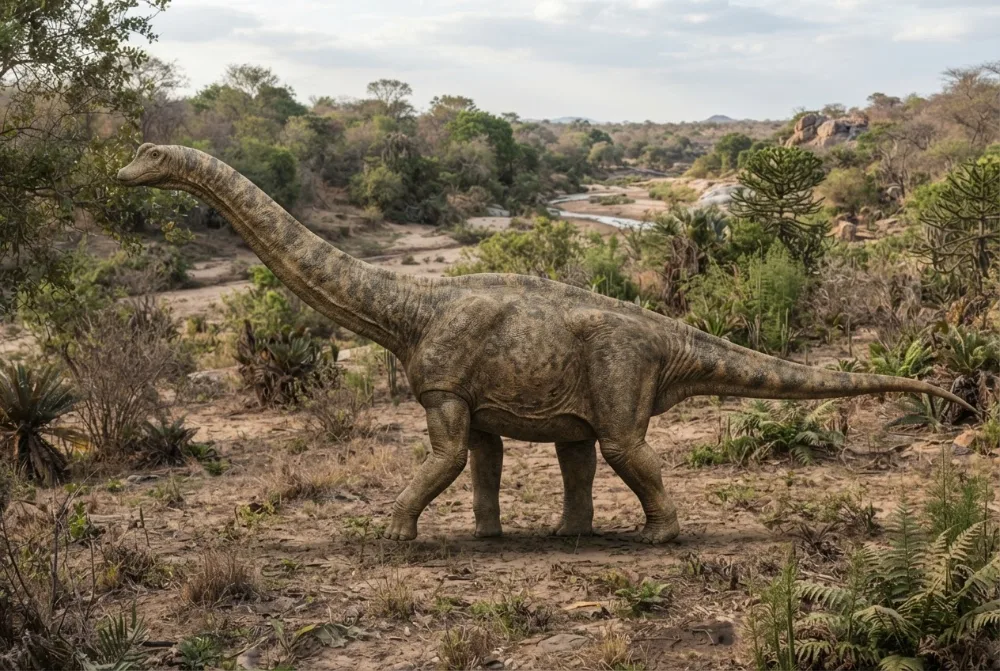
Shingopana was a long-necked dinosaur that munched on plants in ancient Tanzania. It was a titanosaur, a type of sauropod, but smaller than many of its giant cousins. Shingopana lived about 74 to 71 million years ago.12
Rairarama rini?
Raiva hombe sei?
Raiva refu zvakadii?
Raiva rakakwirira zvakadii?
fungidziro
 kureba seimbwa 8 kubva pamhino kusvika kumuswe🍌kureba semabhanana 44 akatevedzana🏃raigona kumhanya mamita 100 mumasekonzi 13 (munhu anomhanya kupfuura vose anoda 9.6)
Shingopana raiva hombe sei kana richienzaniswa NEWE?
Masvomhu chete mubrowser yako. Hapana chinochengetwa kana kutumirwa kupi zvako.
Raimhanya zvakadii?


Zvinonakidza
Shingopana's fossils had holes from insect bites that happened shortly after the dinosaur died.1
Scientists think Shingopana was more closely related to South American titanosaurs than to other African ones.1
Shingopana lived alongside other dinosaurs like Rukwatitan and Mnyamawamtuka, as well as crocodile-like reptiles and lungfish.1
The name Shingopana means 'wide neck' in Swahili, because of the bulbous parts on its neck bones.1
Shingopana is known from a partial jaw, neck bones, ribs, a shoulder bone, and a partial hip bone.1
Shingopana's ribs had flanged edges, but scientists are not sure what these were for.1
Mibvunzo inonyanya kubvunzwa nezve Shingopana
?How big was Shingopana?
Shingopana was about 8 metres (26 feet) long, which is smaller than many other sauropods.1
?What did Shingopana eat?
Shingopana was a plant-eater, munching on leaves and other vegetation.1
?Where did Shingopana live?
Shingopana lived in what is now Tanzania, in Africa, about 74 to 71 million years ago.1
Zvevanyanzvi vemadhino
- Zita resainzi
- Shingopana
- Akaripa zita:
- Gorscak et al. 20172
- Boka
- Madhino emitsipa mirefu
- Mhuri / boka
- Lithostrotia2
- Kurongwa kwemhuka
- Sauropodomorpha > Sauropoda > Titanosauria > Macronaria2
- Zera rematombo
- makore mamiriyoni 100 kusvika 72 (Cenomanian / Campanian)2
- Mapoka ematombo
- Galula2
- Nyika
- Tanzania2
- Zvinyorwa zvemafosiri
- 1 mu The Paleobiology Database2
- Kuwanikwa
- The first fossils of Shingopana were found in 2002 by scientists from the Rukwa Rift Basin Project. It was named Shingopana songwensis in 2017 by Gorscak and colleagues.12
- Zvichiri kupokanwa
- Scientists are not sure why the ribs had flanged edges or what the bulbous parts on the neck bones were for.1
Kunobva chokwadi
- Shingopana (en.wikipedia.org)
- Shingopana in The Paleobiology Database (CC BY 4.0): zera, nzvimbo, mapoka ematombo, kurongwa kwemhuka.
Chokwadi chega chega papeji ino chine nhamba inoratidza kwachakabva. Kana takakanganisa chimwe chinhu, ruregerero, tiri vanoda madhino, kwete magazini yesainzi. Tiudze pa [email protected] tichazvigadzirisa.
 Rex ane nzara! Dino Wiki ipurojekiti yababa yemwanakomana wavo anoda madhino, mahara, pasina kushambadza uye pasina zvinokutevera. Vakuru vanogona kupa Rex chekudyadya kuti vabatsire kuchengeta saiti iri pamhepo.Fudza Rex
 Brachiosaurus
 Diplodocus
 Brontosaurus
 Argentinosaurus
 Camarasaurus
 Morosaurus
 Tyrannosaurus
 Triceratops
 Velociraptor
 Spinosaurus
 Ankylosaurus
 Parasaurolophus