 Uri dhino ripi? Kwizi
 Hondo yemadhino
 Mujaho wemadhino
 Mitambo midiki yemadhino
 Arubhamu yemasitika
 Rondedzero dzeTOP dzemadhino
 Ndishamise!
Sinocephale
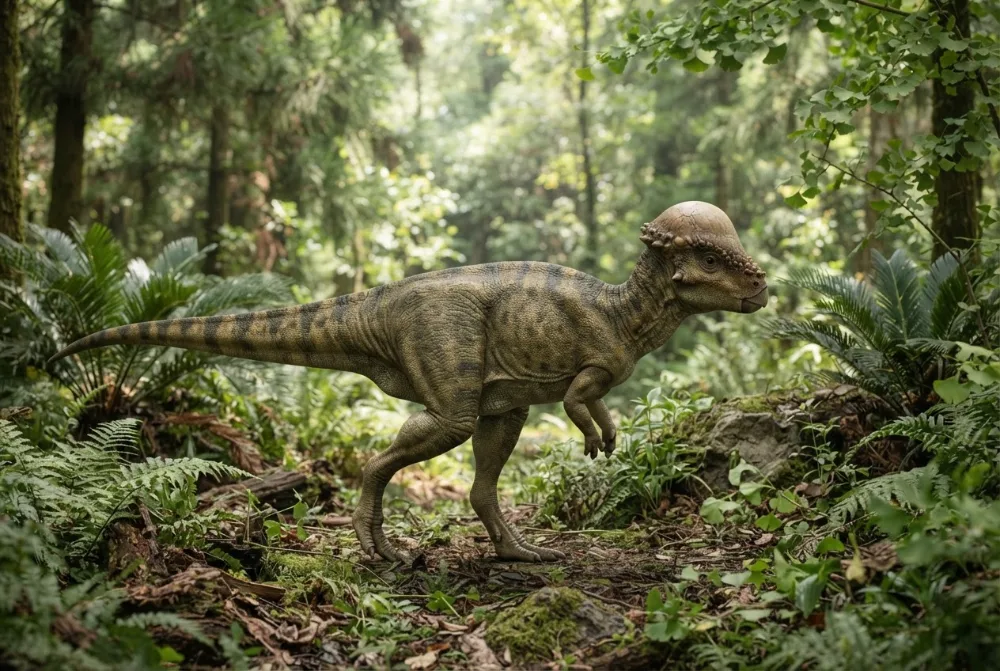
Sinocephale was a small, dome-headed dinosaur that lived in what is now China. It walked on two legs and used its thick, bony skull to head-butt rivals. Only a piece of its skull has been found, but scientists think it was a plant-eater.15
Rairarama rini?
Raiva hombe sei?
Raiva refu zvakadii?
Rairema zvakadii?

 kureba sekatsi dzemumba 4 kubva pamhino kusvika kumuswe🍌kureba semabhanana 12 akatevedzanakurema sekatsi dzemumba 12🍉kurema semanwiwa 9🧸kurema sevana vekireshi 2.5🎒kurema sevana vechikoro 1.5🏃raigona kumhanya mamita 100 mumasekonzi 8.2 (munhu anomhanya kupfuura vose anoda 9.6)
Sinocephale raiva hombe sei kana richienzaniswa NEWE?
Masvomhu chete mubrowser yako. Hapana chinochengetwa kana kutumirwa kupi zvako.
Raimhanya zvakadii?


Zvinonakidza
Sinocephale is the first pachycephalosaurid dinosaur ever found outside of North America.2
Its skull had a heart-shaped outline when viewed from above, because the back edge was deeply curved inward.1
The only known fossil is a piece of the skull roof, called a parietal bone. The original was lost, but plaster casts were found and used for study.12
Sinocephale was originally named as a species of Troodon in 1953, then moved to Stegoceras, and finally got its own genus in 2021.1
It lived during the Late Cretaceous, about 83 to 66 million years ago, in a floodplain environment with rivers.51
Sinocephale is related to famous dome-headed dinosaurs like Pachycephalosaurus and Prenocephale.1
Mibvunzo inonyanya kubvunzwa nezve Sinocephale
?How big was Sinocephale?
Nobody knows for sure, because only a piece of the skull roof has been found. The dome was about 7.5 centimetres (3 inches) thick, but the full body size is unknown.14
?Did Sinocephale have a heart-shaped skull?
Yes. The back edge of its skull was deeply curved inward, giving the skull a heart-shaped outline when seen from above.1
?When did Sinocephale live?
Sinocephale lived during the Late Cretaceous, about 83 to 66 million years ago, in what is now Inner Mongolia, China.1
?What did Sinocephale eat?
Scientists think it was a plant-eater, based on its dome-headed dinosaur relatives, though no teeth or jaws have been found.1
Mubvisi wengano
Ngano: Some people think Sinocephale was a theropod dinosaur like Troodon.
Chokwadi: Sinocephale is actually a pachycephalosaur, a dome-headed plant-eater, not a meat-eating theropod.1
Zvevanyanzvi vemadhino
- Zita resainzi
- Sinocephale
- Akaripa zita:
- Evans et al. 20215
- Boka
- Misoro-dhome
- Mhuri / boka
- Pachycephalosauridae5
- Kurongwa kwemhuka
- Ornithischia > Pachycephalosauria5
- Zera rematombo
- makore mamiriyoni 84 kusvika 66 (Campanian / Maastrichtian)5
- Mapoka ematombo
- Ulansuhai5
- Nyika
- China5
- Zvinyorwa zvemafosiri
- 1 mu The Paleobiology Database5
- Kuwanikwa
- The fossil was found in 1930 or 1931 by Swedish paleontologists in Inner Mongolia. It was named Troodon bexelli by Birger Bohlin in 1953, but later renamed Sinocephale bexelli in 2021.1
- Zvichiri kupokanwa
- Scientists are not sure exactly how old the Ulansuhai Formation is, so the age of Sinocephale is still debated.1
Kunobva chokwadi
- Sinocephale (en.wikipedia.org)
- Description and revised diagnosis of Asia’s first recorded pachycephalosaurid, Sinocephale bexelli gen. nov., from the Upper Cretaceous of Inner Mongolia, China (web.archive.org)
- Sinocephale bexelli | Dinosaur Database by DinoAnimals.com (dinoanimals.com)
- Description and revised diagnosis of Asia’s first recorded pachycephalosaurid, Sinocephale bexelli gen. nov., from the Upper Cretaceous of Inner Mongolia, China (cdnsciencepub.com)
- Sinocephale in The Paleobiology Database (CC BY 4.0): zera, nzvimbo, mapoka ematombo, kurongwa kwemhuka.
Chokwadi chega chega papeji ino chine nhamba inoratidza kwachakabva. Kana takakanganisa chimwe chinhu, ruregerero, tiri vanoda madhino, kwete magazini yesainzi. Tiudze pa [email protected] tichazvigadzirisa.
 Rex ane nzara! Dino Wiki ipurojekiti yababa yemwanakomana wavo anoda madhino, mahara, pasina kushambadza uye pasina zvinokutevera. Vakuru vanogona kupa Rex chekudyadya kuti vabatsire kuchengeta saiti iri pamhepo.Fudza Rex
 Pachycephalosaurus
 Stegoceras
 Prenocephale
 Sphaerotholus
 Foraminacephale
 Brontotholus
 Tyrannosaurus
 Triceratops
 Velociraptor
 Spinosaurus
 Ankylosaurus
 Parasaurolophus