 Uri dhino ripi? Kwizi
 Hondo yemadhino
 Mujaho wemadhino
 Mitambo midiki yemadhino
 Arubhamu yemasitika
 Rondedzero dzeTOP dzemadhino
 Ndishamise!
Rairarama rini?

Raiva hombe sei?
Raiva refu zvakadii?
Raiva rakakwirira zvakadii?
fungidziro
Rairema zvakadii?
 kureba sekatsi dzemumba 2 kubva pamhino kusvika kumuswe🍌kureba semabhanana 6 akatevedzana🪶kureruka kupfuura katsi yemumba🍌kurema semabhanana 8🪑diki zvekugona kufamba pasi pechigaro🏃raigona kumhanya mamita 100 mumasekonzi 19 (munhu anomhanya kupfuura vose anoda 9.6)
Sinosauropteryx raiva hombe sei kana richienzaniswa NEWE?
Masvomhu chete mubrowser yako. Hapana chinochengetwa kana kutumirwa kupi zvako.
Raimhanya zvakadii?


Zvinonakidza
Sinosauropteryx was the first feathered dinosaur discovered that was not directly related to birds.1
Scientists used Sinosauropteryx to figure out a dinosaur's color pattern for the first time ever.1
A fossil of Sinosauropteryx has a tiny lizard preserved in its stomach, showing what it ate for its last meal.1
Sinosauropteryx had over 50 very long tail bones, which made up about 60% of its body length.2
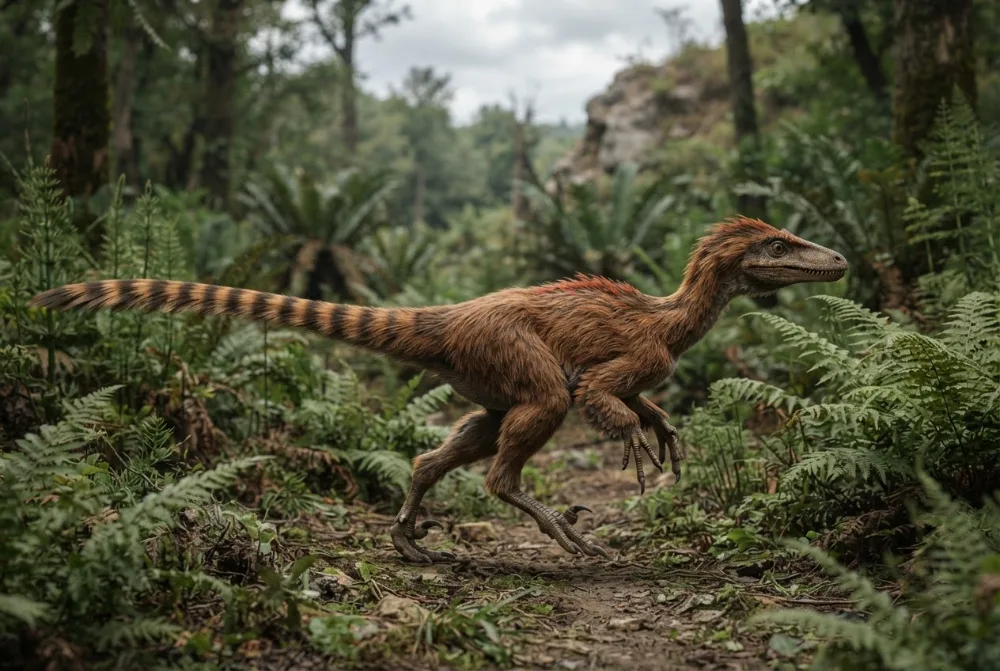
Its feathers were short and simple, like down feathers, not like the flight feathers of modern birds.2
Sinosauropteryx could not fly, but it could run fast on two legs, like an ostrich.2
One of the small mammals Sinosauropteryx ate, called Zhangheotherium, may have been venomous, with spurs on its ankles like a platypus.1
Mibvunzo inonyanya kubvunzwa nezve Sinosauropteryx
?How big was Sinosauropteryx?
About 1.07 metres (3.5 feet) long and weighed around 0.55 kilograms (1.2 pounds). That is about as long as a skateboard but much lighter.31
?Did Sinosauropteryx have feathers?
Yes, it had a coat of thin, hair-like feathers. It was the first non-avian dinosaur discovered with evidence of feathers.13
?What did Sinosauropteryx eat?
It ate small animals like lizards, mammals, and insects. One fossil even has a tiny lizard preserved in its stomach.13
?When did Sinosauropteryx live?
It lived during the Early Cretaceous period, about 125 to 122 million years ago.13
?Where was Sinosauropteryx found?
Its fossils were found in Liaoning Province in northeastern China.13
?What color was Sinosauropteryx?
Scientists think it was reddish-brown with a light belly and dark and light bands on its tail, like a camouflage pattern.13
Zvevanyanzvi vemadhino
- Zita resainzi
- Sinosauropteryx
- Akaripa zita:
- Ji and Ji 19965
- Boka
- Madhino anodya nyama
- Mhuri / boka
- Sinosauropterygidae5
- Kurongwa kwemhuka
- Theropoda5
- Zera rematombo
- makore mamiriyoni 126 kusvika 120 (Barremian / Aptian)5
- Mapoka ematombo
- Yixian5
- Nyika
- China5
- Zvinyorwa zvemafosiri
- 4 mu The Paleobiology Database5
- Kuwanikwa
- A fossil hunter named Li Yumin found the first Sinosauropteryx remains in 1996 in Liaoning, China. He sold the fossils to museums, and scientists Ji and Ji named the dinosaur in the same year.15
Kunobva chokwadi
- Sinosauropteryx | Natural History Museum (nhm.ac.uk)
- On the Discovery of the earliest fossil bird in China (Sinosauropteryx (naturalhistory.si.edu)
- Sinosauropteryx (en.wikipedia.org)
- Dinosaurs - Sinosauropteryx prima - The Australian Museum (australian.museum)
- Sinosauropteryx in The Paleobiology Database (CC BY 4.0): zera, nzvimbo, mapoka ematombo, kurongwa kwemhuka.
Chokwadi chega chega papeji ino chine nhamba inoratidza kwachakabva. Kana takakanganisa chimwe chinhu, ruregerero, tiri vanoda madhino, kwete magazini yesainzi. Tiudze pa [email protected] tichazvigadzirisa.
 Rex ane nzara! Dino Wiki ipurojekiti yababa yemwanakomana wavo anoda madhino, mahara, pasina kushambadza uye pasina zvinokutevera. Vakuru vanogona kupa Rex chekudyadya kuti vabatsire kuchengeta saiti iri pamhepo.Fudza Rex
 Allosaurus
 Carnotaurus
 Dilophosaurus
 Giganotosaurus
 Compsognathus
 Paronychodon
 Stegosaurus
 Iguanodon
 Archaeopteryx
 Microraptor
 Deinonychus
 Baryonyx