 Uri dhino ripi? Kwizi
 Hondo yemadhino
 Mujaho wemadhino
 Mitambo midiki yemadhino
 Arubhamu yemasitika
 Rondedzero dzeTOP dzemadhino
 Ndishamise!
Suzhousaurus
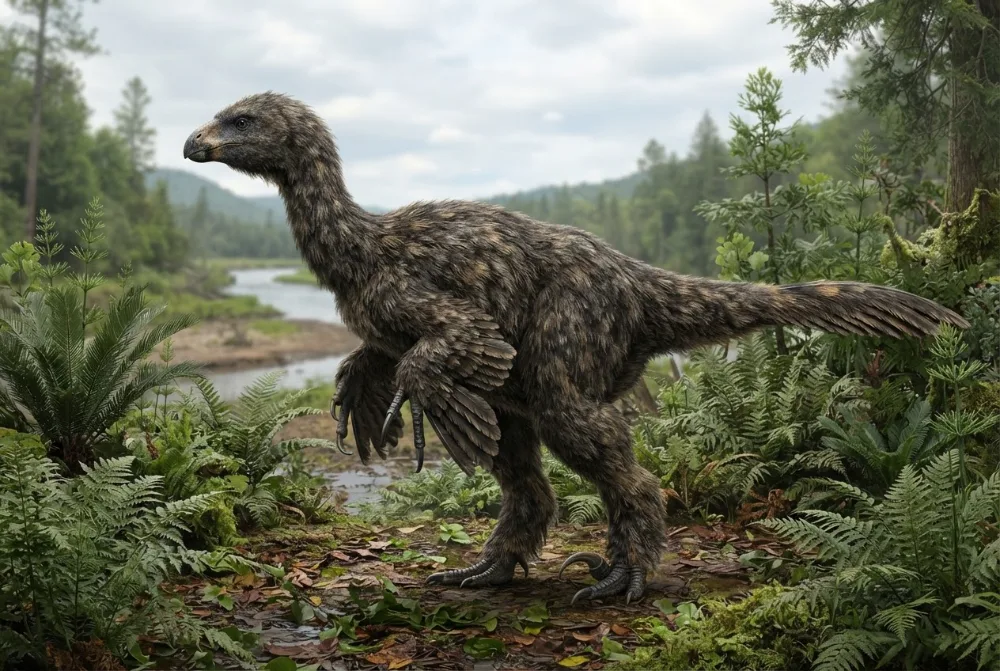
Suzhousaurus was a huge, plant-eating dinosaur with a big belly, strong legs, and long claws. It lived in China during the Early Cretaceous, about 124 to 113 million years ago. It probably had feathers, just like its close relatives!1
Rairarama rini?
Raiva hombe sei?
Raiva refu zvakadii?
Raiva rakakwirira zvakadii?
fungidziro
Rairema zvakadii?

 kureba seimbwa 6 kubva pamhino kusvika kumuswe🍌kureba semabhanana 33 akatevedzanakurema seimbwa 160🍉kurema semanwiwa 620🎒kurema semakirasi 4 akazara evana vechikoro🐻❄️kurema semabere echando 7🏃raigona kumhanya mamita 100 mumasekonzi 22 (munhu anomhanya kupfuura vose anoda 9.6)
Suzhousaurus raiva hombe sei kana richienzaniswa NEWE?
Masvomhu chete mubrowser yako. Hapana chinochengetwa kana kutumirwa kupi zvako.
Raimhanya zvakadii?


Zvinonakidza
Suzhousaurus was one of the largest Early Cretaceous therizinosauroids, reaching about 6 metres (20 feet) long and weighing around 3.1 tonnes (3,100 kilograms).1
Its upper arm bone (humerus) had very expanded ends and a big entepicondyle, which helped scientists identify it as a therizinosauroid.3
Unlike more advanced therizinosaurids, Suzhousaurus's backbone was not highly pneumatized, meaning it had fewer air spaces in its vertebrae.1
Its pelvis was opisthopubic, a feature that is typical of therizinosaurids, even though Suzhousaurus was a more basal member of the group.1
Suzhousaurus had a large belly and a reduced tail, which helped it balance its heavy body.1
Feather impressions from the related Beipiaosaurus suggest that Suzhousaurus was probably at least partially feathered.1
The first specimen, FRDC-GSJB-99, was found in 1999 and includes a right humerus, shoulder bones, ten back vertebrae, and part of the pelvis, but no skull.1
A second, more complete skeleton found in 2004 includes the sacrum, tail vertebrae, a nearly complete pelvis, and both thigh bones.1
Mibvunzo inonyanya kubvunzwa nezve Suzhousaurus
?How big was Suzhousaurus?
Suzhousaurus was about 6 metres (20 feet) long and weighed around 3.1 tonnes (3,100 kilograms). That makes it one of the largest Early Cretaceous therizinosauroids.1
?What did Suzhousaurus eat?
It was a plant-eater. It had a big belly, strong legs, and long claws for browsing on plants.1
?Did Suzhousaurus have feathers?
Probably yes. Feather impressions from its close relative Beipiaosaurus suggest that Suzhousaurus was at least partially feathered.1
?When did Suzhousaurus live?
It lived during the Early Cretaceous, about 124 to 113 million years ago, in what is now China.1
?Was Suzhousaurus a dinosaur?
Yes, it was a theropod dinosaur, specifically a therizinosauroid.1
?Why did Suzhousaurus have long claws?
Its long claws were probably used for pulling down branches and leaves to eat, like other therizinosauroids.1
Zvevanyanzvi vemadhino
- Zita resainzi
- Suzhousaurus
- Akaripa zita:
- Li et al. 20074
- Boka
- Madhino ane minhenga anoshamisa
- Mhuri / boka
- Therizinosauridae4
- Kurongwa kwemhuka
- Theropoda > Therizinosauria4
- Zera rematombo
- makore mamiriyoni 121 kusvika 110 (Aptian / Albian)4
- Mapoka ematombo
- Xiagou, Zhonggou4
- Nyika
- China4
- Zvinyorwa zvemafosiri
- 2 mu The Paleobiology Database4
- Kuwanikwa
- The first Suzhousaurus fossil was found in 1999 in the Yujingzi Basin, China. Scientists named it Suzhousaurus megatherioides in 2007, and the name means 'Suzhou lizard' after the old name for the Jiuquan area.1
- Zvichiri kupokanwa
- Scientists are not sure if Suzhousaurus is the same animal as another therizinosauroid called 'Nanshiungosaurus' bohlini, because the fossils do not overlap and the original specimen is lost.1
Kunobva chokwadi
- Suzhousaurus (en.wikipedia.org)
- PBDB Taxon (paleobiodb.org)
- A Large Therizinosauroid (Dinosauria: Theropoda) from the Early Cretaceous of Northwestern China (onlinelibrary.wiley.com)
- Suzhousaurus in The Paleobiology Database (CC BY 4.0): zera, nzvimbo, mapoka ematombo, kurongwa kwemhuka.
Chokwadi chega chega papeji ino chine nhamba inoratidza kwachakabva. Kana takakanganisa chimwe chinhu, ruregerero, tiri vanoda madhino, kwete magazini yesainzi. Tiudze pa [email protected] tichazvigadzirisa.
 Rex ane nzara! Dino Wiki ipurojekiti yababa yemwanakomana wavo anoda madhino, mahara, pasina kushambadza uye pasina zvinokutevera. Vakuru vanogona kupa Rex chekudyadya kuti vabatsire kuchengeta saiti iri pamhepo.Fudza Rex
 Therizinosaurus
 Oviraptor
 Chirostenotes
 Citipes
 Leptorhynchos
 Avimimus
 Stegosaurus
 Iguanodon
 Archaeopteryx
 Giganotosaurus
 Microraptor
 Deinonychus