 Uri dhino ripi? Kwizi
 Hondo yemadhino
 Mujaho wemadhino
 Mitambo midiki yemadhino
 Arubhamu yemasitika
 Rondedzero dzeTOP dzemadhino
 Ndishamise!
Yamatosaurus
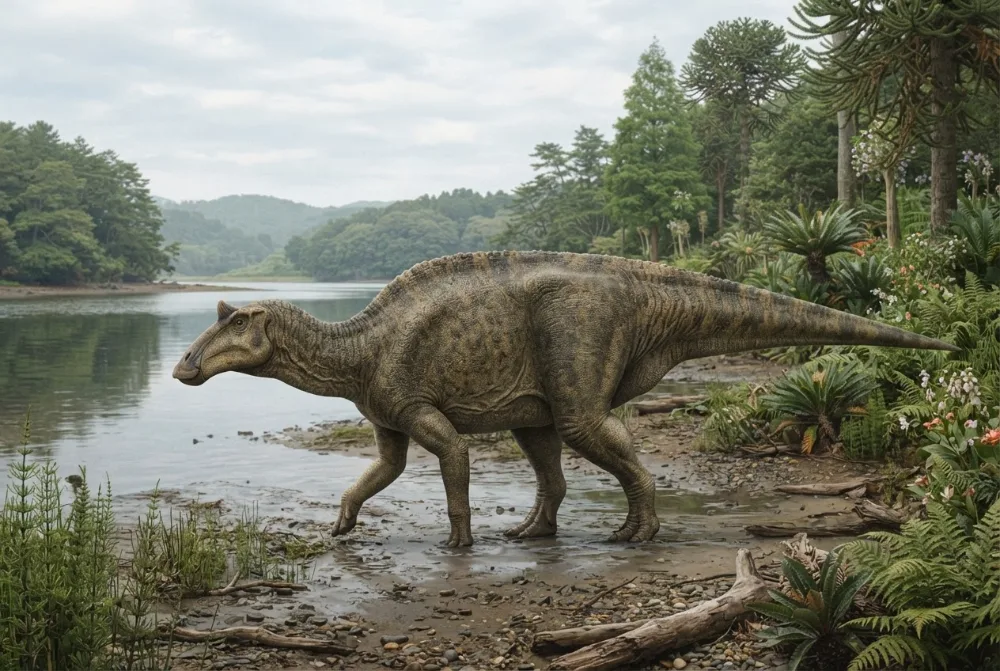
Yamatosaurus was a duck-billed dinosaur that lived in Japan near the end of the age of dinosaurs. It had a special jaw with only one tooth at a time in each spot, which is different from most other duck-billed dinosaurs. This plant-eater probably lived in coastal areas.21
Rairarama rini?
Raiva hombe sei?
Raiva refu zvakadii?
Raiva rakakwirira zvakadii?
Rairema zvakadii?
 kureba semotokari 2 dzakamiswa dzakatevedzana🍌kureba semabhanana 56 akatevedzana
 kurema seimbwa 85🍉kurema semanwiwa 340🧸kurema sevana vekireshi 89🎒kurema sevana vechikoro 53🐻❄️kurema semabere echando 4🏃raigona kumhanya mamita 100 mumasekonzi 13 (munhu anomhanya kupfuura vose anoda 9.6)
Yamatosaurus raiva hombe sei kana richienzaniswa NEWE?
Masvomhu chete mubrowser yako. Hapana chinochengetwa kana kutumirwa kupi zvako.
Raimhanya zvakadii?


Zvinonakidza
Yamatosaurus had only one tooth in each tooth socket at a time, which is very unusual for a duck-billed dinosaur.2
It lived about 72 to 66 million years ago during the Maastrichtian stage of the Late Cretaceous.3
The fossils were found in marine rocks, meaning the dinosaur's body was washed into the sea after it died.2
Yamatosaurus is one of the oldest known hadrosaurids, or duck-billed dinosaurs, from Japan.2
Its shoulder bone, the coracoid, lacks a bump called the biceps tubercle, which is a primitive feature.2
The name Yamatosaurus comes from Yamato, an ancient name for Japan.1
Mibvunzo inonyanya kubvunzwa nezve Yamatosaurus
?How big was Yamatosaurus?
Scientists do not know its exact size because only a partial skeleton has been found, including parts of the jaw, neck bones, and shoulder bone.12
?What did Yamatosaurus eat?
It was a plant-eater, like other duck-billed dinosaurs. Its teeth were adapted for chewing plants.1
Zvevanyanzvi vemadhino
- Zita resainzi
- Yamatosaurus
- Akaripa zita:
- Kobayashi et al. 20215
- Boka
- Miromo-yedhadha
- Mhuri / boka
- Hadrosauridae5
- Kurongwa kwemhuka
- Ornithischia > Ornithopoda > Iguanodontia > Hadrosauridae5
- Zera rematombo
- makore mamiriyoni 72 kusvika 66 (Maastrichtian)5
- Mapoka ematombo
- Kita-ama5
- Nyika
- Japan5
- Zvinyorwa zvemafosiri
- 1 mu The Paleobiology Database5
- Kuwanikwa
- An amateur fossil collector named Shingo Kishimoto discovered the partial skeleton in May 2004 on Awaji Island, Japan. Scientists Yoshitsugu Kobayashi and colleagues named it Yamatosaurus izanagii in 2021.12
- Zvichiri kupokanwa
- Scientists are not sure exactly how Yamatosaurus is related to other duck-billed dinosaurs, but they think it is a very early member of the group.2
Kunobva chokwadi
- Yamatosaurus (en.wikipedia.org)
- nature.com (nature.com)
- PBDB Taxon (paleobiodb.org)
- Yamatosaurus izanagii | Dinosaur Database by DinoAnimals.com (dinoanimals.com)
- Yamatosaurus in The Paleobiology Database (CC BY 4.0): zera, nzvimbo, mapoka ematombo, kurongwa kwemhuka.
Chokwadi chega chega papeji ino chine nhamba inoratidza kwachakabva. Kana takakanganisa chimwe chinhu, ruregerero, tiri vanoda madhino, kwete magazini yesainzi. Tiudze pa [email protected] tichazvigadzirisa.
 Rex ane nzara! Dino Wiki ipurojekiti yababa yemwanakomana wavo anoda madhino, mahara, pasina kushambadza uye pasina zvinokutevera. Vakuru vanogona kupa Rex chekudyadya kuti vabatsire kuchengeta saiti iri pamhepo.Fudza Rex
 Parasaurolophus
 Edmontosaurus
 Saurolophus
 Hypacrosaurus
 Corythosaurus
 Kritosaurus
 Tyrannosaurus
 Triceratops
 Velociraptor
 Spinosaurus
 Ankylosaurus
 Pteranodon