 Uri dhino ripi? Kwizi
 Hondo yemadhino
 Mujaho wemadhino
 Mitambo midiki yemadhino
 Arubhamu yemasitika
 Rondedzero dzeTOP dzemadhino
 Ndishamise!
Zhejiangopterus
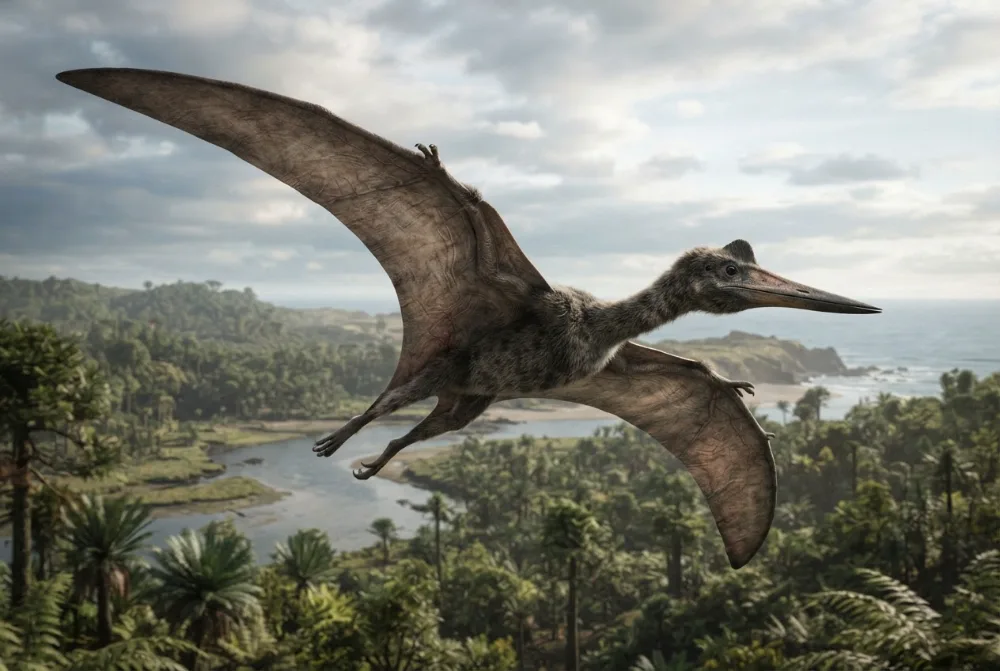
Zhejiangopterus was a huge flying reptile that lived in ancient China. It had a long, toothless beak like a modern bird and a wingspan wider than a car is long. It soared over the Late Cretaceous skies hunting for fish.31
Rairarama rini?
Raiva hombe sei?
Mapapiro aro aiva akapamhama zvakadii?
Rairema zvakadii?
 mapapiro akapamhama semabhasikoro 3 akatevedzana
 kurema kunenge sekatsi yemumba🍌kurema semabhanana 66⚽raigona kubhururuka richiyambuka nhandare yose yebhora mumasekonzi 5.5
Zhejiangopterus raiva hombe sei kana richienzaniswa NEWE?
Masvomhu chete mubrowser yako. Hapana chinochengetwa kana kutumirwa kupi zvako.
Raimhanya zvakadii?


Zvinonakidza
Zhejiangopterus had no teeth at all. Its beak was long, thin and pointed, perfect for grabbing fish.1
Its skull was long and low, with a single large oval opening that took up nearly half the length of the head.1
The wing finger metacarpal bone was longer than the combined radius and ulna bones in the arm.1
Its thigh bone was about one and a half times longer than its upper arm bone.1
Zhejiangopterus lived around 81.5 million years ago, during the Late Cretaceous period.1
It was discovered by a local villager named Chengfa Xu in 1986 while he was splitting rocks in a quarry.1
Mibvunzo inonyanya kubvunzwa nezve Zhejiangopterus
?How big was Zhejiangopterus?
Its wingspan was first estimated at 5 meters (16.4 feet), but later estimates reduced it to about 3.5 meters (11.5 feet). Its body mass was around 7.9 kilograms (roughly 17 pounds).2
?Did Zhejiangopterus have teeth?
No, it had no teeth at all. Its beak was long, thin, and sharply pointed.2
?What did Zhejiangopterus eat?
It likely ate fish, grabbing them with its long, toothless beak.2
?When did Zhejiangopterus live?
It lived about 81.5 million years ago, during the Late Cretaceous Period.2
?Where was Zhejiangopterus found?
It was discovered in Zhejiang Province, China, near the city of Linhai.2
?Is Zhejiangopterus a dinosaur?
No, it is a pterosaur, a flying reptile that is not a dinosaur.2
Zvevanyanzvi vemadhino
- Zita resainzi
- Zhejiangopterus
- Akaripa zita:
- Cai and Wei 19943
- Boka
- Zvinokambaira zvinobhururuka
- Mhuri / boka
- Azhdarchidae3
- Kurongwa kwemhuka
- Pterosauria > Pterodactyloidea > Azhdarchidae3
- Zera rematombo
- makore mamiriyoni 84 kusvika 72 (Campanian)3
- Mapoka ematombo
- Tangshang3
- Nyika
- China3
- Zvinyorwa zvemafosiri
- 1 mu The Paleobiology Database3
- Kuwanikwa
- Zhejiangopterus was named in 1994 by Chinese paleontologists Cai Zhengquan and Wei Feng. The first fossils were found in 1986 by a villager named Chengfa Xu in a quarry near Linhai, Zhejiang, China.31
- Zvichiri kupokanwa
- Scientists are not sure whether Zhejiangopterus belongs to the family Nyctosauridae or Azhdarchidae. Different studies place it in different groups.31
Kunobva chokwadi
- Zhejiangopterus linhaiensis (Pterosauria) from the Upper Cretaceous of Linhai, Zhejiang, China (naturalhistory.si.edu)
- Zhejiangopterus (en.wikipedia.org)
- Zhejiangopterus in The Paleobiology Database (CC BY 4.0): zera, nzvimbo, mapoka ematombo, kurongwa kwemhuka.
Chokwadi chega chega papeji ino chine nhamba inoratidza kwachakabva. Kana takakanganisa chimwe chinhu, ruregerero, tiri vanoda madhino, kwete magazini yesainzi. Tiudze pa [email protected] tichazvigadzirisa.
 Rex ane nzara! Dino Wiki ipurojekiti yababa yemwanakomana wavo anoda madhino, mahara, pasina kushambadza uye pasina zvinokutevera. Vakuru vanogona kupa Rex chekudyadya kuti vabatsire kuchengeta saiti iri pamhepo.Fudza Rex
 Pteranodon
 Quetzalcoatlus
 Dorygnathus
 Rhamphorhynchus
 Anhanguera
 Pterodactylus
 Tyrannosaurus
 Triceratops
 Velociraptor
 Spinosaurus
 Ankylosaurus
 Parasaurolophus