 Kuizi: Çfarë dinozauri je?
 Beteja e dinozaurëve
 Gara e dinozaurëve
 Minilojëra me dinozaurë
 Albumi i stikerave
 Listat TOP të dinozaurëve
 Më surprizo!
Europejara
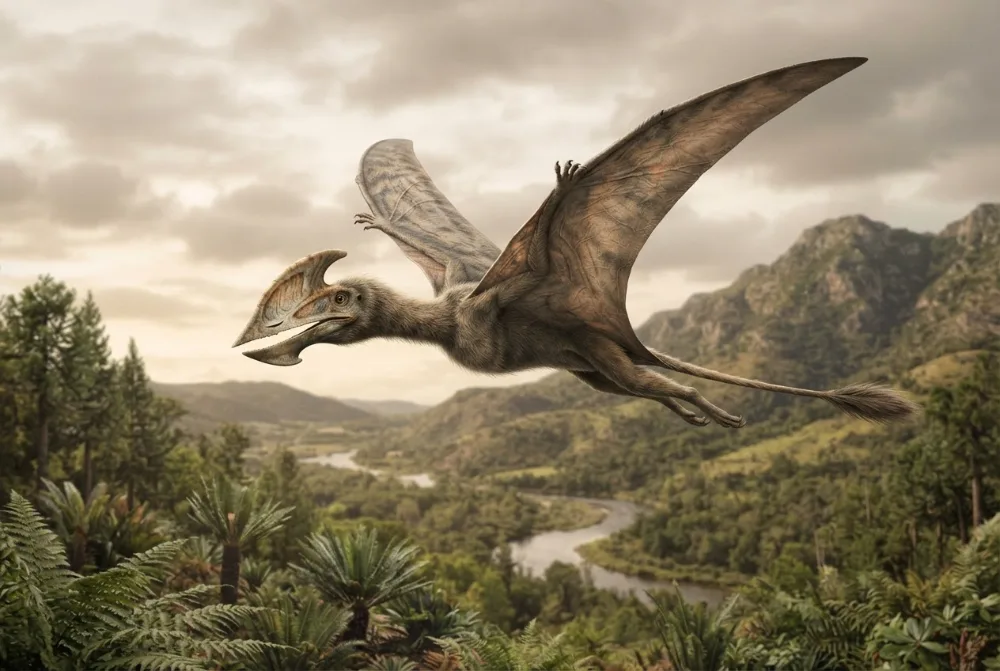
Europejara was a flying reptile with a big, bony crest on its chin that curved backwards. It lived in what is now Spain during the Early Cretaceous, about 130 to 125 million years ago. This pterosaur had no teeth and probably ate fruits and seeds.21
Kur jetoi?
Sa i madh ishte?
Sa të hapur ishin krahët e tij?
 krahë të gjerë sa 2 biçikleta në rresht⚽mund të fluturonte përmes një fushe të tërë futbolli për 6 sekonda
Sa i madh ishte Europejara krahasuar me TY?
Vetëm matematikë në shfletuesin tënd. Asgjë nuk ruhet dhe asgjë nuk dërgohet askund.
Sa i shpejtë ishte?


Fakte argëtuese
Europejara is the oldest known toothless pterosaur, meaning it had no teeth at all.2
It was the first tapejarid pterosaur ever found in Europe. Before that, tapejarids were only known from China and Brazil.2
Europejara had a strange crest on its lower jaw that curved backwards, which is different from other tapejarids.2
Its wingspan was about 2 to 4 metres (6.6 to 13.1 feet), making it a medium-sized pterosaur.1
The only fossil found is a crushed skull and lower jaw, preserved in fine limestone from an ancient lake.2
Scientists think Europejara may have helped spread early flowering plants by eating their fruits and pooping out the seeds.2
Pyetjet më të shpeshta për Europejara
?How big was Europejara?
It was a small to medium sized pterosaur. Its wingspan was about 2 to 4 metres (6.6 to 13.1 feet).1
?Did Europejara have teeth?
No, it had no teeth. It was the oldest known toothless pterosaur when it was discovered.12
Për ekspertët e dinozaurëve
- Emri shkencor
- Europejara
- Emërtuar nga
- Vullo et al. 20123
- Grupi
- Zvarranikët fluturues
- Familja / klada
- Azhdarchoidea3
- Klasifikimi
- Pterosauria > Pterodactyloidea3
- Mosha e shkëmbinjve
- 126 deri në 121 milionë vjet (Barremian)3
- Formacionet shkëmbore
- La Huérguina3
- Vendet
- Spanja3
- Gjetjet fosile
- 1 në The Paleobiology Database3
- Zbulimi
- Europejara was named in 2012 by Romain Vullo and colleagues based on a skull found at Las Hoyas in Spain. The name means 'Europe's old being' and honors the ancient Olcades people.13
- Ende i diskutueshëm
- Scientists are not sure if Europejara was a fruit-eater or an omnivore that also ate insects and small animals. The evidence from its beak shape is not enough to be certain.2
Nga vijnë faktet
- Europejara (en.wikipedia.org)
- A New Crested Pterosaur from the Early Cretaceous of Spain: The First European Tapejarid (Pterodactyloidea: Azhdarchoidea) | PLOS One (journals.plos.org)
- Europejara in The Paleobiology Database (CC BY 4.0): mosha, vendet, formacionet shkëmbore, klasifikimi.
Çdo fakt në këtë faqe ka një numër që të çon te burimi i tij. Nëse kemi gabuar diçka, na fal, ne jemi fansa dinozaurësh, jo revistë shkencore. Na shkruaj në [email protected] dhe do ta rregullojmë.
 Rexi ka uri! Dino Wiki është projekti i një babai për djalin e tij që i do dinozaurët, falas, pa reklama dhe pa gjurmues. Të rriturit mund t'i japin Rexit një meze për ta mbajtur online.Ushqe Rexin
 Pteranodon
 Quetzalcoatlus
 Dorygnathus
 Rhamphorhynchus
 Anhanguera
 Pterodactylus
 Stegosaurus
 Iguanodon
 Archaeopteryx
 Giganotosaurus
 Microraptor
 Deinonychus