 Kwisi: O dinosaure efe?
 Ntwa ya didinosaure
 Peiso ya didinosaure
 Dipapadi tse nyane tsa didinosaure
 Albamo ya ditikara
 Manane a TOP a didinosaure
 Nkgethele!
Boreonykus
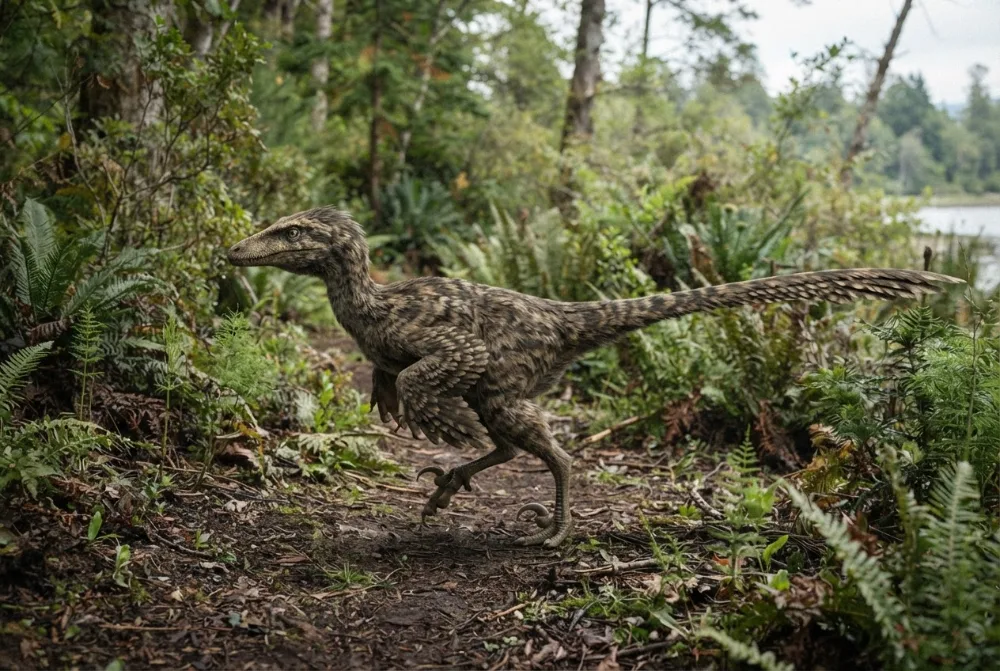
Boreonykus was a small, fast dinosaur that lived in Canada during the Late Cretaceous. It had a big sickle claw on each foot, which it used to hunt and slash its prey. This raptor was a cousin of the famous Velociraptor.1
E phetse neng?
E ne e le kgolo hakae?
E ne e le telele hakae?
E ne e phahame hakae?
E ne e le boima hakae?

 telele jwaloka dintja tse 3 ho tloha nkong ho isa mohatleng🍌telele jwaloka dibanana tse 17 di behilwe ka mola🍌boima jwaloka dibanana tse 110🏃e ne e ka matha dimitara tse 100 ka metsotswana e 9 (motho ya lebelo ka ho fetisisa o hloka 9,6)
Boreonykus e ne e le kgolo hakae ha e bapiswa le WENA?
Ke dipalo feela ho browser ya hao. Ha ho letho le bolokwang kapa le romelwang kae kapa kae.
E ne e le lebelo hakae?


Dintlha tse monate
Boreonykus was named in 2015 by scientists Phil Bell and Philip Currie.1
Its fossils were found in a bonebed that contained at least 27 individuals of the horned dinosaur Pachyrhinosaurus.1
The name Boreonykus means 'northern claw', because it lived in what is now Canada and had a large claw on its foot.1
Only a few bones of Boreonykus have been found, including a skull bone, teeth, and a sickle claw.1
Boreonykus lived about 73 million years ago, during the Late Cretaceous period.1
Scientists think Boreonykus was a dromaeosaurid, a group of feathered dinosaurs that includes Velociraptor and Deinonychus.6
Dipotso tse botswang haholo ka Boreonykus
?How big was Boreonykus?
About 2 metres long and as tall as a dog.3
?What did Boreonykus eat?
It was a meat-eater that probably ate the carcasses of the horned dinosaur Pachyrhinosaurus. Its serrated teeth and big claws helped it hunt and slash prey. [dinomuseum.ca](https://dinomuseum.ca/2016/03/new-dinosaur-boreonykus)5
?Did Boreonykus have feathers?
Yes, because it was a dromaeosaurid, a group of feathered dinosaurs that includes Velociraptor. [wikipedia.org](https://en.wikipedia.org/wiki/Boreonykus)1
?Where was Boreonykus found?
In the Pipestone Creek bonebed in central Alberta, Canada, about 20 kilometres southwest of Grande Prairie. [cbc.ca](https://www.cbc.ca/news/canada/edmonton/sharp-toothed-boreonykus-a-dog-sized-dinosaur-found-near-grande-prairie-1.3494699)3
Bakeng sa ditsebi tsa didinosaure
- Lebitso la saense
- Boreonykus
- E rehilwe ke
- Bell and Currie 20166
- Sehlopha
- Diraptor
- Lelapa / leloko
- Dromaeosauridae6
- Tlhophiso
- Theropoda > Dromaeosauridae6
- Dilemo tsa mafika
- dilemo tse dimilione tse 84 ho isa ho 72 (Campanian)6
- Dibopeho tsa mafika
- Wapiti6
- Dinaha
- Kanada6
- Direkoto tsa difosili
- 2 ho The Paleobiology Database6
- Ho sibollwa
- Boreonykus was named and described by Phil Bell and Philip Currie in 2015. The fossils were found in the 1980s at Pipestone Creek in Alberta, Canada, during digs for the horned dinosaur Pachyrhinosaurus.1
- E sa ntse e phehwa kgang
- Scientists are not sure whether Boreonykus was a velociraptorine or a dromaeosaurine, because different studies place it in different groups.1
Moo dintlha di tswang teng
- Boreonykus (en.wikipedia.org)
- PBDB Taxon (paleobiodb.org)
- Sharp-toothed Boreonykus, a dog-sized dinosaur, found near Grande Prairie | CBC News (cbc.ca)
- Boreonykus certekorum | Dinosaur Database by DinoAnimals.com (dinoanimals.com)
- What Big Claws You Have: Northern Alberta Welcomes New Raptor Dinosaur - Philip J. Currie Dinosaur Museum (dinomuseum.ca)
- Boreonykus in The Paleobiology Database (CC BY 4.0): dilemo, dibaka, dibopeho tsa mafika, tlhophiso.
Ntlha e nngwe le e nngwe leqepheng lena e na le nomoro e supang mohlodi wa yona. Haeba re fositse ho hong, re kopa tshwarelo, re balatedi ba didinosaure, ha re koranta ya saense. Re bolelle ho [email protected] mme re tla e lokisa.
 Rex o lapile! Dino Wiki ke projeke ya ntate bakeng sa mora wa hae ya ratang didinosaure, ke mahala, ha ho dipapatso, ha ho disebedi. Batho ba baholo ba ka fepa Rex seneke ho thusa hore e dule e le inthaneteng.Fepa Rex
 Velociraptor
 Microraptor
 Deinonychus
 Asiamericana
 Richardoestesia
 Saurornitholestes
 Tyrannosaurus
 Triceratops
 Spinosaurus
 Ankylosaurus
 Parasaurolophus
 Pteranodon