 Kwisi: O dinosaure efe?
 Ntwa ya didinosaure
 Peiso ya didinosaure
 Dipapadi tse nyane tsa didinosaure
 Albamo ya ditikara
 Manane a TOP a didinosaure
 Nkgethele!
Chirostenotes
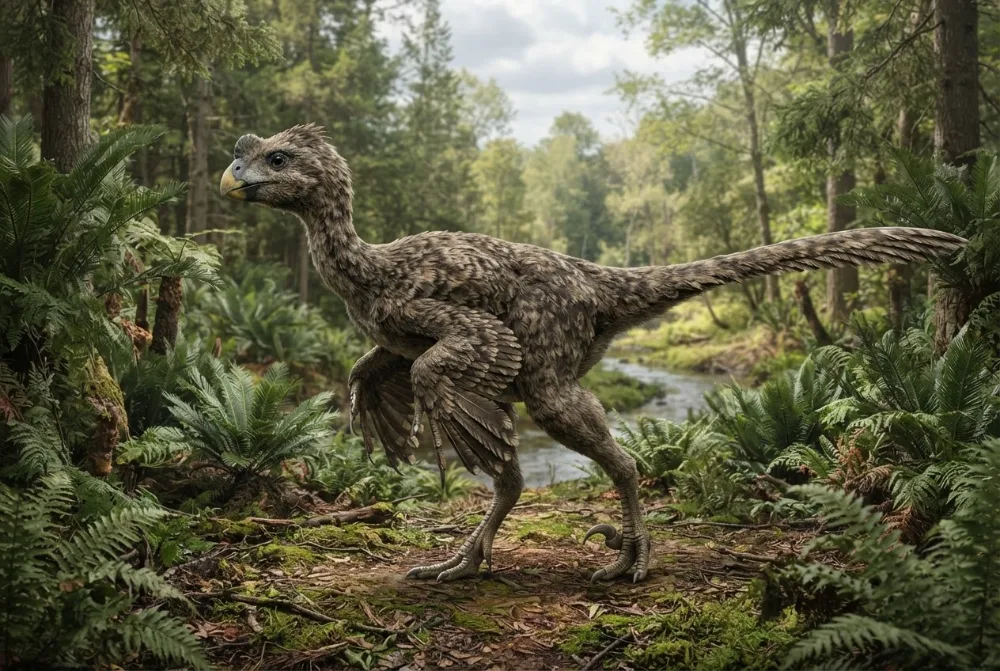
Chirostenotes was a small, bird-like dinosaur that lived in North America during the Late Cretaceous. It had long, slender fingers and a beak without teeth, and scientists think it ate both plants and small animals.12
E phetse neng?
E ne e le kgolo hakae?
E ne e le telele hakae?
E ne e phahame hakae?
kakanyo
E ne e le boima hakae?

 telele jwaloka dikatse tsa lapeng tse 3 ho tloha nkong ho isa mohatleng🍌telele jwaloka dibanana tse 9 di behilwe ka mola🍉boima jwaloka mahapu a 20🧸boima jwaloka bana ba kereshe ba 5🎒boima jwaloka bana ba sekolo ba 3🏃e ne e ka matha dimitara tse 100 ka metsotswana e 7.5 (motho ya lebelo ka ho fetisisa o hloka 9,6)
Chirostenotes e ne e le kgolo hakae ha e bapiswa le WENA?
Ke dipalo feela ho browser ya hao. Ha ho letho le bolokwang kapa le romelwang kae kapa kae.
E ne e le lebelo hakae?


Dintlha tse monate
Chirostenotes belongs to a group called caenagnathids, which are oviraptorosaurs. These dinosaurs are known for their toothless beaks and often had crests on their heads.42
Its name means 'narrow-handed' because its hand bones were long and slender, with three fingers that ended in sharp claws.1
Chirostenotes lived between about 79 and 67 million years ago, during the Late Cretaceous period.1
Fossils of Chirostenotes have been found in the Dinosaur Park Formation in Alberta, Canada, and the Hell Creek Formation in Montana, USA.4
Scientists once thought Chirostenotes was a different dinosaur called Macrophalangia, which means 'big toes'. Now they know it's the same animal.4
A study of a well-preserved jaw showed that Chirostenotes had a strong, shearing bite, like some plant-eating animals today. This supports the idea that it ate tough plants.2
Dipotso tse botswang haholo ka Chirostenotes
?How big was Chirostenotes?
About 2.5 metres (8.2 ft) long and weighed around 100 kg (220 lbs).3
?What did Chirostenotes eat?
It was an omnivore, eating both plants and small animals like grubs, amphibians, reptiles and mammals.32
?Did Chirostenotes have feathers?
Yes, it was a feathered theropod, and related oviraptorosaurs like Caudipteryx had large primary feathers on their hands.3
?When did Chirostenotes live?
It lived during the Late Cretaceous period, about 79 to 67 million years ago.1
?Why is it called Chirostenotes?
Its name means 'narrow-handed' because its hand bones were long and slender.1
Mosenyi wa ditshomo
Tshomo: Some people think Chirostenotes was a meat-eater like many other theropods.
Nnete: Chirostenotes was actually an omnivore, eating both plants and small animals. Its toothless beak and jaw shape are better suited for slicing plants than for catching large prey.2
Bakeng sa ditsebi tsa didinosaure
- Lebitso la saense
- Chirostenotes
- E rehilwe ke
- Gilmore 19244
- Sehlopha
- Didinosaure tse makatsang tse nang le mafofa
- Lelapa / leloko
- Caenagnathidae4
- Tlhophiso
- Theropoda > Oviraptorosauria4
- Dilemo tsa mafika
- dilemo tse dimilione tse 84 ho isa ho 66 (Campanian / Maastrichtian)4
- Dibopeho tsa mafika
- Hell Creek, Dinosaur Park, Aguja4
- Dinaha
- Amerika, Kanada4
- Direkoto tsa difosili
- 28 ho The Paleobiology Database4
- E boetse e tsejwa e le
- Macrophalangia (mabitso a kgale jwale a balwa e le phoofolo e le nngwe)4
- Ho sibollwa
- Chirostenotes was named in 1924 by paleontologist Charles W. Gilmore, based on a pair of hands found in Alberta, Canada. Later, more complete fossils showed it was a caenagnathid.41
- E sa ntse e phehwa kgang
- Scientists are still debating exactly what Chirostenotes ate. Some think it was mostly a plant-eater, while others believe it ate a mix of plants and small animals.2
Moo dintlha di tswang teng
- Chirostenotes | Natural History Museum (nhm.ac.uk)
- A previously undescribed caenagnathid mandible from the late Campanian of Alberta, and insights into the diet of Chirostenotes pergracilis (Dinosauria: Oviraptorosauria) (cdnsciencepub.com)
- Chirostenotes (en.wikipedia.org)
- Chirostenotes in The Paleobiology Database (CC BY 4.0): dilemo, dibaka, dibopeho tsa mafika, tlhophiso.
Ntlha e nngwe le e nngwe leqepheng lena e na le nomoro e supang mohlodi wa yona. Haeba re fositse ho hong, re kopa tshwarelo, re balatedi ba didinosaure, ha re koranta ya saense. Re bolelle ho [email protected] mme re tla e lokisa.
 Rex o lapile! Dino Wiki ke projeke ya ntate bakeng sa mora wa hae ya ratang didinosaure, ke mahala, ha ho dipapatso, ha ho disebedi. Batho ba baholo ba ka fepa Rex seneke ho thusa hore e dule e le inthaneteng.Fepa Rex
Tse ding tsa sehlopha se le seng: Didinosaure tse makatsang tse nang le mafofa
 TherizinosaurusDidinosaure tse makatsang tse nang le mafofa
 OviraptorDidinosaure tse makatsang tse nang le mafofa
 CitipesDidinosaure tse makatsang tse nang le mafofa
 LeptorhynchosDidinosaure tse makatsang tse nang le mafofa
 AvimimusDidinosaure tse makatsang tse nang le mafofa
 CaenagnathusDidinosaure tse makatsang tse nang le mafofa
 Tyrannosaurus
 Triceratops
 Velociraptor
 Spinosaurus
 Ankylosaurus
 Parasaurolophus