 Kwisi: O dinosaure efe?
 Ntwa ya didinosaure
 Peiso ya didinosaure
 Dipapadi tse nyane tsa didinosaure
 Albamo ya ditikara
 Manane a TOP a didinosaure
 Nkgethele!
E phetse neng?

E ne e le kgolo hakae?
E ne e le telele hakae?
E ne e phahame hakae?
kakanyo
E ne e le boima hakae?
 telele jwaloka dintja tse 4 ho tloha nkong ho isa mohatleng🍌telele jwaloka dibanana tse 19 di behilwe ka mola🍉boima jwaloka mahapu a 27🧸boima jwaloka bana ba kereshe ba 7🎒boima jwaloka bana ba sekolo ba 4🏃e ne e ka matha dimitara tse 100 ka metsotswana e 5.1 (motho ya lebelo ka ho fetisisa o hloka 9,6)
Dromiceiomimus e ne e le kgolo hakae ha e bapiswa le WENA?
Ke dipalo feela ho browser ya hao. Ha ho letho le bolokwang kapa le romelwang kae kapa kae.
E ne e le lebelo hakae?


Dintlha tse monate
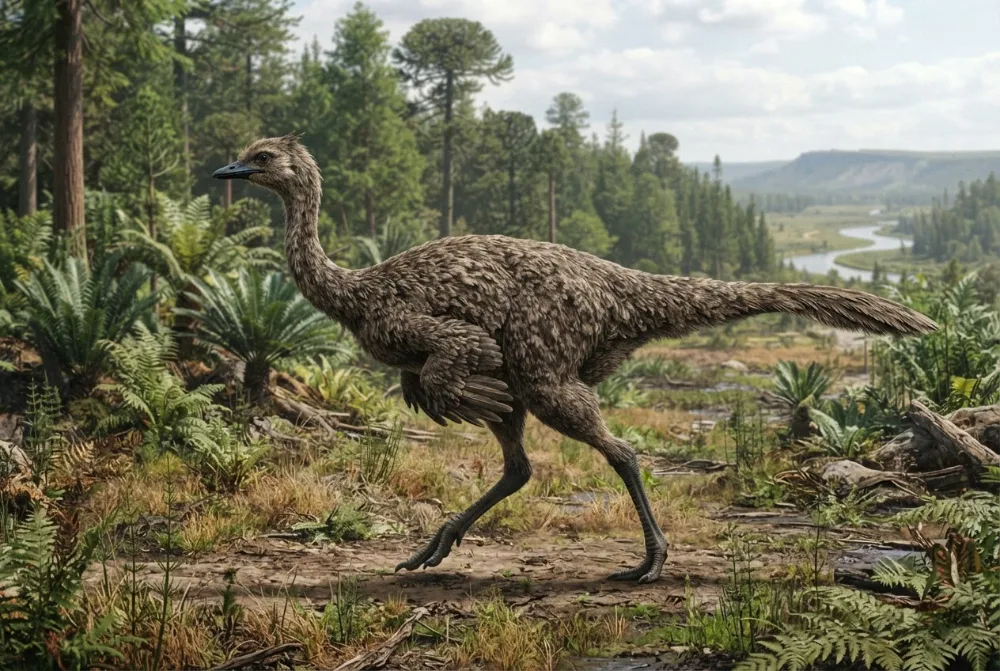
Dromiceiomimus looked a lot like a modern ostrich, but it probably had fewer feathers.1
Its name means 'emu mimic' because it was named after the emu, a large flightless bird.2
Some scientists think Dromiceiomimus might actually be the same dinosaur as Ornithomimus edmontonicus, but others disagree.2
The first fossils of Dromiceiomimus were found in the Horseshoe Canyon Formation in Alberta, Canada.23
Dromiceiomimus had a horny beak instead of teeth, which it used to eat plants and maybe small animals.1
Dipotso tse botswang haholo ka Dromiceiomimus
?How big was Dromiceiomimus?
About 3.5 metres (11.5 feet) long and weighed 100 to 135 kilograms (220 to 298 pounds).12
?What did Dromiceiomimus eat?
It was an omnivore, eating plants and possibly insects and small animals. It had a horny beak instead of teeth.1
?Did Dromiceiomimus have feathers?
It may have had some feathers, but not a thick layer like a modern ostrich.1
?Is Dromiceiomimus a real dinosaur?
Some scientists think it is the same as Ornithomimus edmontonicus, but others say it is a distinct dinosaur. Its fossils come from Alberta, Canada.2
Bakeng sa ditsebi tsa didinosaure
- Lebitso la saense
- Dromiceiomimus
- E rehilwe ke
- Russell 19723
- Sehlopha
- Didinosaure tsa mpshe
- Lelapa / leloko
- Ornithomimidae3
- Tlhophiso
- Theropoda > Ornithomimosauria3
- Dilemo tsa mafika
- dilemo tse dimilione tse 72 ho isa ho 66 (Maastrichtian)3
- Dibopeho tsa mafika
- Horseshoe Canyon3
- Dinaha
- Kanada3
- Direkoto tsa difosili
- 5 ho The Paleobiology Database3
- Ho sibollwa
- The first fossils were described by William Parks in 1926 as a species of Struthiomimus. In 1972, Dale Russell gave it its own genus, Dromiceiomimus, meaning 'emu mimic'.2
- E sa ntse e phehwa kgang
- Scientists still debate whether Dromiceiomimus is a distinct dinosaur or just another name for Ornithomimus edmontonicus.2
Moo dintlha di tswang teng
- Dromiceiomimus | Natural History Museum (nhm.ac.uk)
- Dromiceiomimus (en.wikipedia.org)
- Dromiceiomimus in The Paleobiology Database (CC BY 4.0): dilemo, dibaka, dibopeho tsa mafika, tlhophiso.
Ntlha e nngwe le e nngwe leqepheng lena e na le nomoro e supang mohlodi wa yona. Haeba re fositse ho hong, re kopa tshwarelo, re balatedi ba didinosaure, ha re koranta ya saense. Re bolelle ho [email protected] mme re tla e lokisa.
 Rex o lapile! Dino Wiki ke projeke ya ntate bakeng sa mora wa hae ya ratang didinosaure, ke mahala, ha ho dipapatso, ha ho disebedi. Batho ba baholo ba ka fepa Rex seneke ho thusa hore e dule e le inthaneteng.Fepa Rex
 Gallimimus
 Ornithomimus
 Struthiomimus
 Deinocheirus
 Archaeornithomimus
 Anserimimus
 Tyrannosaurus
 Triceratops
 Velociraptor
 Spinosaurus
 Ankylosaurus
 Parasaurolophus