 Kwisi: O dinosaure efe?
 Ntwa ya didinosaure
 Peiso ya didinosaure
 Dipapadi tse nyane tsa didinosaure
 Albamo ya ditikara
 Manane a TOP a didinosaure
 Nkgethele!
Harpymimus
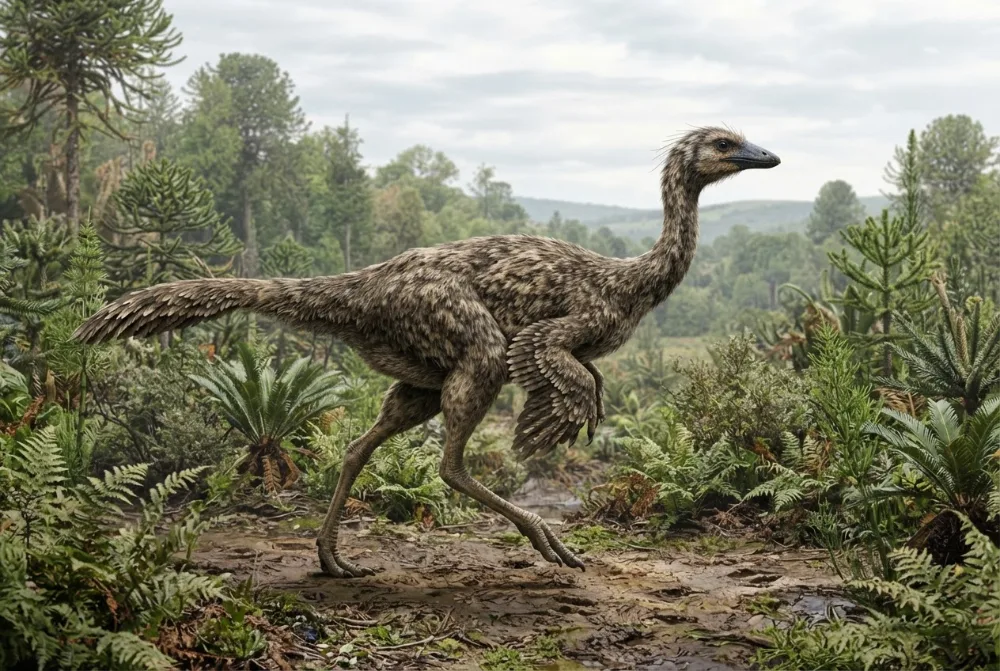
Harpymimus was an early, ostrich-like dinosaur that ran on two long legs. Unlike its later relatives, it still had small teeth in its lower jaw to grab food. It lived in what is now Mongolia during the Early Cretaceous.21
E phetse neng?
E ne e le kgolo hakae?
E ne e le telele hakae?
E ne e phahame hakae?
kakanyo
E ne e le boima hakae?

 telele jwaloka dikatse tsa lapeng tse 4 ho tloha nkong ho isa mohatleng🍌telele jwaloka dibanana tse 11 di behilwe ka mola🍉boima jwaloka mahapu a 29🧸boima jwaloka bana ba kereshe ba 8🎒boima jwaloka bana ba sekolo ba 5🏃e ne e ka matha dimitara tse 100 ka metsotswana e 5.5 (motho ya lebelo ka ho fetisisa o hloka 9,6)
Harpymimus e ne e le kgolo hakae ha e bapiswa le WENA?
Ke dipalo feela ho browser ya hao. Ha ho letho le bolokwang kapa le romelwang kae kapa kae.
E ne e le lebelo hakae?


Dintlha tse monate
Harpymimus had about 11 small, blunt teeth only in its lower jaw, unlike later ostrich dinosaurs which had no teeth at all.2
Its name comes from the Harpies, scary bird monsters from Greek myths, and the Greek word for mimic.2
The only known skeleton is almost complete but was crushed flat, making some details hard to see.2
Harpymimus had a long neck, long arms with sharp claws, and long legs built for running.2
It lived alongside the horned dinosaur Psittacosaurus in the same region of Mongolia.2
Scientists think Harpymimus was an early member of the group that includes the giant-clawed Deinocheirus.2
Dipotso tse botswang haholo ka Harpymimus
?How big was Harpymimus?
About 2 metres (6.6 feet) long and weighed over 146.5 kilograms (323 pounds).12
?What did Harpymimus eat?
It was omnivorous. Its small, blunt teeth and beak were used for grabbing and holding food, not cutting or piercing.12
?Did Harpymimus have feathers?
The sources do not mention feathers, but as a theropod dinosaur related to birds, it may have had simple feathers. No direct evidence has been found.2
?When did Harpymimus live?
It lived during the Early Cretaceous Period, about 121 to 99 million years ago.1
Bakeng sa ditsebi tsa didinosaure
- Lebitso la saense
- Harpymimus
- E rehilwe ke
- Barsbold and Perle 19843
- Sehlopha
- Didinosaure tsa mpshe
- Lelapa / leloko
- Deinocheiridae3
- Tlhophiso
- Theropoda > Ornithomimosauria3
- Dilemo tsa mafika
- dilemo tse dimilione tse 110 ho isa ho 100 (Albian)3
- Dibopeho tsa mafika
- Khuren Dukh3
- Dinaha
- Mongolia3
- Direkoto tsa difosili
- 1 ho The Paleobiology Database3
- Ho sibollwa
- A Soviet-Mongolian expedition found the skeleton in the Gobi Desert in 1981. In 1984, paleontologists Rinchen Barsbold and Altangerel Perle named it Harpymimus okladnikovi after the archaeologist Alexey Okladnikov.2
- E sa ntse e phehwa kgang
- Scientists are not sure exactly how Harpymimus used its small teeth, since they were too blunt for cutting meat or plants.2
Moo dintlha di tswang teng
- Harpymimus | Natural History Museum (nhm.ac.uk)
- Harpymimus (en.wikipedia.org)
- Harpymimus in The Paleobiology Database (CC BY 4.0): dilemo, dibaka, dibopeho tsa mafika, tlhophiso.
Ntlha e nngwe le e nngwe leqepheng lena e na le nomoro e supang mohlodi wa yona. Haeba re fositse ho hong, re kopa tshwarelo, re balatedi ba didinosaure, ha re koranta ya saense. Re bolelle ho [email protected] mme re tla e lokisa.
 Rex o lapile! Dino Wiki ke projeke ya ntate bakeng sa mora wa hae ya ratang didinosaure, ke mahala, ha ho dipapatso, ha ho disebedi. Batho ba baholo ba ka fepa Rex seneke ho thusa hore e dule e le inthaneteng.Fepa Rex
 Gallimimus
 Ornithomimus
 Struthiomimus
 Deinocheirus
 Dromiceiomimus
 Archaeornithomimus
 Stegosaurus
 Iguanodon
 Archaeopteryx
 Giganotosaurus
 Microraptor
 Deinonychus