 Kwisi: O dinosaure efe?
 Ntwa ya didinosaure
 Peiso ya didinosaure
 Dipapadi tse nyane tsa didinosaure
 Albamo ya ditikara
 Manane a TOP a didinosaure
 Nkgethele!
E phetse neng?

E ne e le kgolo hakae?
E ne e le telele hakae?
E ne e phahame hakae?
kakanyo
E ne e le boima hakae?
 telele jwaloka dikatse tsa lapeng tse 2 ho tloha nkong ho isa mohatleng🍌telele jwaloka dibanana tse 6 di behilwe ka mola🪶bobebe ho feta katse ya lapeng🍌boima jwaloka dibanana tse 16🪑e nyane hoo e ka tsamayang ka tlasa setulo🏃e ne e ka matha dimitara tse 100 ka metsotswana e 15 (motho ya lebelo ka ho fetisisa o hloka 9,6)
Hesperonychus e ne e le kgolo hakae ha e bapiswa le WENA?
Ke dipalo feela ho browser ya hao. Ha ho letho le bolokwang kapa le romelwang kae kapa kae.
E ne e le lebelo hakae?


Dintlha tse monate
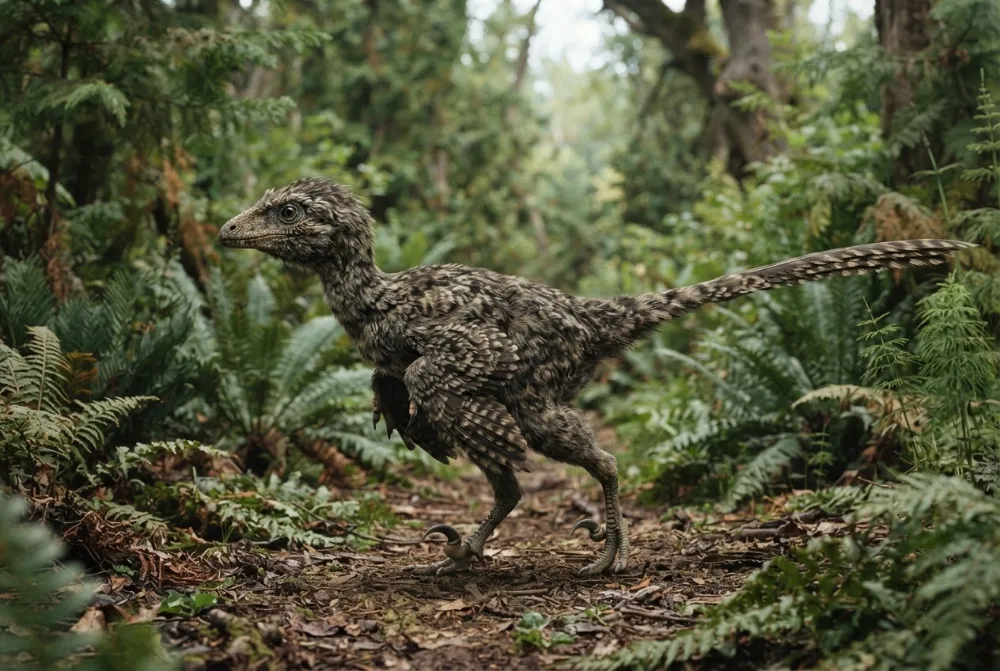
Hesperonychus weighed only about 1.9 kilograms, which is less than a house cat.1
It is the smallest carnivorous non-avian dinosaur known from North America.1
Hesperonychus belongs to a group called Microraptorinae, which includes the four-winged Microraptor from China.1
Its fossils were first collected in 1982 but were not studied until 25 years later.1
Hesperonychus lived about 75 million years ago during the Late Cretaceous.1
Even though it was fully grown, its hip bones were fused together, showing it was an adult.1
Dipotso tse botswang haholo ka Hesperonychus
?How big was Hesperonychus?
About 1 metre long and weighed between 1.5 and 2 kilograms, roughly the size of a large cat.31
?What did Hesperonychus eat?
It was a meat-eater. It ate small animals like lizards, mammals, and insects.31
?Did Hesperonychus have feathers?
Yes, it almost certainly had feathers. It belonged to a group of feathered dinosaurs called Microraptorinae, which includes the four-winged Microraptor.31
?Could Hesperonychus fly?
Probably not. Scientists think it was more like a ground-running predator, not a glider like its relative Microraptor.3
Bakeng sa ditsebi tsa didinosaure
- Lebitso la saense
- Hesperonychus
- E rehilwe ke
- Longrich and Currie 20094
- Sehlopha
- Diraptor
- Lelapa / leloko
- Dromaeosauridae4
- Tlhophiso
- Theropoda > Dromaeosauridae4
- Dilemo tsa mafika
- dilemo tse dimilione tse 84 ho isa ho 72 (Campanian)4
- Dibopeho tsa mafika
- Dinosaur Park, Oldman4
- Dinaha
- Kanada4
- Direkoto tsa difosili
- 4 ho The Paleobiology Database4
- Ho sibollwa
- The holotype was collected in 1982 by Dr. Elizabeth Nicholls, but it was not described until 2009 by Nicholas Longrich and Philip Currie. The species name honors Elizabeth Nicholls.13
- E sa ntse e phehwa kgang
- Scientists are not sure exactly how many small dromaeosaurids lived in North America, because only isolated bones have been found so far.1
Moo dintlha di tswang teng
- A microraptorine (Dinosauria, Dromaeosauridae) from the Late Cretaceous of North America (pmc.ncbi.nlm.nih.gov)
- A microraptorine (Dinosauria, Dromaeosauridae) from the Late Cretaceous of North America (pnas.org)
- Hesperonychus (en.wikipedia.org)
- Hesperonychus in The Paleobiology Database (CC BY 4.0): dilemo, dibaka, dibopeho tsa mafika, tlhophiso.
Ntlha e nngwe le e nngwe leqepheng lena e na le nomoro e supang mohlodi wa yona. Haeba re fositse ho hong, re kopa tshwarelo, re balatedi ba didinosaure, ha re koranta ya saense. Re bolelle ho [email protected] mme re tla e lokisa.
 Rex o lapile! Dino Wiki ke projeke ya ntate bakeng sa mora wa hae ya ratang didinosaure, ke mahala, ha ho dipapatso, ha ho disebedi. Batho ba baholo ba ka fepa Rex seneke ho thusa hore e dule e le inthaneteng.Fepa Rex
 Velociraptor
 Microraptor
 Deinonychus
 Asiamericana
 Richardoestesia
 Saurornitholestes
 Tyrannosaurus
 Triceratops
 Spinosaurus
 Ankylosaurus
 Parasaurolophus
 Pteranodon