 Kwisi: O dinosaure efe?
 Ntwa ya didinosaure
 Peiso ya didinosaure
 Dipapadi tse nyane tsa didinosaure
 Albamo ya ditikara
 Manane a TOP a didinosaure
 Nkgethele!
Incisivosaurus
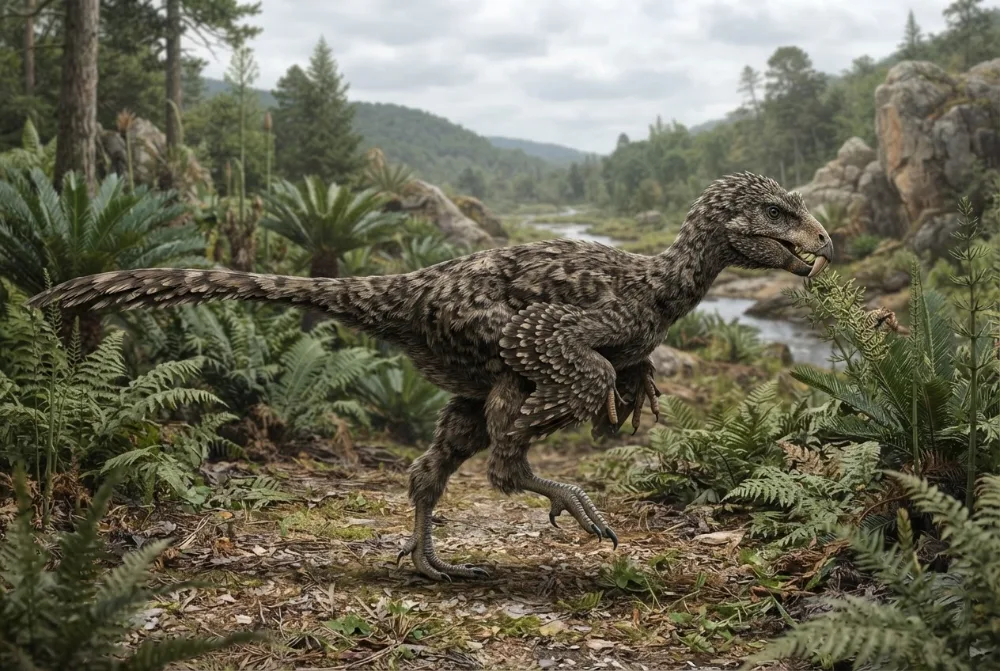
Incisivosaurus was a small, feathered dinosaur with a pair of big front teeth that looked like a rodent's incisors. It used these teeth to gnaw on plants, making it one of the first meat-eating dinosaurs known to eat mostly plants.12
E phetse neng?
E ne e le kgolo hakae?
E ne e le telele hakae?
E ne e phahame hakae?
kakanyo
 telele jwaloka dikatse tsa lapeng tse 3 ho tloha nkong ho isa mohatleng🍌telele jwaloka dibanana tse 8 di behilwe ka mola🏃e ne e ka matha dimitara tse 100 ka metsotswana e 9.5 (motho ya lebelo ka ho fetisisa o hloka 9,6)
Incisivosaurus e ne e le kgolo hakae ha e bapiswa le WENA?
Ke dipalo feela ho browser ya hao. Ha ho letho le bolokwang kapa le romelwang kae kapa kae.
E ne e le lebelo hakae?


Dintlha tse monate
Incisivosaurus had a pair of very large, chisel-like front teeth that stuck out forward, just like a beaver or rabbit. No other meat-eating dinosaur had teeth like that.12
Its cheek teeth were small and shaped like lance heads, with big wear facets from chewing plants. This shows Incisivosaurus chewed its food, unlike many other dinosaurs.12
Incisivosaurus lived about 128 million years ago, making it the oldest known oviraptorosaur dinosaur. It was a basal member of this group.12
Its skull was low and had teeth, unlike later oviraptorosaurs which had short, toothless beaks. This helps scientists understand how oviraptorosaurs evolved.12
The name Incisivosaurus means 'incisor lizard' because of its rodent-like front teeth. The species name gauthieri honors paleontologist Jacques Gauthier.12
Incisivosaurus is known from a nearly complete skull and a neck vertebra. Its body size is estimated from the skull, which is about 10 cm long.2
It was a feathered dinosaur, like other oviraptorosaurs, and probably walked on two legs. It was a small dinosaur, about the size of a turkey.4
Dipotso tse botswang haholo ka Incisivosaurus
?What did Incisivosaurus eat?
It ate plants. Its rodent-like front teeth and worn cheek teeth show it was adapted for herbivory.31
?Did Incisivosaurus have feathers?
Yes, it had feathers. Two juvenile specimens show long vaned feathers on the hands and tail, and downy feathers on the body.3
Bakeng sa ditsebi tsa didinosaure
- Lebitso la saense
- Incisivosaurus
- E rehilwe ke
- Xu et al. 20024
- Sehlopha
- Didinosaure tse makatsang tse nang le mafofa
- Lelapa / leloko
- Oviraptorosauria4
- Tlhophiso
- Theropoda > Oviraptorosauria4
- Dilemo tsa mafika
- dilemo tse dimilione tse 126 ho isa ho 100 (Barremian / Albian)4
- Dibopeho tsa mafika
- Fuxin, Yixian, Shahai4
- Dinaha
- Tjhaena4
- Direkoto tsa difosili
- 4 ho The Paleobiology Database4
- Ho sibollwa
- Incisivosaurus was named in 2002 by Xing Xu and colleagues from a skull and neck vertebra found in Liaoning, China. The fossils came from the Yixian Formation, which is about 128 million years old.12
- E sa ntse e phehwa kgang
- Scientists are not sure if Incisivosaurus had feathers all over its body or just on some parts, because only the skull and a neck bone have been found.4
Moo dintlha di tswang teng
- An unusual oviraptorosaurian dinosaur from China | Nature (nature.com)
- An unusual oviraptorosaurian dinosaur from China (ivpp.cas.cn)
- Incisivosaurus (en.wikipedia.org)
- Incisivosaurus in The Paleobiology Database (CC BY 4.0): dilemo, dibaka, dibopeho tsa mafika, tlhophiso.
Ntlha e nngwe le e nngwe leqepheng lena e na le nomoro e supang mohlodi wa yona. Haeba re fositse ho hong, re kopa tshwarelo, re balatedi ba didinosaure, ha re koranta ya saense. Re bolelle ho [email protected] mme re tla e lokisa.
 Rex o lapile! Dino Wiki ke projeke ya ntate bakeng sa mora wa hae ya ratang didinosaure, ke mahala, ha ho dipapatso, ha ho disebedi. Batho ba baholo ba ka fepa Rex seneke ho thusa hore e dule e le inthaneteng.Fepa Rex
Tse ding tsa sehlopha se le seng: Didinosaure tse makatsang tse nang le mafofa
 TherizinosaurusDidinosaure tse makatsang tse nang le mafofa
 OviraptorDidinosaure tse makatsang tse nang le mafofa
 ChirostenotesDidinosaure tse makatsang tse nang le mafofa
 CitipesDidinosaure tse makatsang tse nang le mafofa
 LeptorhynchosDidinosaure tse makatsang tse nang le mafofa
 AvimimusDidinosaure tse makatsang tse nang le mafofa
 Stegosaurus
 Iguanodon
 Archaeopteryx
 Giganotosaurus
 Microraptor
 Deinonychus