 Kwisi: O dinosaure efe?
 Ntwa ya didinosaure
 Peiso ya didinosaure
 Dipapadi tse nyane tsa didinosaure
 Albamo ya ditikara
 Manane a TOP a didinosaure
 Nkgethele!
Meganeura
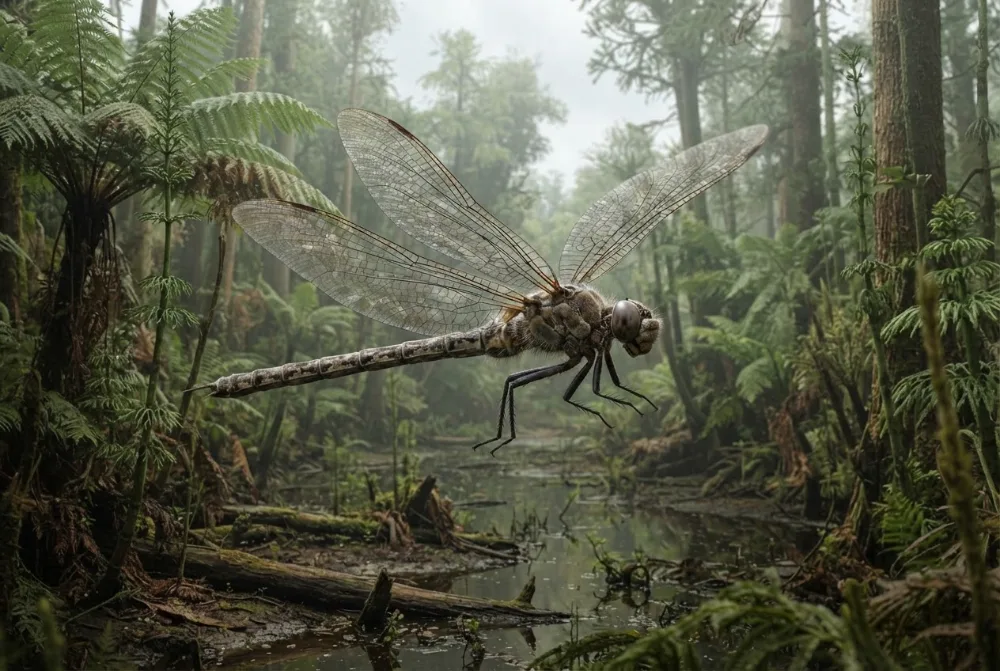
Meganeura was a giant dragonfly-like insect that lived about 300 million years ago. It had a wingspan as wide as a small bird and was one of the biggest flying insects ever. It hunted other insects in open forests and near lakes.12
E phetse neng?
E ne e le kgolo hakae?
E ne e le telele hakae?
E ne e le boima hakae?
Meganeura e ne e le kgolo hakae ha e bapiswa le WENA?
Ke dipalo feela ho browser ya hao. Ha ho letho le bolokwang kapa le romelwang kae kapa kae.
E ne e le lebelo hakae?


Dintlha tse monate
Meganeura's wingspan was about 65 to 75 centimetres (2.1 to 2.5 feet), bigger than any dragonfly alive today.1
Its huge compound eyes met along the top of its head, giving it excellent vision to spot prey against the sky.12
Meganeura was a 'hawker' that patrolled open areas and above the treetops, not a fast zigzag flyer through dense forests.2
Its legs had large spines that formed a 'flying trap' to grab insects in mid-air.1
Scientists think Meganeura spent a lot of time perching because its large body made breathing difficult during flight.1
The first Meganeura fossil was found in a coal mine in Commentry, France, in 1880.1
Only one species of Meganeura is considered valid today: Meganeura monyi.1
Dipotso tse botswang haholo ka Meganeura
?How big was Meganeura?
Meganeura had a wingspan of about 65 to 75 centimetres (2.1 to 2.5 feet) and a body length up to 43 centimetres (1.4 feet). It was one of the largest flying insects ever.14
?Could Meganeura fly fast?
No, it could not make sudden direction changes like modern dragonflies. It was a 'hawker' that patrolled open areas and above treetops, flying steadily rather than zigzagging.12
?What did Meganeura eat?
Meganeura was a predator that ate other insects. It used large spines on its legs to trap prey in mid-air, like a flying trap.14
?Is Meganeura a dinosaur?
No, Meganeura is not a dinosaur. It was a giant dragonfly-like insect that lived about 300 million years ago, long before dinosaurs evolved.1
?When did Meganeura live?
Meganeura lived during the Late Carboniferous period, about 300 million years ago.1
?Why was Meganeura so big?
Scientists think the high oxygen levels in the Carboniferous air may have helped it grow so large, but they are not sure. Another idea is that there were no big flying predators back then.1
?Did Meganeura have good eyesight?
Yes, it had huge compound eyes that met along the top of its head, giving it excellent vision to spot prey against the sky.12
?Where was Meganeura found?
The first Meganeura fossil was found in a coal mine in Commentry, France, in 1880.1
?How much did Meganeura weigh?
Estimates vary a lot, from about 18 grams (0.04 pounds) up to 100 to 150 grams (0.22 to 0.33 pounds). Scientists are not sure of the exact weight.1
Bakeng sa ditsebi tsa didinosaure
- Lebitso la saense
- Meganeura
- E rehilwe ke
- Brongniart 18855
- Sehlopha
- Dibopuwa tse tummeng tsa mehleng ya kgale
- Lelapa / leloko
- Meganeuridae5
- Tlhophiso
- Insecta > Meganisoptera > Meganeuridae5
- Dilemo tsa mafika
- dilemo tse dimilione tse 304 ho isa ho 299 (Gzhelian)5
- Dibopeho tsa mafika
- Commentry Shales5
- Dinaha
- Fora5
- Direkoto tsa difosili
- 7 ho The Paleobiology Database5
- Ho sibollwa
- French paleontologist Charles Brongniart named Meganeura in 1885 after studying fossils from Commentry, France. The first fossil was found in 1880.13
- E sa ntse e phehwa kgang
- Scientists are still unsure exactly how heavy Meganeura was, with estimates ranging from 18 grams to 150 grams.1
Moo dintlha di tswang teng
- Meganeura (en.wikipedia.org)
- Palaeozoic giant dragonflies were hawker predators | Scientific Reports (nature.com)
- PBDB Taxon (paleobiodb.org)
- Griffinflies: The earliest flying insects (nhm.ac.uk)
- Meganeura in The Paleobiology Database (CC BY 4.0): dilemo, dibaka, dibopeho tsa mafika, tlhophiso.
Ntlha e nngwe le e nngwe leqepheng lena e na le nomoro e supang mohlodi wa yona. Haeba re fositse ho hong, re kopa tshwarelo, re balatedi ba didinosaure, ha re koranta ya saense. Re bolelle ho [email protected] mme re tla e lokisa.
 Rex o lapile! Dino Wiki ke projeke ya ntate bakeng sa mora wa hae ya ratang didinosaure, ke mahala, ha ho dipapatso, ha ho disebedi. Batho ba baholo ba ka fepa Rex seneke ho thusa hore e dule e le inthaneteng.Fepa Rex
Tse ding tsa sehlopha se le seng: Dibopuwa tse tummeng tsa mehleng ya kgale
 MegalodonDibopuwa tse tummeng tsa mehleng ya kgale
 Sabre-toothed catDibopuwa tse tummeng tsa mehleng ya kgale
 DimetrodonDibopuwa tse tummeng tsa mehleng ya kgale
 Woolly mammothDibopuwa tse tummeng tsa mehleng ya kgale
 ArthropleuraDibopuwa tse tummeng tsa mehleng ya kgale
 HelicoprionDibopuwa tse tummeng tsa mehleng ya kgale